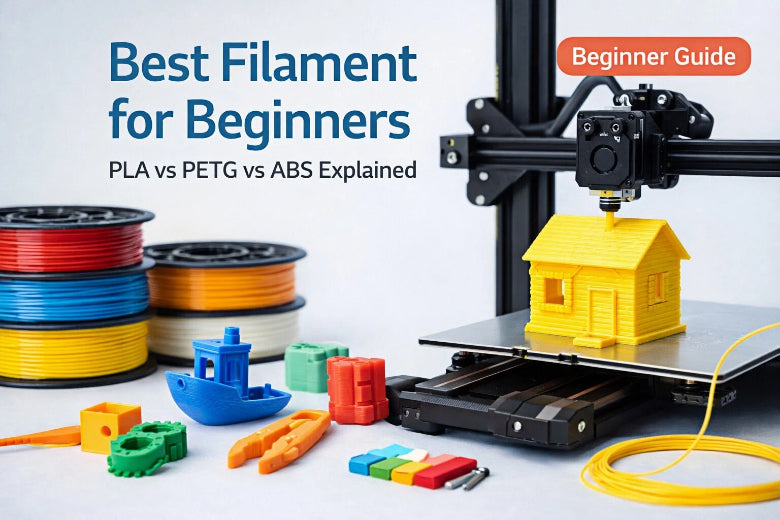
You’re searching for the best filament for beginners. PLA stands out as a beginner-friendly option. It’s easy to handle, works at low temperatures, and doesn’t need a heated bed. PETG and ABS are also common 3d printing filament choices, but they prove trickier. Try budget PLA for the best 3d printing filament experience.
Key Takeaways
- PLA is the best filament for beginners. It is easy to use. It needs a low printing temperature. You do not need a heated bed for PLA.
- PETG makes stronger and tougher parts. It is good if you want more durable prints. But PETG needs more complex settings. You also need a heated bed for PETG.
- ABS is for advanced users who need heat resistance and strength. ABS can warp when you print it. It can also make bad smells during printing.
Best filament for beginners: PLA vs PETG vs ABS
Quick Comparison Table
Let’s see how these three filaments are different:
|
Material |
Recommended Level |
Printing Temperature |
Heated Bed Required |
Warping Resistance |
Environmental Impact |
|---|---|---|---|---|---|
|
PLA |
Beginner |
190-220°C |
No |
Low |
Biodegradable |
|
PETG |
Beginner |
230-250°C |
Yes |
Moderate |
Recyclable |
|
ABS |
Intermediate |
220-260°C |
Yes |
High |
Not biodegradable |
Pros and Cons of Each 3D Printing Filament
Picking the right 3d printing filament makes printing easier and helps your prints look better.
PLA
- Pros: Simple to use, sticks well, doesn’t warp much, good for the planet.
- Cons: Not good with heat, can break easily.
PETG
- Pros: Tough, bends without breaking, keeps water out, works outside.
- Cons: Can leave strings, needs hotter settings, sometimes sticks too much.
ABS - Pros: Lasts long, handles heat, good for parts that need strength.
- Cons: Warps a lot, smells bad, not easy for beginners.
Print Settings and Equipment
If you want the best filament for beginners, you should use basic gear. PLA prints at lower heat, about 200°C. It does not need a heated bed or a box around the printer. PETG needs more heat, between 220°C and 250°C. It works best with a heated bed set from 50°C to 80°C. ABS needs the most heat, up to 260°C. You need a heated bed at 100°C and a box to stop warping and keep fumes away. PLA is the easiest to use and gives nice prints with less trouble. PETG is stronger and bends more but needs careful settings. ABS is tough and handles heat but is harder for new users.
If you want to start 3D printing without problems, PLA is the best filament for beginners. PETG and ABS are good for harder projects, but PLA helps you learn and have fun.
Why PLA is the best 3d printing filament for beginners
PLA Ease of Use and Print Quality
If you want to start 3D printing, PLA is a good choice. PLA melts at low heat, so you do not need special equipment. Most beginner printers work well with PLA. Auto leveling and steady extrusion help you get smooth prints, even if you are new.
PLA makes prints shiny and clear. Your models look neat and nice. When you compare PLA vs PETG vs ABS, PLA is easier to use and gives steady results. You can use PLA for test models, toys, and art projects. PLA sticks to the bed and does not warp much, so it is the easiest filament for 3D printing.
Here’s a simple table about print quality for basic models:
|
Material |
Print Quality Characteristics |
Ideal Use Cases |
|---|---|---|
|
PLA |
Smooth and shiny finish, looks nice |
Prototypes, art projects |
|
PETG |
Strong, bends well, lasts long, resists heat and chemicals |
Useful parts |
|
ABS |
Tough, lasts long, but warps easily, needs air flow |
Engineering models, parts that need strength |
Common Beginner Mistakes with PLA
You may have some problems when you use PLA for the first time. These mistakes are normal, and you can fix them.
- Prints do not stick to the bed
- Strings form between parts
- Corners lift up or warp
- Nozzle gets blocked
- Surface looks rough
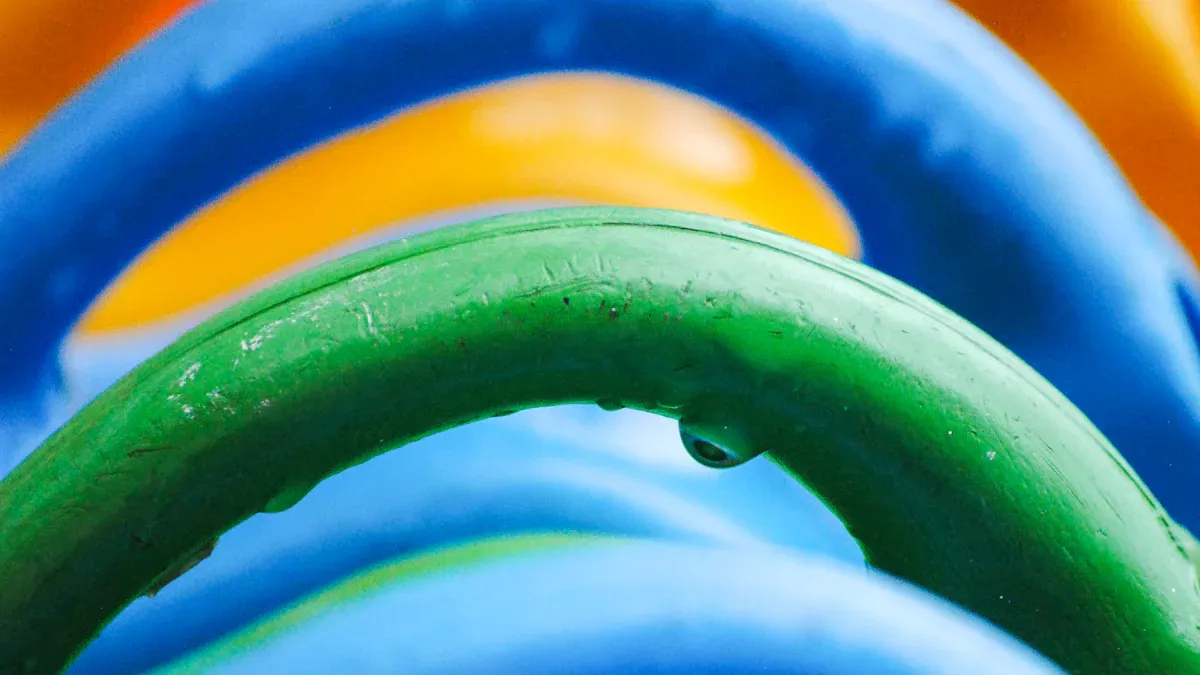
- Filament gets wet
- First layers look bad
- Flow rate is wrong
- Temperature is wrong
If your prints look stringy or rough, change your settings. Wet filament can cause bad layers and blockages. PLA is easy to use, but you must pay attention.
Tip: If your prints do not stick, clean the bed and check the heat. PLA works best when you keep things simple and steady.
Practical Tips for PLA Success
You want your prints to look good and last long. Try these tips to get the best results with PLA:
- Check your cooling fan before you print. Good cooling makes prints better and helps PLA last longer.
- Clean your print bed with isopropyl alcohol. Keep the bed at 50°C to help prints stick.
- Set your extruder heat between 200°C and 220°C. Different PLA brands may need small changes.
- Use a cooling fan at full power after the first few layers. This keeps details sharp and stops warping.
- Start with a retraction distance of 1.5 mm and a speed of 40 mm/s. This lowers stringing and makes prints better.
You can avoid most problems by following these steps. PLA lets you learn and create without many troubles. If your printer has auto leveling and steady extrusion, PLA is even easier to use.
Note: PLA is the best filament for beginners because it gives steady results and high quality prints. You can enjoy 3D printing without stress.
When to use PETG or ABS for 3d printing
You may think about using PETG or ABS instead of PLA. Sometimes, your project needs to be stronger or handle more heat. Let’s see when PETG and ABS are better choices.
PETG for Durability and Functional Parts
PETG is good for parts that need to last. It is tough and bends without breaking. PETG can take hits and does not get damaged by many chemicals. This makes it great for things you use a lot or keep outside.
Here is a table to compare PLA and PETG for different uses:
|
Decision Factor |
PLA Characteristics |
PETG Characteristics |
|---|---|---|
|
Strength & Durability |
Breaks easier, best for simple models |
Strong, does not break easily, good for working parts |
|
Heat Resistance |
Melts at lower heat |
Handles more heat, works outside |
|
Printability & Ease |
Simple to print, does not warp much |
Needs more heat, harder to print, needs heated bed |
|
Project Suitability |
Good for art and test models |
Good for tools, outdoor things, and working parts |
PETG is strong and bends without snapping. It keeps its shape even when pushed or pulled. You can use PETG for food boxes, medical tools, and machine parts. It does not let water in and stands up to many chemicals. This makes it good for tough jobs.
|
Property |
PETG |
ABS |
|---|---|---|
|
Flexibility |
Bends more |
Bends less |
|
Impact Resistance |
Very hard to break |
Breaks easier |
|
Chemical Resistance |
Safe from many chemicals |
Not as safe from chemicals |
|
Cracking/Snapping |
Rarely cracks or snaps |
Can break if bent too much |
- If you need strong and bendy parts, use PETG.
- If you want bright colors and smooth looks, use PLA.
- PETG needs a heated bed and high nozzle heat.
- PLA is the easiest for new users.
- PLA breaks down in nature, PETG can be recycled and lasts longer.
Tip: Use PLA for test models and art. Pick PETG for parts you use every day.
ABS for Advanced and Heat-Resistant Projects
ABS is good when your part gets hot or needs to be very strong. ABS can take heat up to 98°C. This makes it good for parts near engines or electronics. ABS is not as bendy as PETG but is still strong and hard.
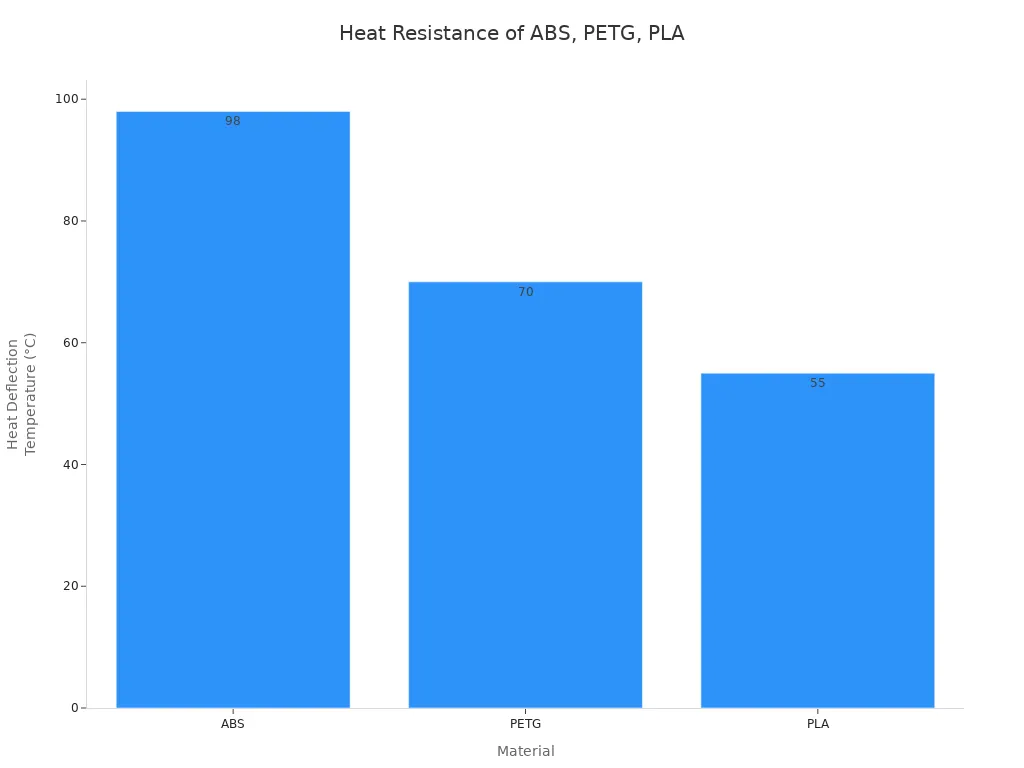
ABS is the best choice for hard jobs. You can use it for cases, machine parts, robots, and tool covers. Many car and computer parts use ABS because it is strong and keeps its shape. Even LEGO bricks are made from ABS because they last a long time.
- Cases for tools and machines
- Machine parts
- Robot parts
- Covers for instruments
- Test parts for working models
- Car and computer parts
- Toys and other goods
- Strong parts for engineering
ABS is best for things that get hot, like car parts or things near heat. PETG is better for indoor things where it does not get too hot.
You want the best filament for beginners. PLA gives you reliable results, smooth prints, and easy handling. You can start with PLA, learn the basics, and enjoy 3D printing. Try buying a spool of PLA and print a simple model. As you gain experience, explore PETG or ABS.
FAQ
What is the best filament for beginners?
PLA is the easiest filament for 3D printing. You can start with PLA because it works well, needs low heat, and gives smooth results.
How do PLA vs PETG vs ABS compare for home use?
|
Filament |
Ease of Use |
Home Suitability |
|---|---|---|
|
PLA |
Very easy |
Great |
|
PETG |
Moderate |
Good |
|
ABS |
Hard |
Not recommended |
Can I print PLA without a heated bed?
You can print PLA without a heated bed. PLA sticks well to most surfaces and helps you avoid warping. This makes it perfect for beginners.