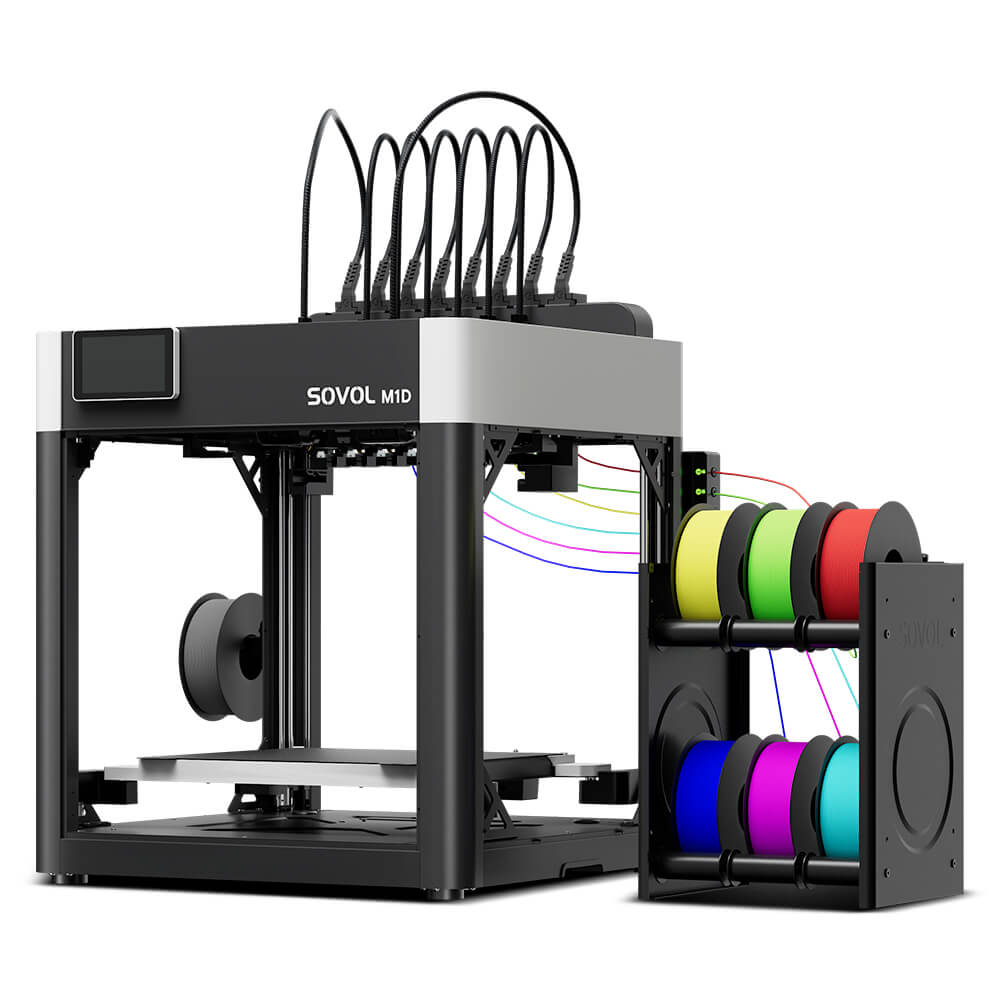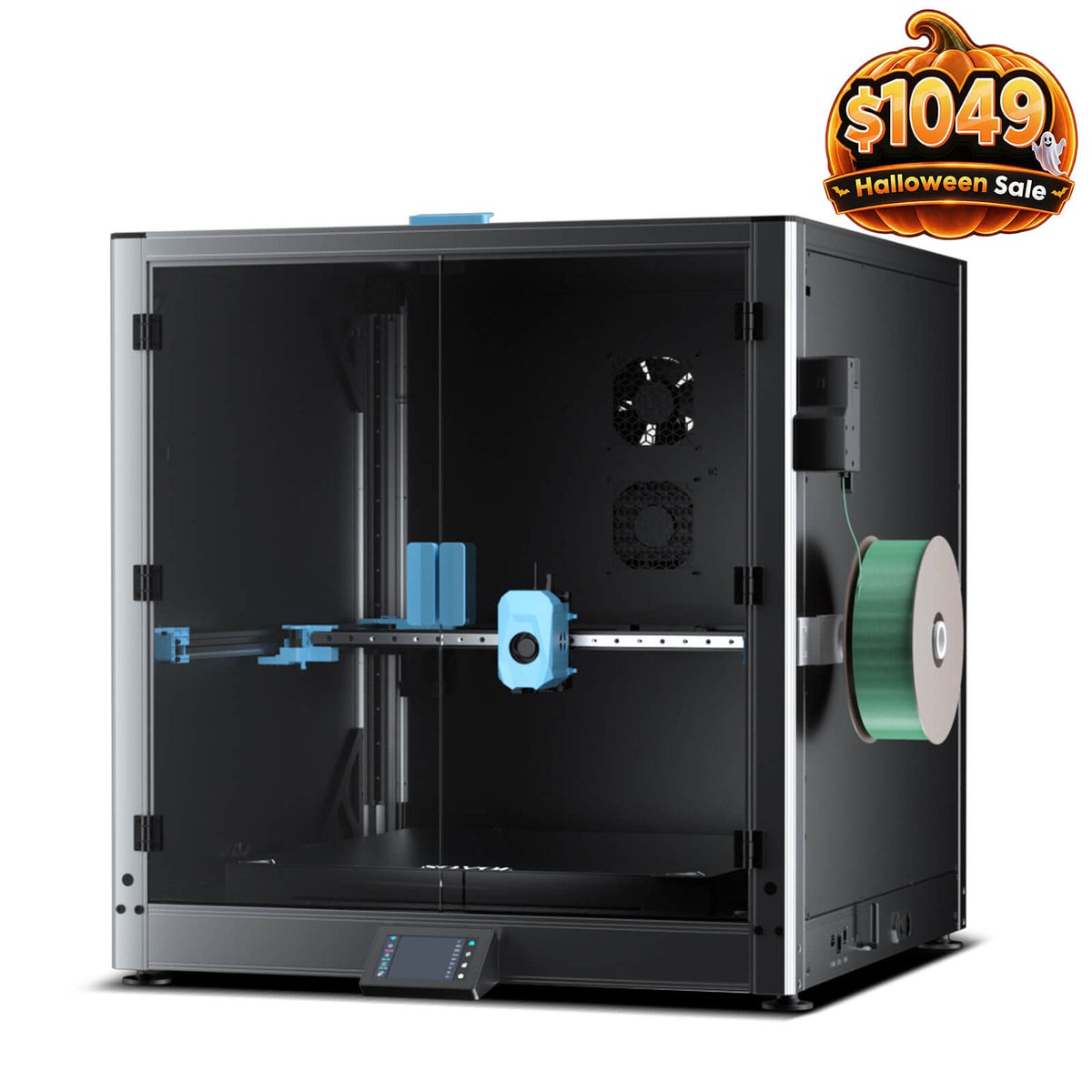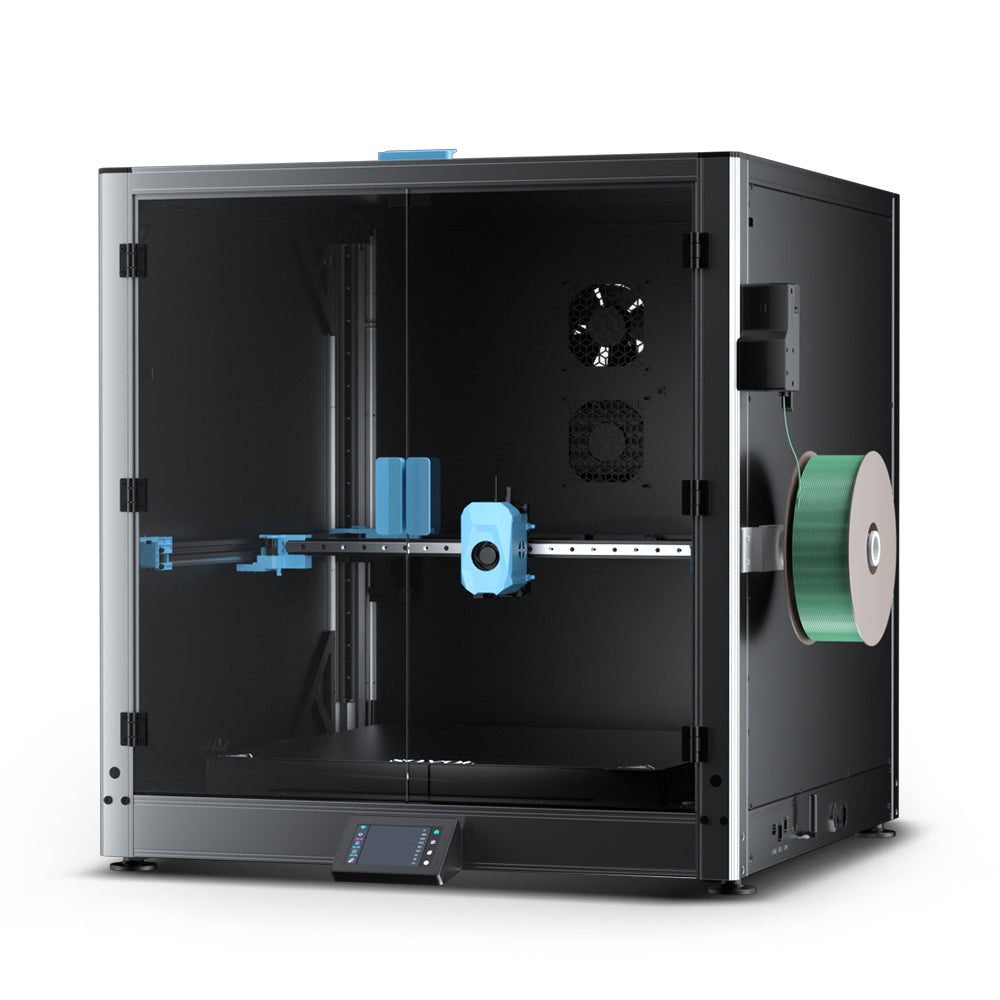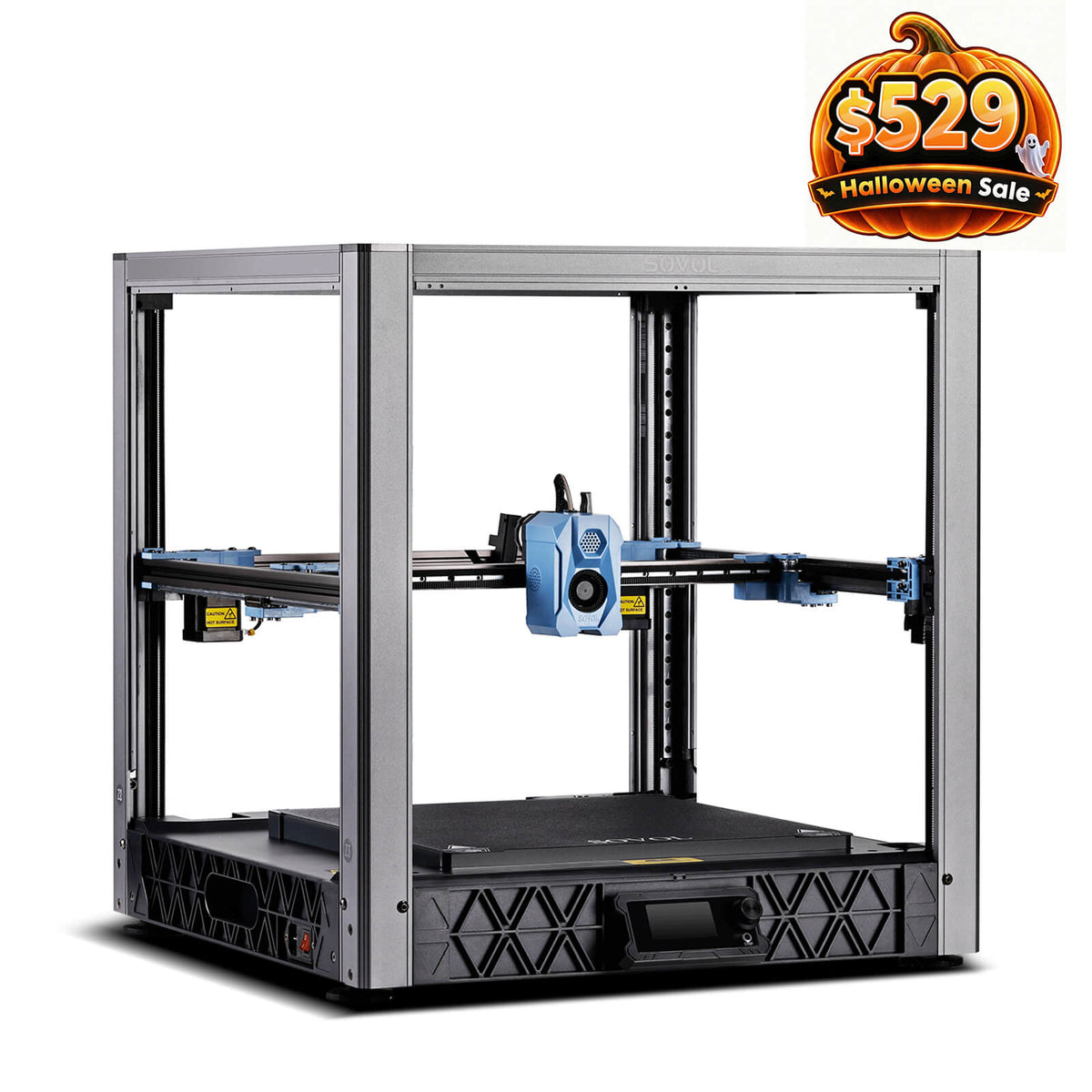
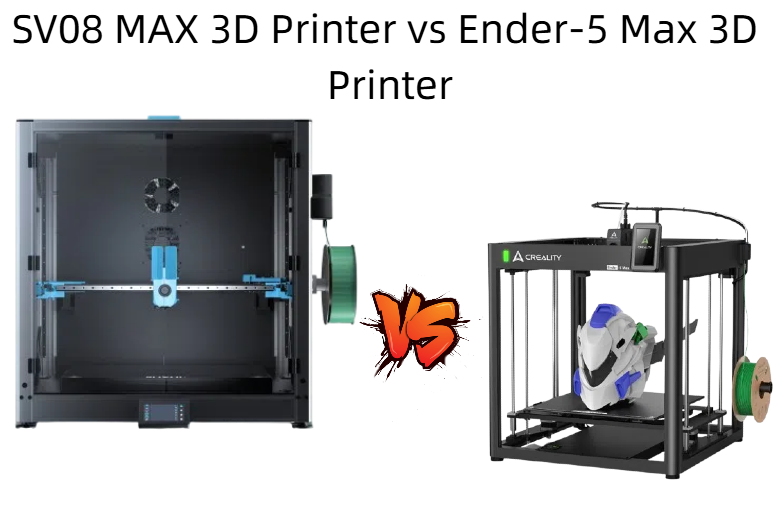
Large-format CoreXY 3D printers are becoming essential tools for makers, cosplay creators, engineers, and small studios. In 2025, two models stand out in the large-format space: Sovol SV08 MAX and Creality Ender-5 Max. Both are powerful machines, but they are built for different users and use cases. This neutral, fact-based comparison will help you decide which one fits your needs.
Key Takeaways
- Both printers use a CoreXY motion system, designed for high speed and smooth movement compared to older Cartesian designs.
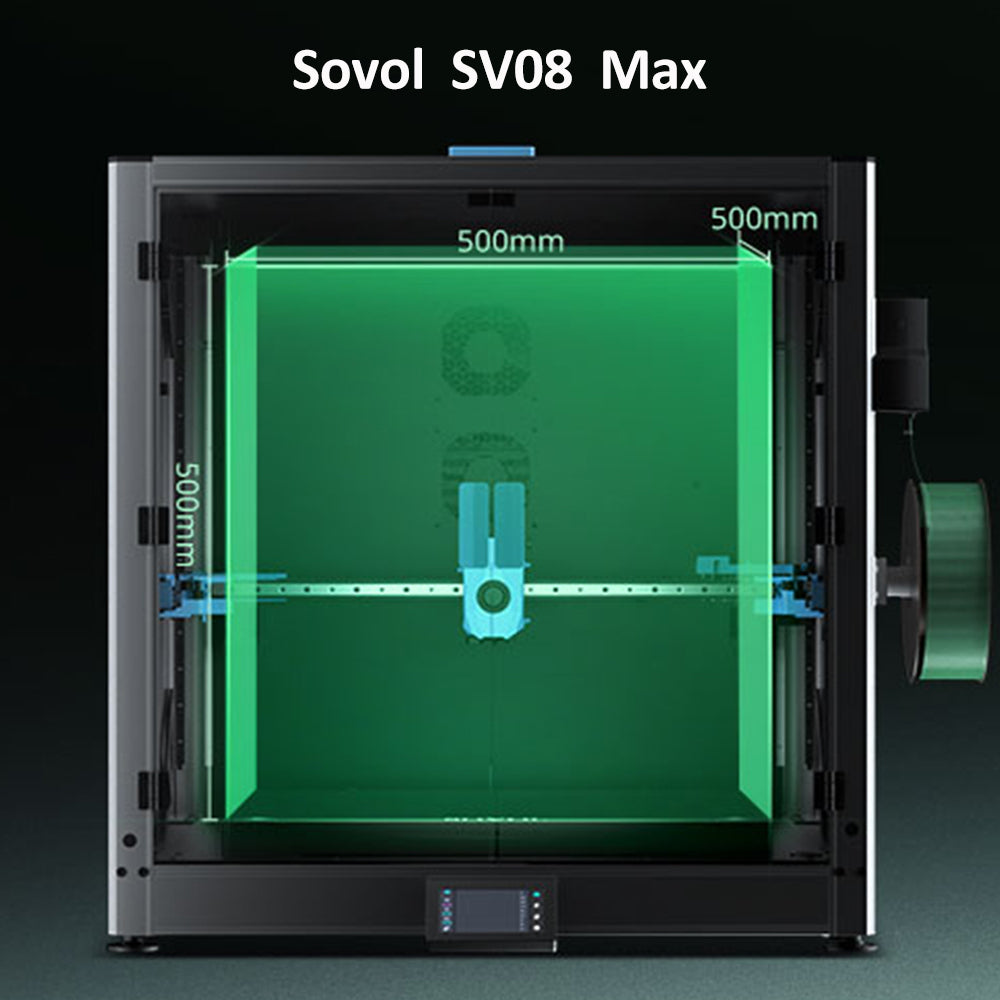
- SV08 MAX offers a larger 500 × 500 × 500 mm build volume, ideal for oversized parts, cosplay armor, and functional prototypes.
- Ender-5 Max provides a 400 × 400 × 400 mm build volume, still large but more space-efficient in smaller workshops.
- SV08 MAX runs Klipper firmware for advanced control and tuning, while Ender-5 Max runs Creality OS for a simpler, integrated experience.
- Both support a wide range of materials when used with proper settings and enclosures, including engineering filaments.
Side-by-Side Feature Comparison
| Feature | SV08 MAX (500mm) | Ender-5 Max (400mm) |
|---|---|---|
| Motion System | CoreXY + full linear rails on XYZ | CoreXY + linear rail on X-axis, dual Z screws |
| Build Volume | 500 × 500 × 500 mm | 400 × 400 × 400 mm |
| Firmware / Control | Klipper (highly configurable) | Creality OS (integrated & user friendly) |
| Max Print Speed | 700 mm/s | 700 mm/s |
| Max Acceleration | Up to 40,000 mm/s² | Lower, tuned for stability |
| Hotend Temperature | Up to 300 °C | Up to 300 °C |
| Bed Temperature | Up to 100 °C | Up to 100 °C |
| Build Plate | 8 mm aluminum + fiber surface | Flexible coated build plate |
| Leveling System | Eddy Current Sensor | 64-point auto bed leveling |
| Materials Supported | PLA, PETG, TPU, ABS, ASA, PC*, PA, PA-CF, PET-CF | PLA, PETG, TPU, ABS, ASA, PLA-CF, PA* |
| Target User | Advanced makers, professionals, large projects | Beginners, hobbyists, budget-conscious users |
*PC and PA/nylon performance depends on enclosure and temperature control.
Motion System & Firmware: CoreXY with Two Different Philosophies

CoreXY Architecture on Both Machines
Both the Sovol SV08 MAX and Creality Ender-5 Max use a modern CoreXY motion system. Compared to older Cartesian designs, CoreXY moves the print head more efficiently and keeps mass low, which helps:
- Maintain print quality at high speeds
- Reduce ringing and vibration
- Improve overall motion smoothness
Klipper on SV08 MAX: Maximum Control
The SV08 MAX runs on Klipper firmware. This is a highly flexible, open-source system that allows:
- Advanced tuning with macros and configuration files
- High-speed motion planning and input shaping
- Web-based control through a modern interface
For experienced users, Klipper opens the door to fine-tuned performance and deep customization.
Creality OS on Ender-5 Max: Integrated Experience
The Ender-5 Max uses Creality OS, which focuses on:
- A guided, user-friendly experience
- Built-in input shaping and smart motion features
- Connectivity to Creality’s cloud and ecosystem
If you prefer an integrated “plug-and-print” approach, Creality OS offers a simpler learning curve than a full Klipper setup.
Build Volume & Frame Design
How Much Build Volume Do You Really Need?
Your ideal build volume depends on what you print most often.
| Printer | Build Volume | Best For |
|---|---|---|
| SV08 MAX | 500 × 500 × 500 mm | Oversized cosplay props, helmets, armor, furniture components, large functional prototypes |
| Ender-5 Max | 400 × 400 × 400 mm | Large models, practical parts, multi-part assemblies where extreme size is not required |
If you regularly need very large one-piece prints, the SV08 MAX offers a clear advantage. If your projects are large but not extreme, the Ender-5 Max can be sufficient while saving space.
Frame Stability and Linear Rails
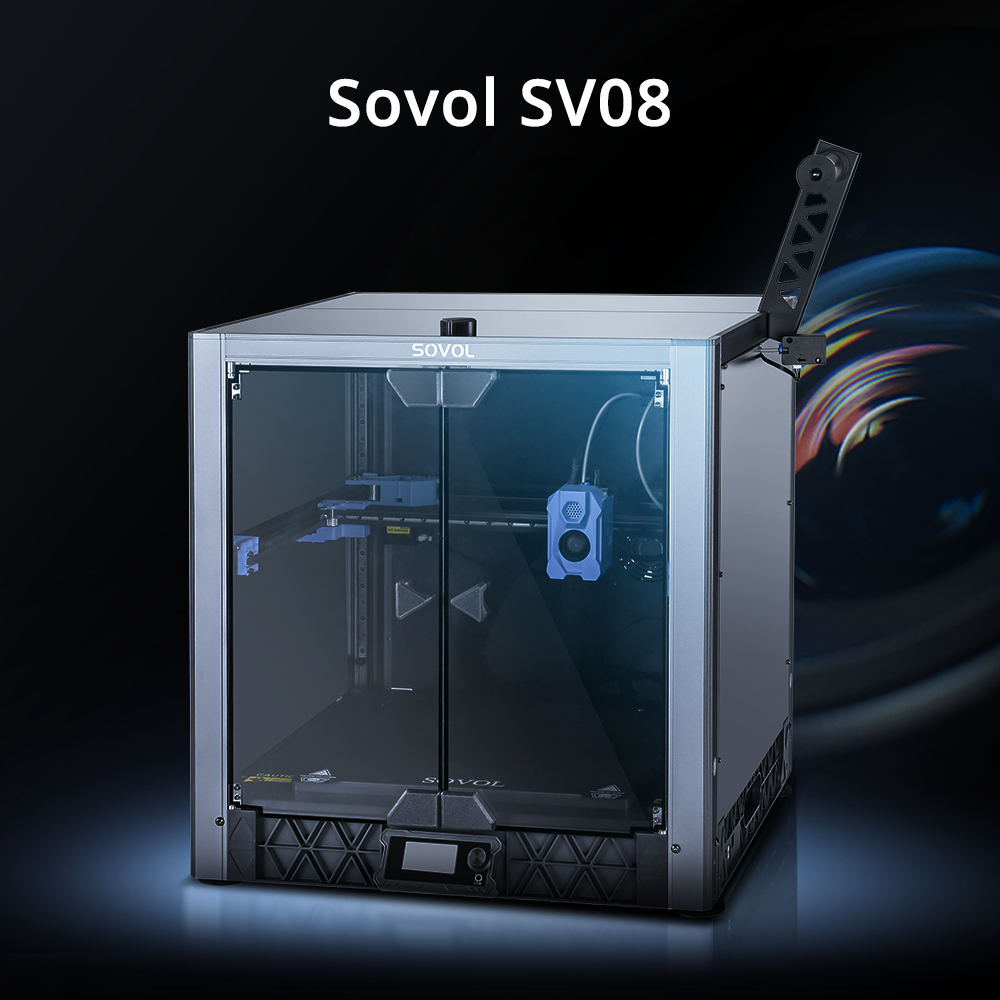
The SV08 MAX uses full linear rails on X, Y, and Z axes, combined with a rigid frame. This design is built for:
- Long print jobs that run for dozens of hours
- Heavy parts and tall structures
- High speeds without excessive vibration
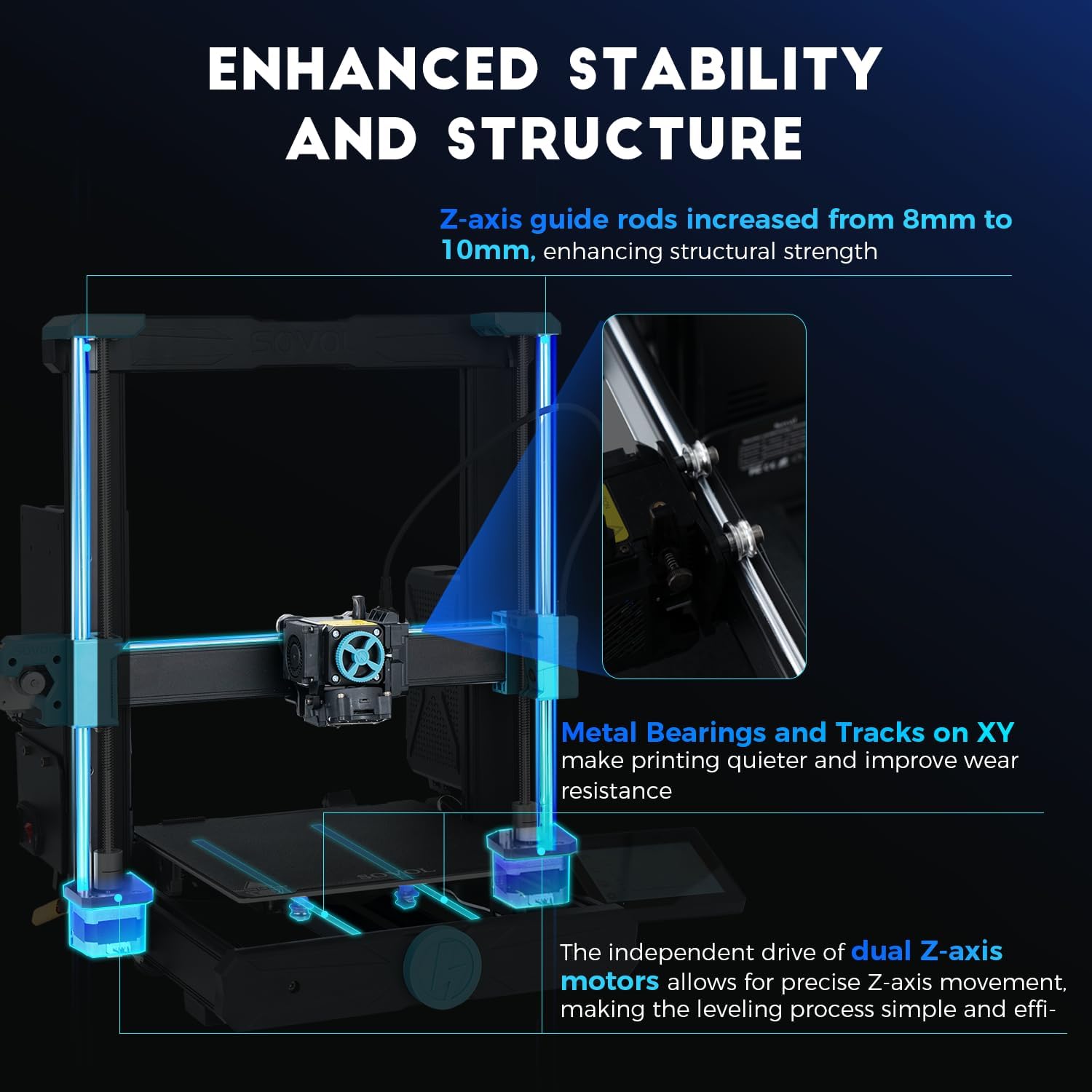
The Ender-5 Max combines a CoreXY frame with a linear rail on the X-axis and dual Z screws, offering good stability while keeping the machine more compact and lighter.
Materials & Hotend Performance

Both printers use 300 °C-capable hotends and 100 °C heated beds, making them suitable for a wide range of filaments. With appropriate enclosures and tuning, they can handle not only consumer-grade PLA but also engineering materials.
SV08 MAX: Designed for Demanding Materials
- PLA, PLA+ and specialty PLA
- PETG and PET-based materials
- TPU and flexible filaments
- ABS and ASA for higher temperature applications
- PC and PA/nylon (with proper environment control)
- PA-CF, PET-CF and other fiber-reinforced filaments
Ender-5 Max: Broad Compatibility with the Right Setup
- PLA / PLA+ / silk PLA
- PETG
- TPU
- ABS / ASA (with enclosure and tuned airflow)
- PLA-CF and some engineering filaments
In practice, both printers can print advanced materials when set up correctly. The SV08 MAX’s larger build volume and robust motion system give it an edge for bigger engineering parts that stress the frame and mechanics more.
Build Plate, Heating & Bed Leveling
Build Plate Design
| Feature | SV08 MAX | Ender-5 Max |
|---|---|---|
| Plate Structure | 8 mm aluminum base + 1.5 mm fiber surface | Flexible coated build plate |
| Heater Power | High-power bed heater optimized for 500 mm size | Standard heated bed suitable for 400 mm platform |
| Max Bed Temperature | 100 °C | 100 °C |
Leveling Systems Compared
The SV08 MAX uses an Eddy Current Sensor to quickly scan the build plate and generate an accurate bed mesh across the large 500 mm surface. The Ender-5 Max uses a 64-point auto bed leveling system that has been proven reliable in day-to-day printing.
Both approaches work well; SV08 MAX focuses on fast, detailed scanning at very large scale, while Ender-5 Max balances reliability and simplicity.
Print Quality, Speed & Real-World Performance
Speed & Acceleration
Both machines can reach up to 700 mm/s in ideal conditions, but their acceleration values differ:
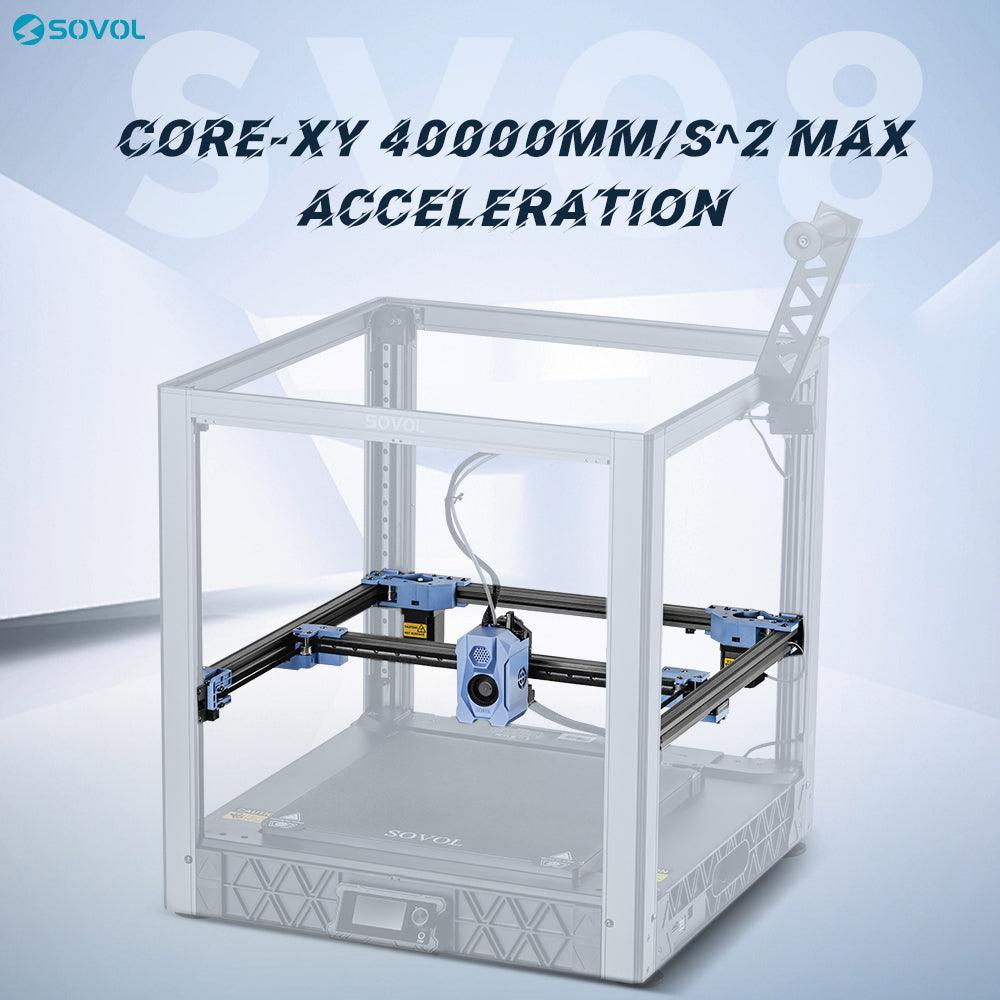
- SV08 MAX: up to 40,000 mm/s², leveraging Klipper and CoreXY with full linear rails.
- Ender-5 Max: lower acceleration settings, tuned for stability and ease of use.
In practical terms, the SV08 MAX is better suited for aggressive high-speed profiles, especially on large prints.
Layer Heights and Precision
In real-world usage, both printers deliver their best results in the 0.1–0.2 mm layer height range. Ender-5 Max officially supports 0.05–0.3 mm, while SV08 MAX is commonly used from 0.1–0.3 mm.
Print quality is influenced more by tuning, cooling and rigidity than by theoretical minimum layer height alone. Both printers are capable of detailed, functional parts when properly calibrated.
Ease of Use, Setup & Workflow
Assembly
- SV08 MAX: mostly pre-assembled; users typically complete setup in a short time.
- Ender-5 Max: partially pre-assembled; some additional frame assembly is required.
User Interface
- SV08 MAX: 7" HD touchscreen with WiFi connectivity and Klipper WebUI access.
- Ender-5 Max: Creality OS touchscreen with cloud connectivity and ecosystem integration.
Both provide modern touchscreen interfaces; the main difference lies in how much control and customization you want versus how “guided” the experience should be.
Price, Value & Long-Term Considerations
Upfront Cost
- Ender-5 Max is generally more affordable, making it attractive for beginners and hobbyists who want a large CoreXY printer without a premium price tag.
- SV08 MAX sits at a higher price point but offers a significantly larger build volume, full linear rails and a Klipper-driven motion system.
Long-Term Value
For users who print frequently, especially with challenging materials or very large parts, the SV08 MAX’s more robust hardware and higher acceleration envelope can translate into long-term value and time savings.
For occasional printing and learning the basics of large-format 3D printing, the Ender-5 Max provides solid performance at a lower investment.
Community, Support & Ecosystem
SV08 MAX Community
- Growing Klipper-oriented community
- Strong focus on tuning, macros and performance optimization
- Active discussion around large-scale prints and advanced materials
Ender-5 Max Community
- Large global user base across forums, groups and channels
- Extensive library of mods, profiles and troubleshooting guides
- Beginner-friendly content for first-time large-format users
Quick Buyer’s Guide
| If you need… | Recommended Printer |
|---|---|
| The largest possible one-piece prints | SV08 MAX |
| A large but more compact CoreXY machine | Ender-5 Max |
| Maximum performance and tuning flexibility | SV08 MAX |
| Low upfront cost and a gentler learning curve | Ender-5 Max |
| Engineering-grade materials and heavy projects | SV08 MAX |
| Beginner-friendly large-format printing | Ender-5 Max |
Conclusion: SV08 MAX vs Ender-5 Max in 2025
Both the Sovol SV08 MAX and Creality Ender-5 Max are capable large-format CoreXY 3D printers, but they serve different kinds of creators.
Choose SV08 MAX if you want:
- The largest possible build volume (500 × 500 × 500 mm)
- Klipper-powered performance and advanced tuning
- Full linear rails and a frame optimized for demanding, long-duration prints
Choose Ender-5 Max if you want:
- A more affordable entry into large CoreXY printing
- A simpler, guided experience with Creality OS
- A large build volume that still fits more easily in smaller workshops
Whichever machine you choose, both represent the strengths of modern large-format CoreXY design in 2025 and can be powerful tools in the hands of creators.
FAQ: SV08 MAX vs Ender-5 Max
Is the SV08 MAX better than the Ender-5 Max?
“Better” depends on your needs. The SV08 MAX is stronger for very large prints, advanced materials and high-speed Klipper workflows. The Ender-5 Max is better for budget-friendly large-format printing and a simpler, integrated experience.
Can the Ender-5 Max print ABS or ASA?
Yes. With an enclosure, proper temperatures and tuned cooling, the Ender-5 Max can handle ABS, ASA and other temperature-sensitive materials.
Do I need to be an expert to use Klipper on the SV08 MAX?
No, beginners can still get started using recommended profiles and presets. However, Klipper does reward users who enjoy fine-tuning and learning more about their printer.
Which printer is faster?
Both list 700 mm/s as a top speed, but the SV08 MAX supports higher acceleration and is optimized for aggressive high-speed profiles, especially on large jobs.
Which printer has better stability for tall or heavy prints?
The SV08 MAX’s full linear-rail system and rigid frame give it an advantage for very tall or heavy parts, especially over long print times.