



This guide is an awareness-stage map of the problem space: the failure modes that kill outdoor electronics, and the enclosure design patterns (including 3D-printed ones) that reduce your odds of a frustrating teardown.
Key Takeaway: A “waterproof 3D printed enclosure” is rarely waterproof by default. Outdoors, you’re designing for seams, cable entry, and condensation—not just splashes.
First, define the target: splash-resistant vs IP65 vs IP67
Many makers say “waterproof” when they really mean “survives UK rain on a fence post.” The more useful question is: what kind of water exposure do you need to survive?
IP ratings (Ingress Protection) use two digits: the first is dust/solids protection, the second is water protection. Clarion UK’s guide to IP ratings (IP54, IP65, IP67) is a clear, plain-language reference, and Rainford Solutions also has a concise IP ratings explainer PDF.
A practical interpretation for outdoor hobby electronics:
- IP54: better described as “splash resistant.”
- IP65 enclosure: typically the baseline for outdoor mounting (dust-tight + resistant to water jets).
- IP67: aimed at situations where temporary immersion is plausible.
Also worth knowing: rain is usually low pressure, so “jet resistance” is often the bigger jump than people think. Armagard’s discussion of IP ratings for outdoor enclosures explains why IP54–IP65 can be sufficient depending on how exposed the install is.
The honest maker rule
Unless you’ve tested (and ideally certified) the finished assembly, don’t claim your print is “IP67.” Instead say you designed toward an IP65-style exposure and validated it with a basic spray test.
3D printed electronics enclosure best practice #1: design the lid seam like a gasketed joint
A 3D-printed electronics enclosure usually fails at the seam first. Plastic-on-plastic contact looks tight, but it’s not a reliable seal when:
- your first layer is slightly over/under-extruded,
- the lid warps over time,
- screws apply uneven pressure,
- the enclosure expands and contracts outdoors.
If you want a meaningful seal, treat it like an engineering joint:
- Use a gasket (TPU, O-ring, or closed-cell foam) instead of relying on “tight tolerances.”
- Give the gasket a seat/channel so it locates consistently.
- Clamp evenly around the perimeter (more screws, better spacing, or a clamping ring).
A manufacturing-oriented enclosure guide from ThinkRobotics highlights how gasket channels and fastener spacing influence sealing performance in real products: see their notes on gasket design and cable entry sealing.
A maker-friendly gasket checklist
- A flat, continuous gasket land (no gaps, no sharp corners that cut TPU)
- Compression that’s even all the way around
- Enough fasteners to prevent “smile-shaped” gaps on long edges
Best practice #2: treat cable entry as the #1 leak path
If your enclosure has a single weak point, it’s where the wires enter.
Common failure modes:
- water running down the cable jacket and wicking inside,
- sealant pulling away after temperature cycling,
- repeated flexing causing micro-cracks at the exit point.
Field-deployment notes from the Cave Pearl Project are blunt about this: in their waterproofing writeup (2023), they describe how sealing compounds can be “waterproof” but still allow water vapor migration over time, and why cable glands plus desiccant maintenance matter.
Practical patterns that work:
- Real cable glands for the final assembly (best option).
- Strain relief so the cable can’t lever against the seal.
- A drip loop (route cable downward before it enters the gland) so water doesn’t run straight into the entry.
If you’re printing cable fittings, a common approach is “rigid body + TPU compression element.” A community model that demonstrates this pattern (TPU gasket + cable compression) is documented on MakerWorld: Waterproof electrical junction box model. Treat it as a pattern reference, not a guarantee.
⚠️ Warning: If you seal the cable entry perfectly but leave the seam weak, water will still get in. If you seal the seam perfectly but leave cable entry weak, water will still get in. You need both.
Best practice #3: plan for condensation (even in a “sealed” box)
Condensation is the failure mode that surprises most builders.
In the real world, your enclosure heats up in sunlight and cools quickly at night. That temperature swing changes internal pressure and drives air exchange in tiny amounts. Over time, moisture accumulates—even if you never see obvious leaks.
What helps in practice:
- Desiccant packs with indicator beads (and a way to replace/recharge them).
- PCB conformal coating for insurance against humidity.
- Serviceability: don’t design a box you’re afraid to open.
The Cave Pearl Project’s field notes include practical details on desiccants and vapor ingress in DIY housings (the same field writeup referenced earlier); it’s worth reading end-to-end if you’re deploying sensors for months at a time.
Serviceability beats “permanent sealing” for gardens
Potting and permanent sealing can work, but it also means:
- repairs are harder,
- battery swaps get annoying,
- you lose the ability to dry the box after a bad week.
For most smart gardening builds, designing for maintenance is the win.
Best practice #4: choose materials for sun, heat, and moisture (not just strength)
A good outdoor electronics enclosure material does three things:
- stays dimensionally stable in heat,
- resists UV-driven brittleness,
- doesn’t hate moisture.
A simple, honest rule of thumb:
- PLA: great for prototypes, risky for outdoor electronics housings.
- PETG vs ASA: PETG is the practical baseline; ASA is the stronger choice when you expect lots of sun and weather.
UltiMaker’s overview of filament types and typical use cases is a decent starting point for thinking through material behavior (especially for makers who want a non-brand-specific reference).
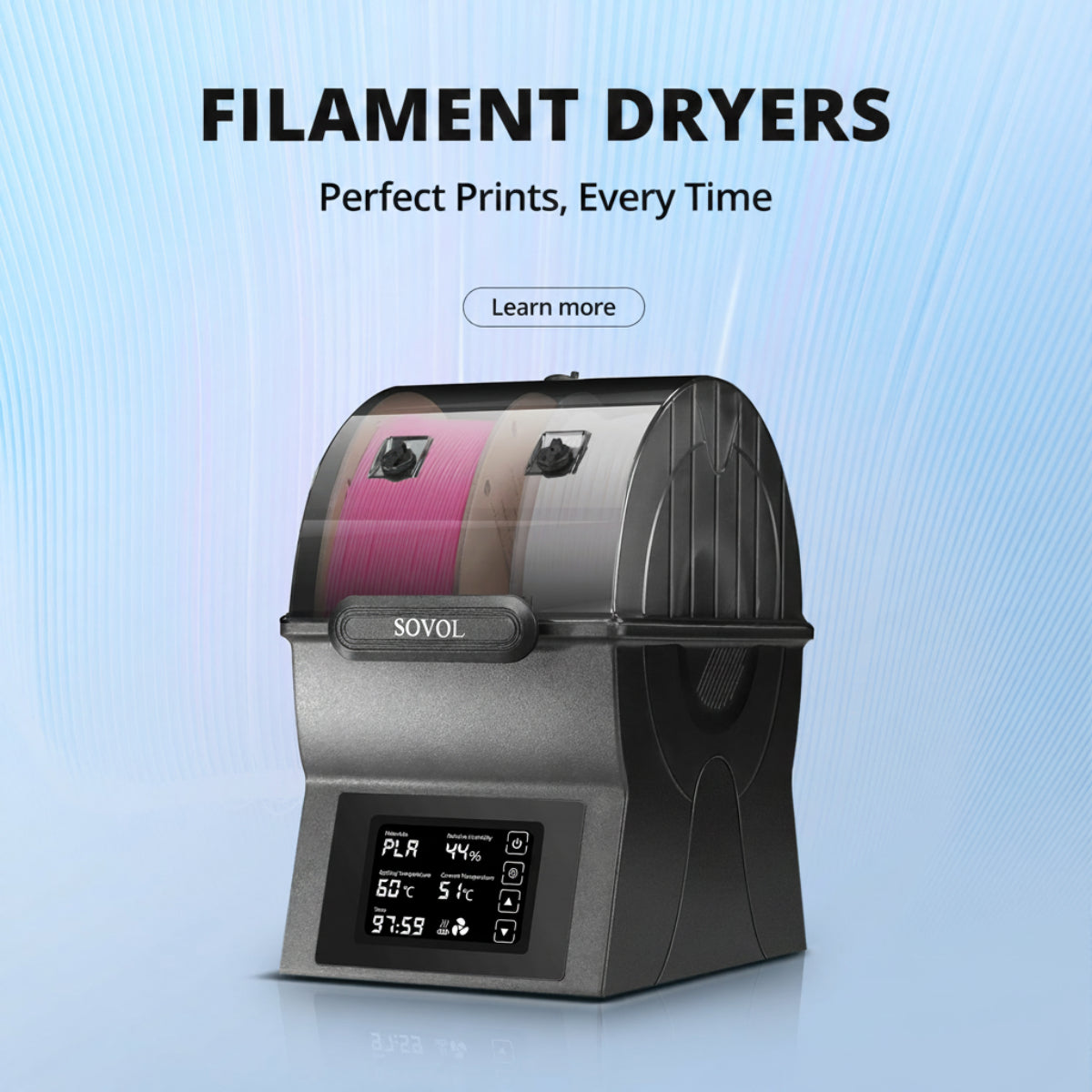
Pro Tip: If you’re printing with PETG, dry filament and consistent extrusion matter more than people expect—because tiny gaps become leak paths. A filament dryer can help with repeatability; for example, SOVOL sells a Sovol filament dryer that makers often use as part of a “consistent PETG” workflow.
Best practice #5: print like you’re building a seal, not a sculpture
A visually perfect print can still leak.
Here are the FDM-specific choices that affect sealing performance:
Use geometry that’s friendly to your printer
- Avoid long, thin lid edges that warp.
- Prefer chamfers and radii that print cleanly.
- Keep the sealing surface simple and continuous.
Add enough walls (and don’t rely on sparse infill)
For enclosures, perimeters do the real work. Sparse infill can create internal paths for moisture to migrate.
Pick a print orientation that protects the seam
Print orientation changes where layer lines land and how strong the joint is under screw compression. When in doubt:
- orient parts so the sealing land prints cleanly,
- avoid putting the sealing surface on the “worst-supported” side.
Use inserts where repeated opening is expected
If you’ll open the box often, consider heat-set inserts so screw holes don’t slowly degrade.
Design tolerances with real clearance
A gasket needs room to compress. If your lid “barely fits,” you’ll either distort the gasket or distort the lid.
A quick validation checklist before you deploy it in the garden
You don’t need a lab to learn a lot.
|
Test |
What you’re looking for |
Practical method |
|---|---|---|
|
Seam check |
uneven gasket compression |
tighten screws gradually in a cross pattern; inspect the gasket seat |
|
Spray test |
leaks at seam or cable entry |
light hose/spray bottle for several minutes; then open and inspect |
|
Condensation check |
moisture buildup over days |
place a small humidity indicator card or desiccant indicator inside |
|
Cable strain test |
entry seal movement |
tug gently, then re-check the gland/gasket position |
If you can, run the box outdoors for a week before committing to a permanent mount.
FAQ
Can a 3D printed electronics enclosure be truly waterproof?
It can be very resistant to water, but “truly waterproof” is hard to guarantee without controlled testing—and 3D prints are porous to some degree. A more realistic goal is “reliable in rain + humidity,” with a design that anticipates condensation.
Do I need IP67 for a smart garden sensor?
Only if you realistically expect temporary immersion (puddles, flooding, buried installs). For most above-ground mounts, designing toward IP65-style rain exposure (and validating) is usually the right balance of effort and reliability.
Is PETG good enough outdoors?
Often, yes—especially for shaded installs. For constant sun exposure, ASA is usually the more robust long-term choice, but it’s also more demanding to print.
Key Takeaways
- Define your exposure target (rain vs jets vs immersion) and use IP ratings as a practical reference—not a marketing label.
- Seal the seam with a real gasket and even clamping pressure.
- Cable entry is the most common leak path; use glands + strain relief.
- Condensation is normal outdoors—design for desiccant and maintenance.
- Material choice matters: PLA is risky outdoors; PETG is the baseline; ASA is for heavy sun/weather.
Next steps
If you plan to print weather-capable materials (like ASA/ABS), a printer enclosure can make the process more consistent—SOVOL’s collection of printer enclosures is one place to see common enclosure formats makers use.