
Printing large cosplay props on an FDM printer sounds simple until you try it: a helmet that won’t fit, a chest plate that warps halfway through, or a 36‑hour print that fails at hour 34.
A 500mm+ CoreXY can solve a very specific pain: printing big pieces in fewer seams while keeping print times reasonable. That’s why people search for the best high speed CoreXY 3D printer for large scale props.
But at this size, the wrong machine (or the wrong expectations) can turn into a reliability tax for your whole maker space.
This guide is written for ambitious maker communities—clubs, labs, and shared workshops—who want to choose a large format CoreXY 3D printer that can actually keep up with big props.
In other words: if you’re trying to find the best high speed CoreXY 3D printer for large scale props, this will help you avoid the common expensive mistakes at 500mm+.
Start here: do you truly need a 500mm+ CoreXY?
Before you spend for size, sanity-check the requirement.
You likely do need 500mm+ if:
- You regularly print helmets, armor shells, large creature parts, oversized display pieces, or jigs that can’t be split without weakening them.
- You want fewer seams because you’re doing team builds (consistent quality, less post-processing time).
- You run a queue: multiple users printing large parts back-to-back.
You might not need it if:
- Your biggest parts can be split cleanly and assembled without visible seams.
- The large part is occasional, and you’d rather keep a smaller printer dialed-in.
Sovol has a practical guide on seam placement and alignment pins in How to Split Large 3D Models for FDM Printing. If you read that and think, “We can totally do that,” you may be able to stay smaller and simpler.
CoreXY, input shaping, volumetric flow: the three terms that decide “real speed”
“High speed” isn’t just a number on a product page.
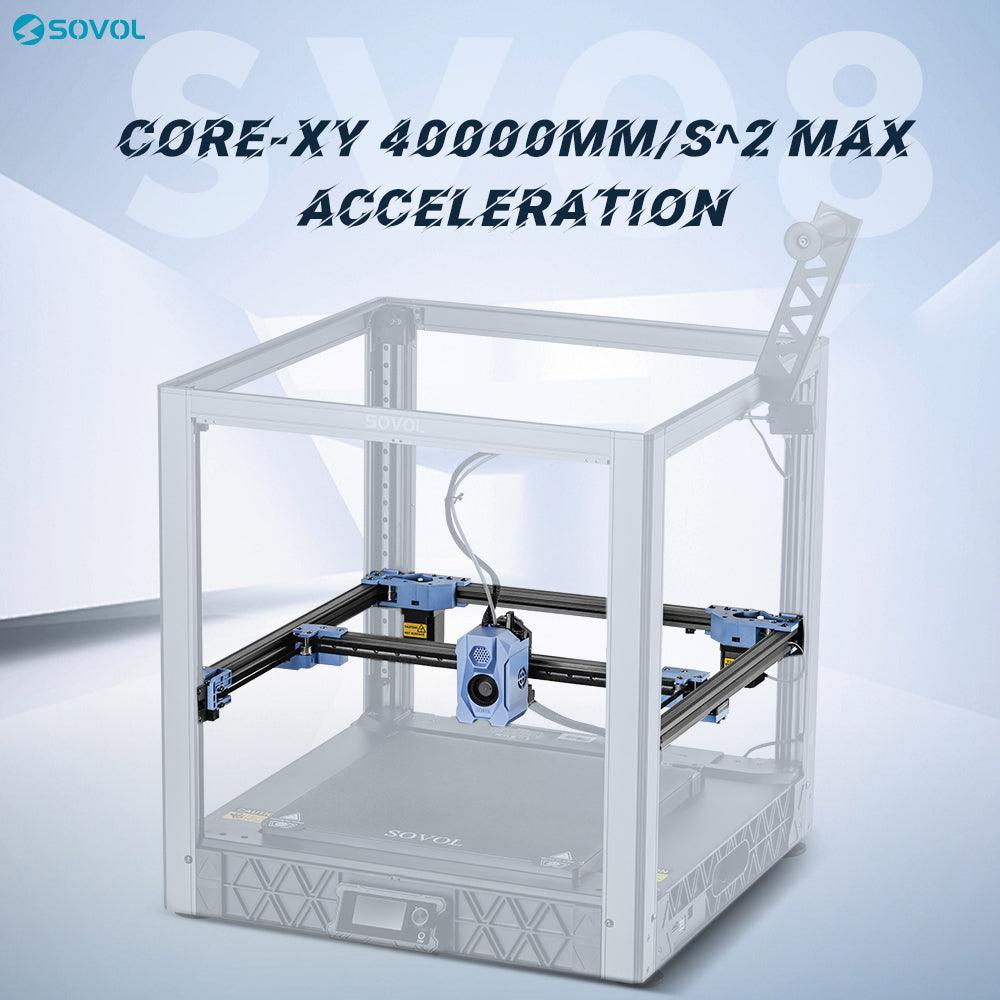
- CoreXY: a motion system where the X/Y motors move the toolhead using belts while keeping moving mass relatively low. That helps with speed and accuracy—especially on smaller printers.
- Cosplay prop 3D printer (what you actually want): a machine that can reliably print large shells with decent surface finish and minimal warping—speed matters, but uptime matters more.
- Input shaping (common in Klipper setups): a way to reduce ringing/ghosting by compensating for vibration.
- Volumetric flow (mm³/s): how much plastic your hotend can melt and push reliably. For large props, this often becomes the bottleneck long before “max travel speed.” (Some buyer guides will also call this out as high flow hotend capability.)
If your flow rate is the limit, a printer can move at 500–700 mm/s but still need to print outer walls much slower to keep quality.
Pro Tip: For big props, going from a 0.4mm nozzle to 0.6mm or 0.8mm can cut print times dramatically—if your hotend can keep up with the required flow.
What changes (and gets harder) at 500mm+
When you’re shopping for the best high speed CoreXY 3D printer for large scale props, this is the part most “best printer” lists skip: size changes the engineering constraints.
A 500mm CoreXY is not “a 350mm printer, but bigger.” The physics change.
Here are the big practical shifts:
1) Rigidity becomes a first-class feature
A bigger frame flexes more. Flex shows up as artifacts, layer shifts, or quality falling apart when you try to print fast.
What to look for:
- A frame designed for the size (not a “scaled up” light frame)
- Linear rails or robust motion components
- Real attention to belt path and belt stiffness
2) Belt behavior matters more than you expect
Longer belts are harder to tension consistently, and belt stretch can blunt acceleration and repeatability.
What to look for:
- Belt width and tensioning design that’s clearly meant for large format
- Easy access for re-tensioning (because you will do it)
3) Heat-up time and thermal expansion can ruin big prints
Large beds take time to heat evenly. Big enclosures take longer to stabilize. Thermal expansion can change first-layer behavior mid-print.
What to look for:
- High-power bed heating (so you’re not waiting forever)
- Enclosure or chamber options if you plan to print warp-prone materials
- Consistent first-layer calibration tools
⚠️ Warning: If your goal is large ABS/ASA props, chamber strategy is not optional. A big bed alone doesn’t prevent warping.
The buyer’s checklist: what to evaluate for large-scale props
If you’re comparing options for the best high speed CoreXY 3D printer for large scale props, this checklist is the fastest way to separate “big and fast on paper” from “big and dependable in real life.”
You can use this as a scoring sheet when comparing options.
Build volume: usable space, not just the headline number
- Verify the real volume with any enclosure kit installed.
- Check whether cable chains, toolhead protrusions, or bed clips reduce usable area.
Bed system: power, flatness, and repeatability
For big props, the bed is your foundation.
- Higher bed power helps with faster, more even heat-up.
- A thick, stable bed plate helps resist warping.
- Reliable probing matters because a 500mm bed that’s “slightly off” becomes a first-layer disaster.
Hotend + extrusion: can it push enough plastic for big parts?
Large props reward thicker lines and bigger nozzles.
- Check max nozzle temperature if you want engineering filaments.
- Look for a stated flow-rate capability—and treat it as a best-case claim unless you can verify it with real-world tests.
Calibration + sensors: shared spaces need automation
Maker spaces aren’t one-person machines. You need repeatability.
Look for:
- Fast bed mesh / scanning
- Filament runout detection
- Simple “get back to printing” workflows after maintenance
Firmware & ecosystem: open vs locked matters at this size
For communities, open ecosystems help with:
- troubleshooting
- upgrades
- spare parts flexibility
- consistent slicer profiles
If you choose a closed ecosystem, you’re trading flexibility for convenience. That can be fine—just be clear on the trade.
Red flags that often show up with big “fast” printers
- “700 mm/s” marketing with no mention of flow limits, accel limits, or quality trade-offs.
- A large bed with weak heating (long warmup, uneven first layer).
- Hard-to-service belt paths or motion components.
- Little community adoption (harder to find fixes when something weird happens).
Example shortlist: 500mm+ options makers commonly consider
This is not a lab-tested ranking—think of it as a starting shortlist to run through the checklist above.
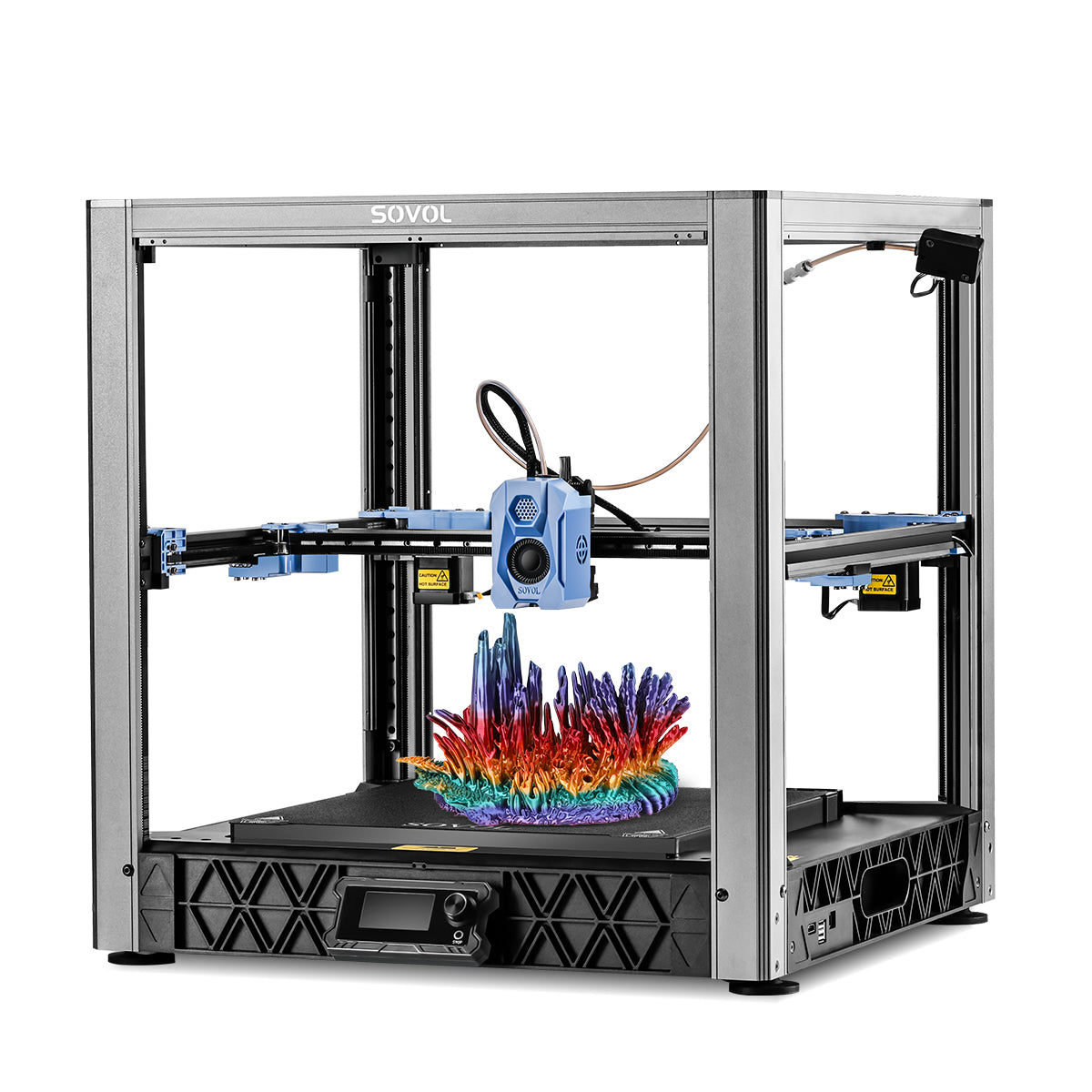
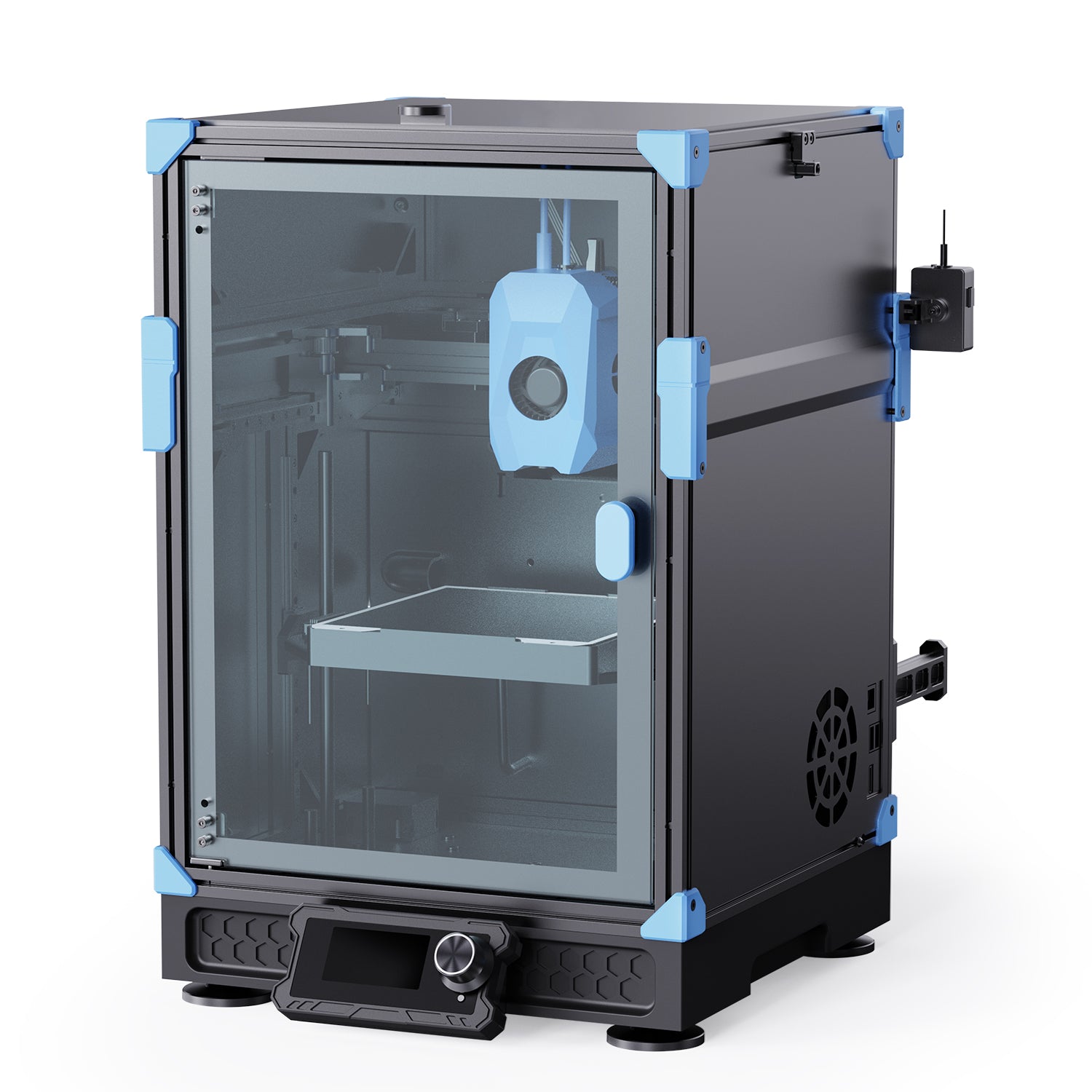
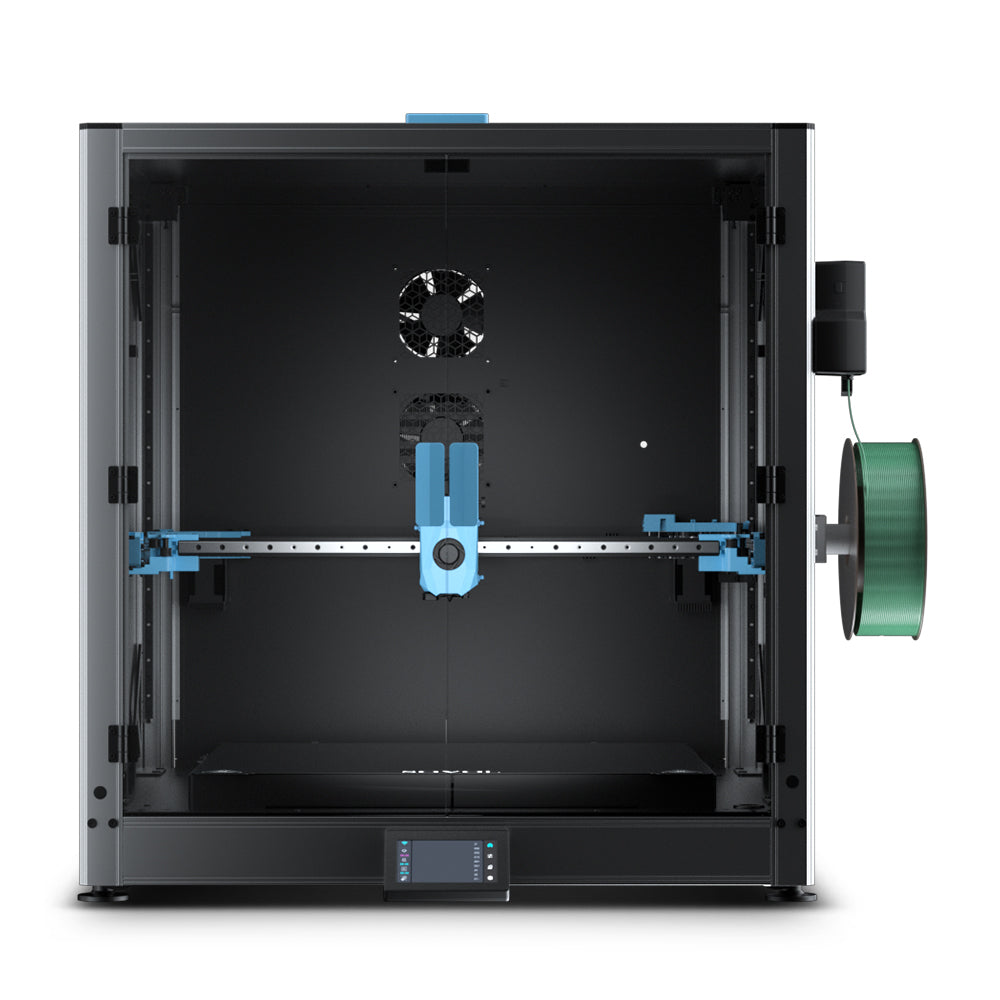
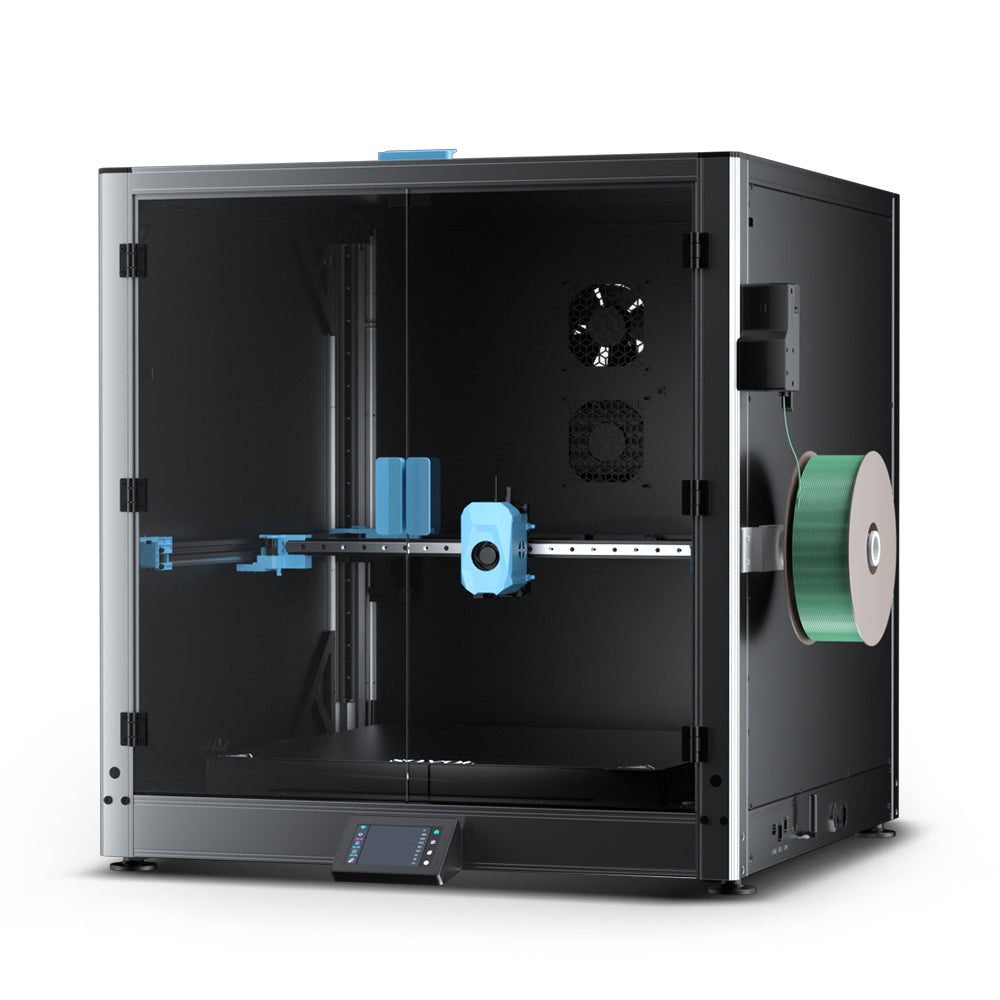
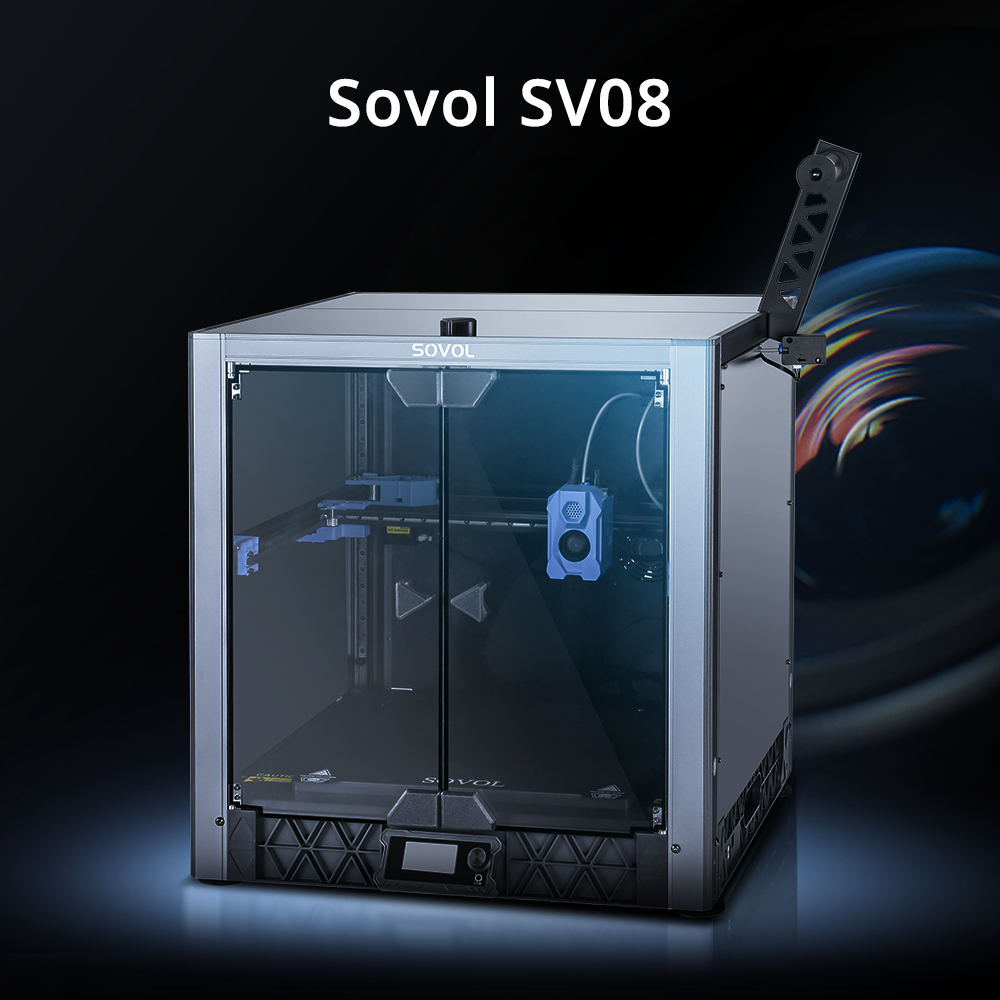
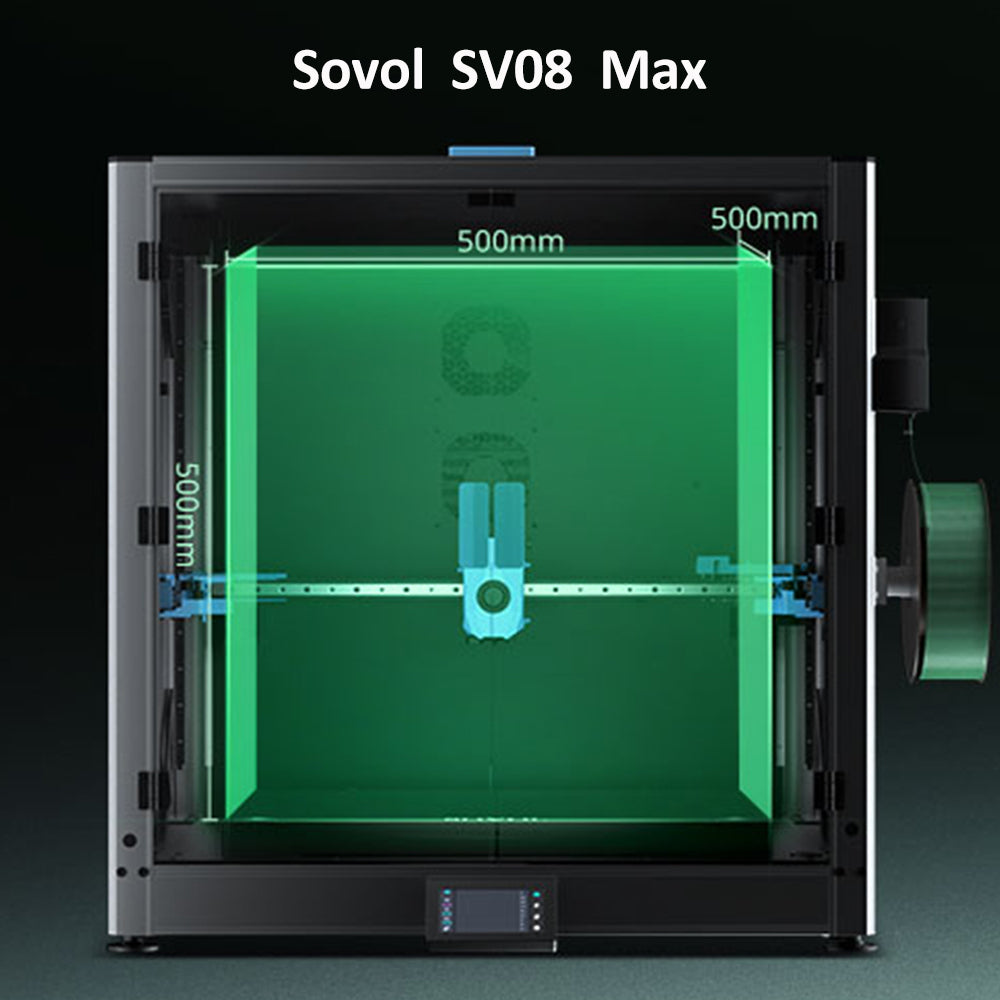
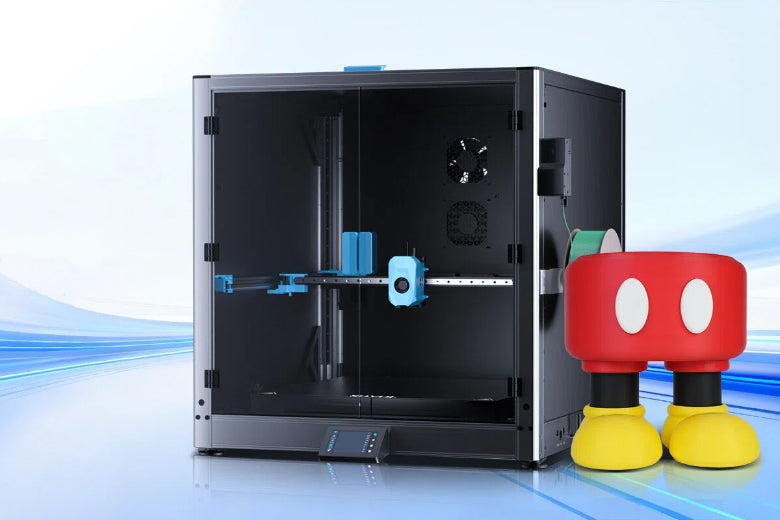
Sovol SV08 Max (500×500×500) — a spec-forward, open-ish large CoreXY example
If your priority is big build volume with modern convenience features, the Sovol SV08 Max is worth evaluating.
What stands out (from Sovol’s published specs):
- Build volume: 500×500×500mm (or 500×500×450mm with enclosure kit)
- CoreXY with full linear rails
- Klipper control
- Advertised max speed 700 mm/s and advertised max flow rate 50 mm³/s
- 8mm aluminum bed with 1300W heating and up to 100°C bed temperature
- Hotend rated up to 300°C
- Built-in camera for remote monitoring and time-lapse
- Contactless eddy current scanning for bed leveling + automatic calibration
How to interpret this as a buyer:
- Treat max speed/flow as ceiling numbers. For big props, ask: “What speeds can I hold on outer walls with acceptable surface finish?”
- If your maker space prints ABS/ASA at scale, evaluate chamber/enclosure needs early.
DIY / kit ecosystem options (advanced): RatRig- and Voron-style builds
Many experienced builders look at kit ecosystems for large CoreXY because they can tune and repair everything.
But for 500mm+ builds, the Voron community itself flags scaling as an expert-level project with more trade-offs and less standardization than 250–350mm builds.
If you’re considering a 500mm build, read the Voron community discussion on downsides when the printer is bigger than 350mm before you commit.
If your group has:
- strong builders,
- spare time for tuning,
- and you want maximum mod-ability,
If your group needs:
- predictable uptime,
- easy onboarding,
- and consistent “any member can run it” workflows
Other 500mm-class names you’ll see (mixed architectures)
If you want more examples of 500mm-class machines to run through the checklist (again: not performance proof), this list includes models like Comgrow T500, Tronxy X5SA-500 Pro, and Two Trees Sapphire Plus 500: 500x500x500 3D Printers: 7 Best Options.
A simple decision path for maker communities
If you want fewer seams and higher throughput:
- Start with build volume (500mm+ true usable).
- Validate bed system (power + flatness + probing).
- Validate flow capability (or plan for nozzle/hotend upgrades).
- Decide chamber strategy based on materials (PLA/PETG vs ASA/ABS).
- Choose based on your maintenance reality: “Who fixes it when it’s down?”
Next steps
If you want, share your typical props (helmet/armor/weapon), your primary filament (PLA/PETG/ASA), and how many users share the machine. I can turn this into a one-page scoring sheet your group can reuse.
Or, if you’re already leaning toward a 500mm CoreXY, start by reviewing the published specs and ecosystem notes for the Sovol SV08 Max and compare it to your top 2–3 alternatives using the checklist above.