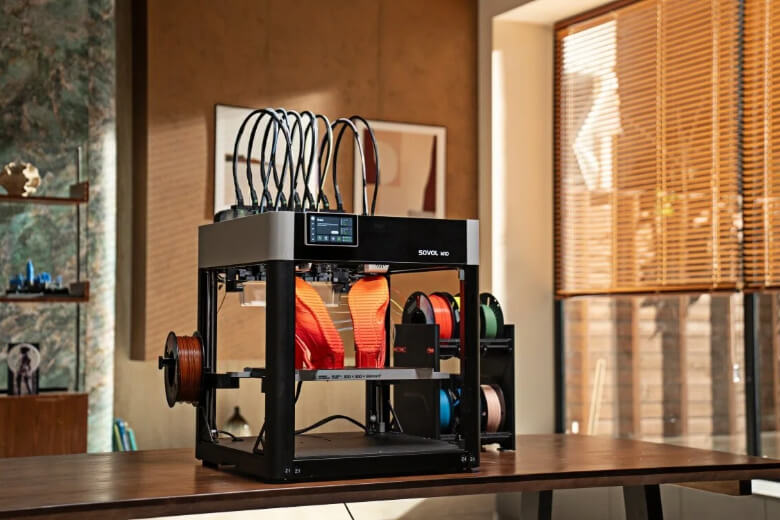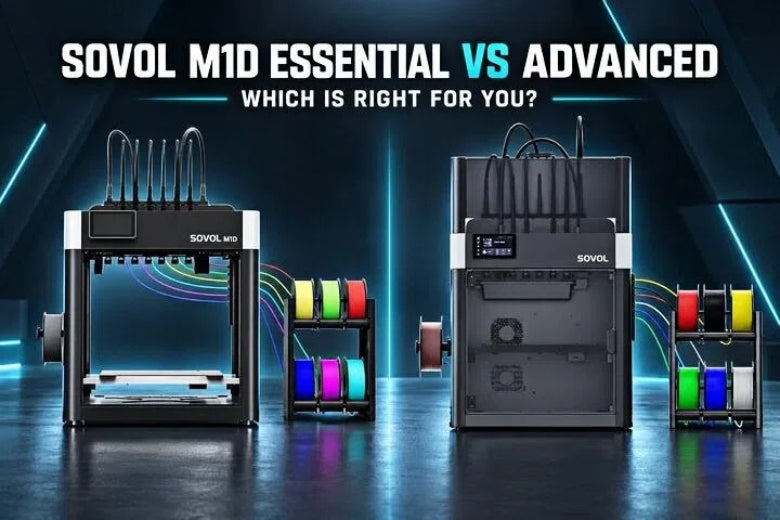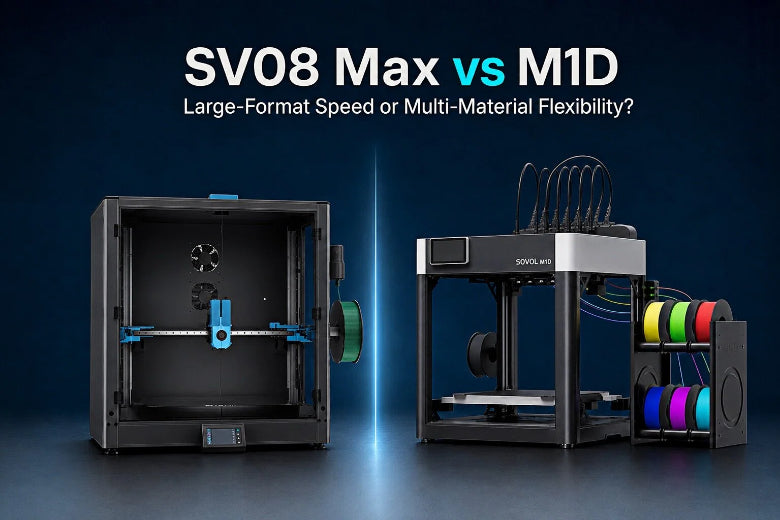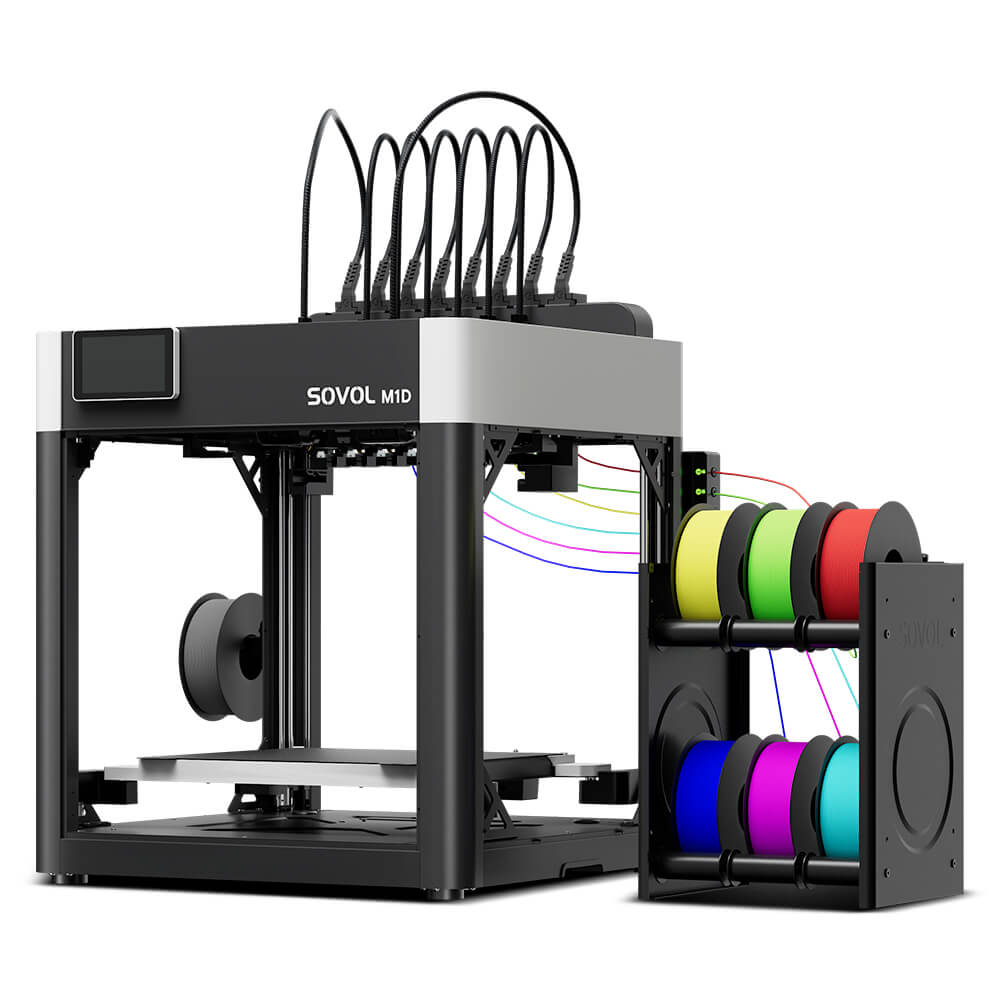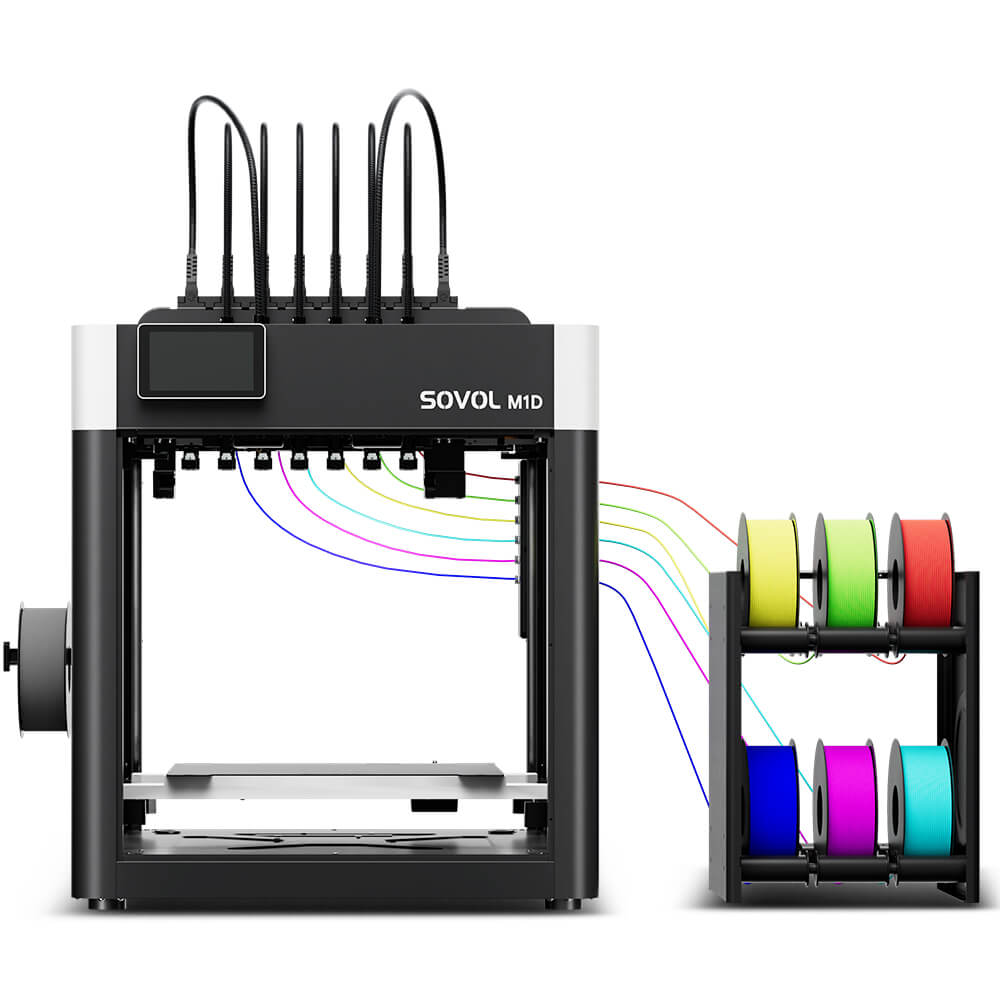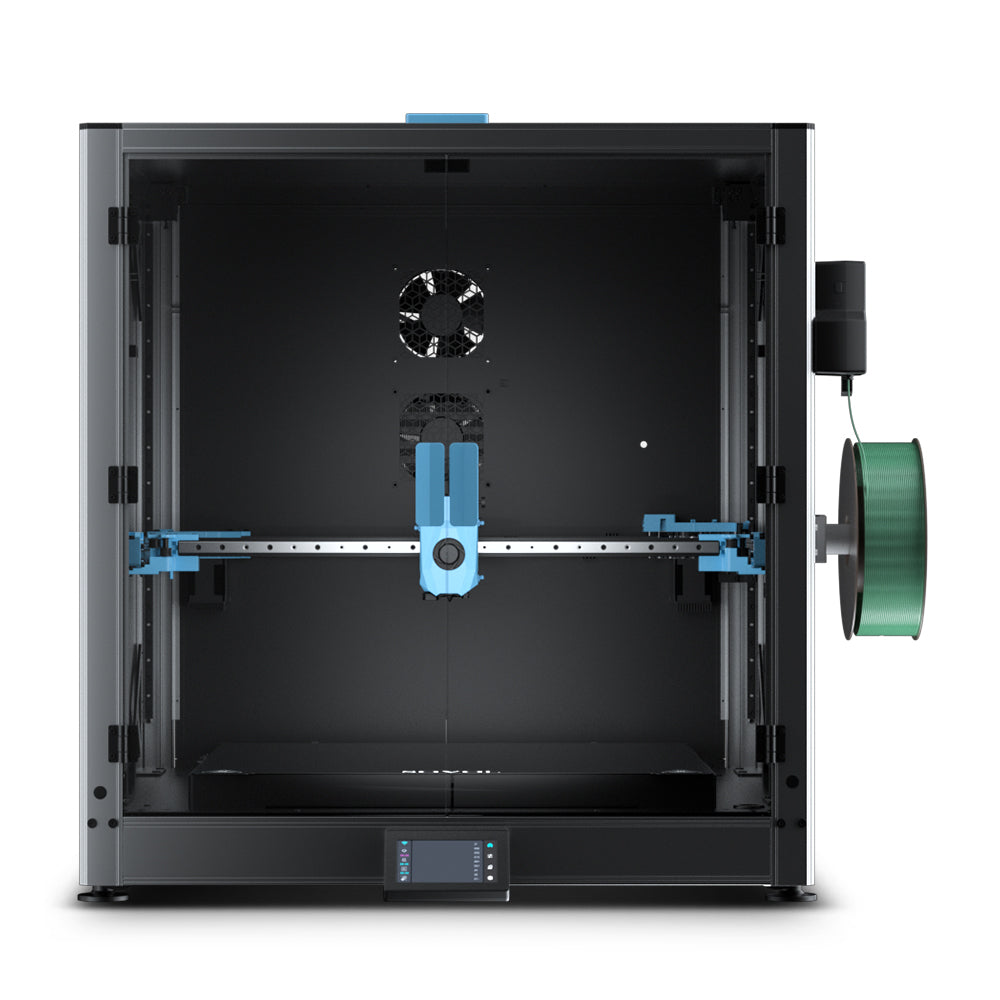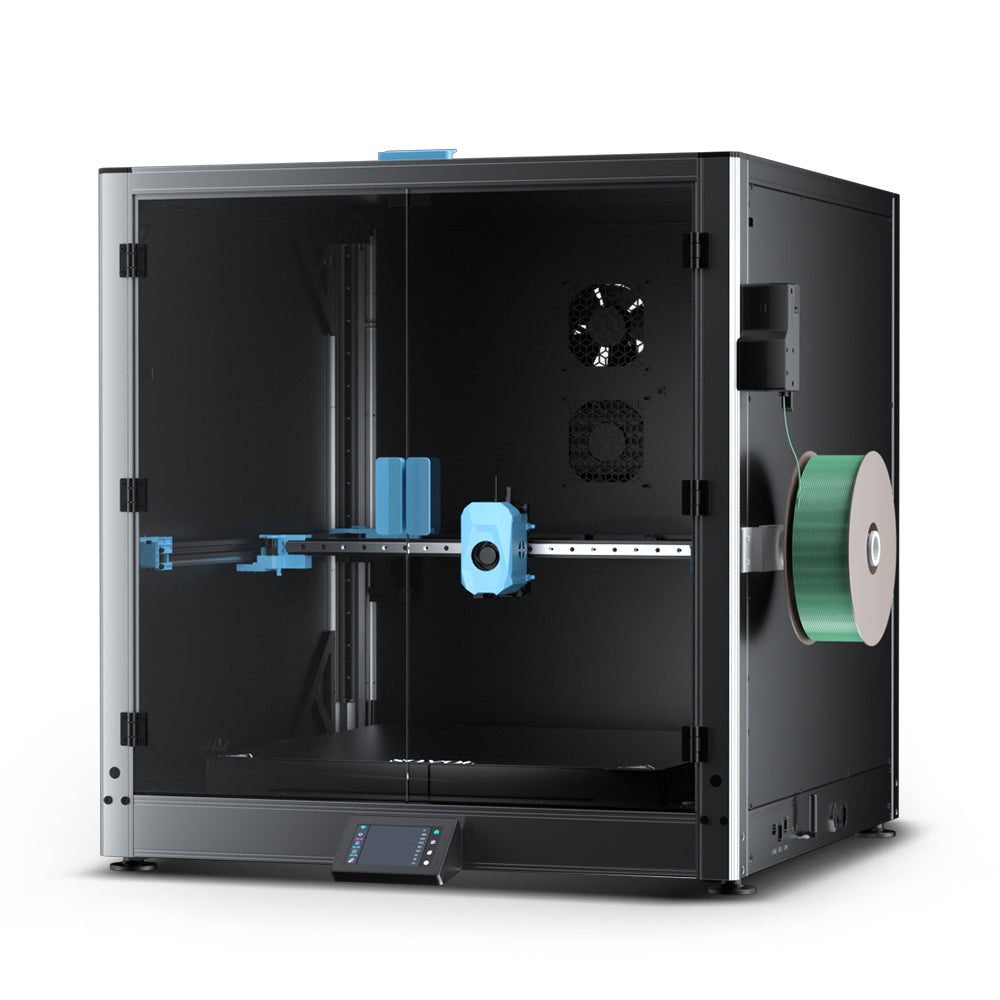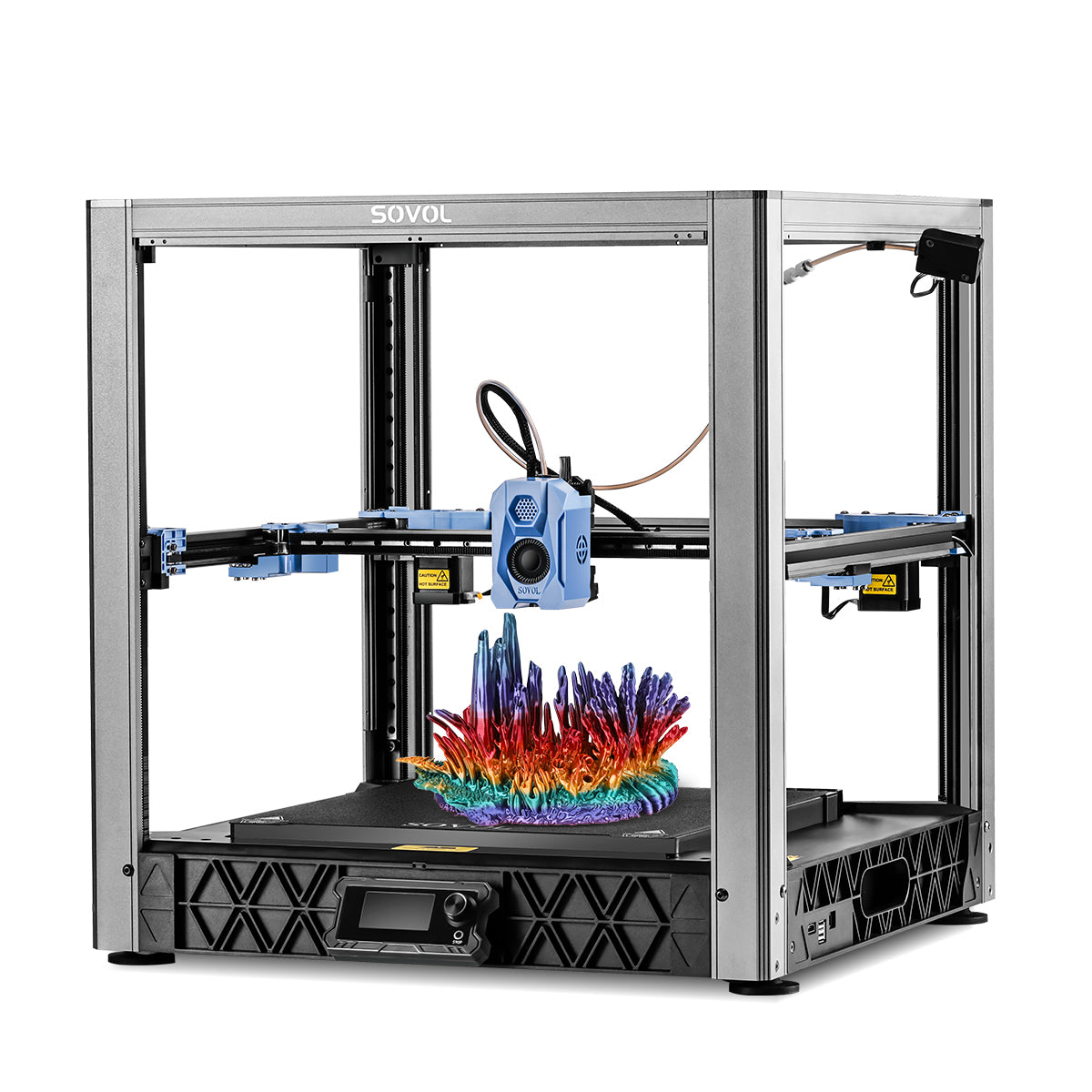




What actually makes it work is a sequence of tool changes (switching which filament is active) and cleanup (making sure the nozzle isn’t still carrying the last colour). How your printer does those two jobs depends on the method: manual swaps, an MMU-style selector, an external splicer, dual extruders, IDEX, or a toolchanger.
Key takeaways
- Multi-colour on FDM is mostly about how you switch filament/tools and how you keep colours clean after each switch.
- If you’re using a single nozzle, expect a tradeoff: cleaner colour transitions usually mean more purge waste (prime tower/purge block).
- If you’re using two nozzles (dual/IDEX) or a toolchanger, you can reduce colour contamination, but you take on more calibration work.
- For reliable multi-colour prints, most failures come from the basics: wet filament, poor tip shaping, oozing, and inconsistent purge settings.
Multi-colour vs multi-material vs “gradient” colour
People mix these terms up, and it matters because the workflow changes.
- Multi-colour 3D printing: same base material (often PLA/PETG), different colours. Goal is visual separation.
- Multi-material 3D printing: different polymers (for example rigid + flexible). Goal is functional properties, but compatibility becomes a bigger risk.
- Gradient / rainbow filament: one strand that changes colour along its length. The printer isn’t switching tools; the filament itself is.
If you want a logo, labels, or clean colour boundaries, you usually need real tool changes. If you want “colour variation” on a vase, gradient filament can be the easiest win.
How does multi color 3D printing work? Tool changes + purging
Every method boils down to two questions:
- How does the printer select the next colour? (swap filament, select a different feed, move to a second nozzle, dock a new toolhead)
- How does it avoid dragging old colour into the next one? (purge, wipe, prime tower, purge chute, or simply using a different nozzle)
On a single nozzle, you’re pushing one colour out of a hot metal tube and replacing it with another. That transition can’t be instant. That’s why slicers often create a prime tower (or purge block): a sacrificial structure where the nozzle can purge until the new colour is clean.
Prusa calls this a “smart wipe tower” in Prusa’s wipe tower documentation, and the idea is straightforward: you intentionally waste a bit of filament so the actual model gets crisp colour boundaries.
The main methods (and what’s happening under the hood)
1) Pause and swap (manual colour changes)
This is the simplest: the printer pauses at a specific height, you unload and load a new colour, then resume.
What it’s good at:
- Layer-based colour changes (for example a nameplate: black base, white text on top)
- Occasional swaps, not dozens of them
Where it bites you:
- You’re the “automation”. Miss the timing and you get a blob, a crash, or the wrong layer.
- If you don’t purge enough after the swap, the first few millimetres of extrusion will be muddy.
2) Firmware-assisted swaps (M600 on Marlin)
If your printer runs Marlin (or a Marlin-based build), the M600 filament change command can automate the pause, park, unload/load routine.
Marlin describes M600 as initiating a filament change procedure that moves the head away from the print, ejects filament, waits for new filament, then resumes.
If you want the canonical behaviour and parameters, use Marlin’s M600 Filament Change documentation (2026).
What it’s good at:
- Cleaner, repeatable swaps compared to ad-hoc manual pausing
- Prints where you only need a handful of colour changes
Where it bites you:
- Still manual intervention
- Still needs purge tuning, especially if you care about crisp colour boundaries
3) Single-nozzle multi-feed selector (MMU-style)
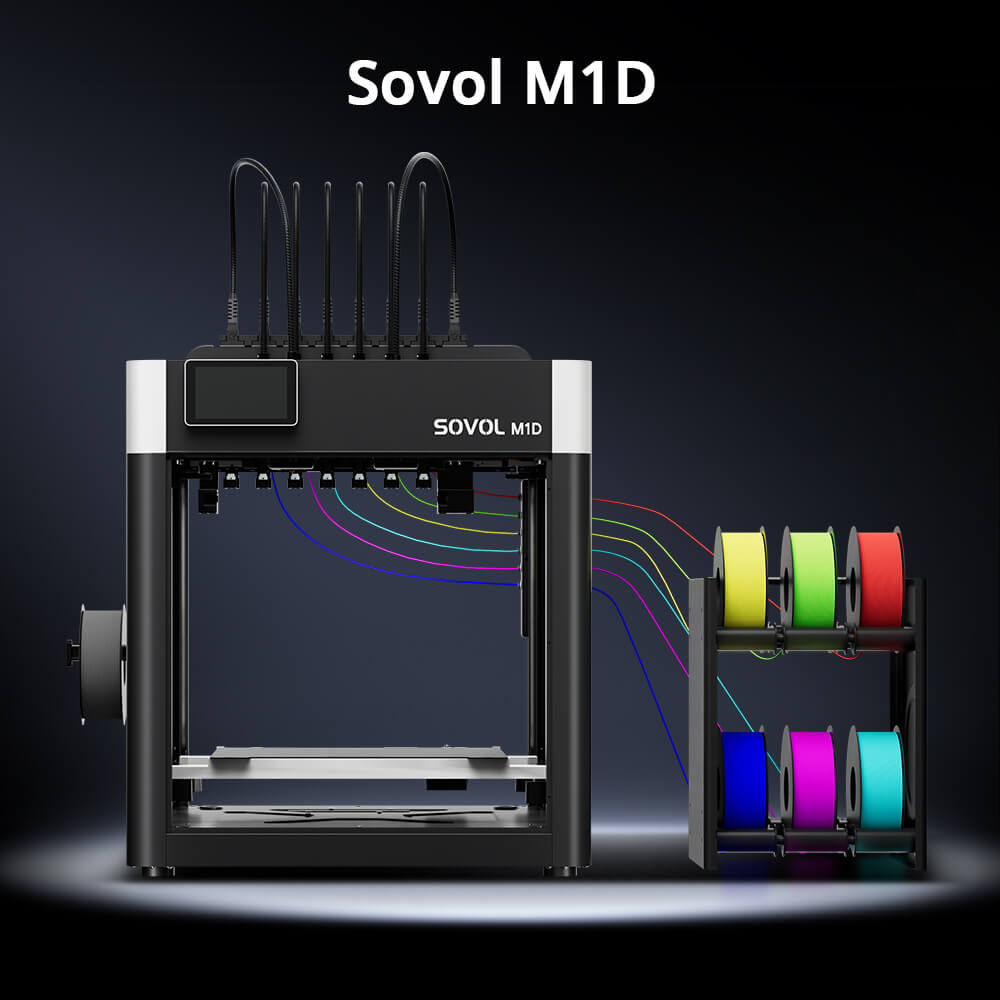
An MMU-style setup feeds multiple filaments into one hotend, then unloads/reloads filament for each colour change.
Mechanically, you’re doing a lot of “tip work”: unload, form a clean tip, pick the next filament, load, purge until clean.
The practical implication is unavoidable: you’ll almost always need a wipe/prime strategy. Prusa’s knowledge base covers how the slicer side approaches this in Prusa’s multi-material slicing guidance.
What it’s good at:
- True automatic multi-colour on a single-nozzle printer
- High-colour-count prints when tuned well
Where it bites you:
- More moving parts and more failure points (selector friction, filament path drag, inconsistent tips)
- Purge waste can be significant, especially with frequent colour changes
4) External splicer (Palette-style approach)
Instead of swapping at the extruder, an external splicer creates a single “programmed” filament strand by cutting and joining segments.
From the printer’s point of view, it’s just one spool. The complexity moves to calibration: timing the splices to match the toolpath.
What it’s good at:
- Multi-colour without modifying the printer’s hotend or adding extra toolheads
Where it bites you:
- Calibration is everything; bad timing means colours shift location
- You still need a purge strategy at the start and during transitions, depending on setup
5) Dual extrusion and IDEX (two nozzles)
Dual-extruder printers give you two separate melt zones. That reduces colour contamination compared to single-nozzle methods because each colour can stay loaded in its own nozzle.
IDEX (Independent Dual Extruder) takes that further: each extruder is on its own carriage and can park independently. That helps with oozing control, collision avoidance, and productivity modes.
If you want a clean definition of the concept and common modes, BCN3D outlines IDEX on their BCN3D IDEX technology overview.
What it’s good at:
- Multi-colour and support-material workflows with less filament swapping
- Cleaner transitions than single-nozzle swapping for many prints
Where it bites you:
- You inherit calibration work: tool offsets, nozzle heights, and wipe routines
- Oozing from the parked nozzle can still mark the print if your idle temperatures and wipe settings aren’t dialled in
6) Toolchangers (swap whole toolheads)
A toolchanger docks and undocks complete toolheads. Think of it like a printer that can pick up a different hotend when it needs it.
That’s powerful because it keeps materials isolated and makes “tool” changes cleaner. It’s also mechanically demanding.
E3D’s ToolChanger project is documented publicly in E3D’s ToolChanger project files and backgrounded in E3D’s motion system and tool-changer R&D post (2018).
What it’s good at:
- Clean multi-tool workflows
- Multi-material setups where you want separation between materials
Where it bites you:
- Setup complexity: docking precision, offsets, and repeatability
- More to maintain and troubleshoot
Which method should you use? A decision table
Use this as a starting point, then sanity-check with your own tolerance for tuning.
|
If your goal is… |
Best starting method |
Why |
Watch-outs |
|---|---|---|---|
|
A 2-colour logo that changes by layer |
Pause + swap or M600 |
Low hardware complexity |
Manual timing, purge after swap |
|
4–5 colours on a single-nozzle printer |
MMU-style selector |
Automated tool changes |
Purge waste, jams, tip consistency |
|
Multi-colour with minimal printer mods |
External splicer |
Printer stays “single filament” |
Calibration and splice timing |
|
Clean support material + colour |
Dual/IDEX |
Separate nozzles reduce contamination |
Offsets, idle ooze |
|
True multi-material across tools |
Toolchanger |
Isolation between tools/materials |
Mechanical + calibration complexity |
What the slicer is really doing (and why “colour painting” matters)
Slicers can represent colours in a few common ways:
- By layer: the slicer inserts a pause or filament-change command at a Z height. Clean and predictable.
- By region: the model is split into parts (or you paint regions) and the slicer assigns each region a tool/colour.
- By purge strategy: the slicer decides when and how much to purge to clean the nozzle.
For advanced multi-colour work, the purge strategy is where your time and filament go. Too little purge equals colour bleed. Too much purge means longer prints and more waste.
Failure modes that usually ruin multi-colour prints
Colour bleed at boundaries
Common causes:
- Not enough purge volume
- Transitioning between colours with very different pigmentation
Fixes:
- Increase purge for the problem transitions only (don’t blanket-increase everything)
- Add a dedicated wipe wall/prime tower if your slicer supports it
Jams or failed loads on MMU-style systems
Common causes:
- Inconsistent filament tip shape after unload
- Filament path friction (tight bends, worn PTFE)
Fixes:
- Keep the filament path smooth and short
- Tune unload/retract settings until tips are consistent
Oozing from an idle nozzle (dual/IDEX)
Common causes:
- Idle nozzle too hot
- No wipe/park routine
Fixes:
- Lower standby temperature if your material allows it
- Use wipe routines and keep travel paths away from finished surfaces
Long-print reliability collapse
If a 4-hour print works but a 16-hour multi-colour print fails, it’s often not “the colours”. It’s all the small risks stacking up.
Fixes:
- Keep filament dry and consistent. Wet filament is a silent failure multiplier.
- If you’re doing lots of tool changes, do a short “stress test” print first.
One practical way to reduce moisture-related failures is to manage storage and drying. If you want a starting point for hardware that helps, see SOVOL filament dryer options.
Next steps (if you want multi-colour without the pain)
- Start with a model that’s forgiving: big colour areas, not tiny text.
- Limit the number of colour changes per layer until your purge settings are stable.
- If you’re comparing approaches, it’s worth reading SOVOL’s overview on SOVOL’s multi-colour printing explainer and then mapping it to your own printer’s hardware.
FAQ
Does multi-colour always mean a “multi-material” printer?
No. You can do multi-colour on a single-nozzle printer with swaps or a multi-feed selector. Multi-material is about different polymers, which adds compatibility issues.
Why do multi-colour prints waste so much filament?
Because a single nozzle needs to purge the old colour out of the melt zone before the new colour is clean. Prime towers and purge blocks are basically cleaning tools.
Can I do multi-colour without a prime tower?
Sometimes. With manual swaps you can often purge off to the side before resuming. With frequent automated colour changes, a prime tower (or purge chute) is often the cleanest way to keep colours crisp.
Is IDEX better than a single-nozzle MMU?
It depends on what you value. IDEX can reduce colour contamination because each nozzle can stay loaded, but it adds mechanical alignment and ooze-control work. An MMU-style setup is one nozzle (simpler motion), but it can add lots of purging and filament-handling complexity.