You might ask, what is petg filament? It is a kind of plastic called polyethylene terephthalate glycol-modified. Makers add glycol to PET. This makes petg filament stronger, more bendy, and clearer than many other plastics. This material does not get damaged by chemicals or water. It is very clear and stays strong when stretched or pressed. More than 60% of people who use 3D printers pick petg for their work. You will find petg simple to use. It sticks together well and bends without breaking. Many people like petg because you can recycle it. It also has a high tensile strength of over 5000 psi.
Most common reasons why people like petg:
- It is tough and easy to use
- It gives good value for the price
- It can be recycled for green projects
Key Takeaways
- PETG filament is tough and bends easily. It is simple to print. Beginners and experts can use it.
- This material does not get damaged by chemicals or water. Prints made with it last a long time. You can use them in many places.
- PETG can be recycled. It helps with eco-friendly projects. Check your local rules first. Not every recycling center takes it.
- Use PETG for parts that need to bend. It can handle impacts well. It bends better than PLA. It is as strong as ABS.
- To stop printing problems like stringing, change your printer settings. Adjust the temperature and retraction.
What is PETG Filament
PETG Filament Definition
Many people use PETG filament for 3D printing. PETG filament is a plastic made from PET with glycol added. Glycol changes the plastic so it is tough and flexible. It is also clear. PETG filament does not get damaged by chemicals or water. You can use it for lots of projects. It bends but does not break easily. Glycol makes PETG filament less brittle than regular PET. When you print, layers stick together well and warping is low.
Tip: PETG filament is good for beginners and experts. You can print parts that need to be strong and flexible.
Here is a simple table showing how glycol changes PETG filament:
|
Property |
Description |
|---|---|
|
Chemical Structure |
Glycol-modified PET with cyclohexanedimethanol (CHDM) |
|
Crystallinity |
Glycol lowers crystallinity |
|
Processing Characteristics |
Easier to process, less stress when cooling, melt stays stable |
|
Mechanical Properties |
Tougher, resists moisture, handles heat okay |
|
3D Printing Advantages |
Layers stick well, warping is low, extrusion is steady |
How PETG is Made
PETG filament is made by mixing PET with glycol. Makers melt PET and add glycol. This changes the plastic’s structure. Glycol makes PETG filament more bendy and less brittle. Extrusion is smoother and layers bond better. The structure lets PETG filament bend and take hits.
- Glycol is added during PET polymerization to make PETG filament.
- Glycol makes PETG filament less brittle and easier to extrude.
- The process creates a flexible material that bonds well between layers.
- Glycol gives PETG filament more flexibility and impact resistance.
- The structure helps with thermoforming and lowers brittleness.
Why PETG is Used in 3D Printing
People pick PETG filament for 3D printing because it has many benefits. PETG filament is stronger than PLA and almost as tough as ABS. It bends better than PLA and resists chemicals more than other filaments. PETG filament stands up to acids and bases. You can use it for parts in harsh places. It is easier to print than ABS and layers stick well. PETG filament lowers delamination and warping, so prints are more reliable.
Here is a quick comparison table:
|
Advantage |
PETG |
Other Filaments |
|---|---|---|
|
Strength |
Stronger than PLA, like ABS |
Often not as strong as PETG |
|
Flexibility |
Bends better than PLA |
Usually less flexible |
|
Chemical Resistance |
Handles acids and bases |
Not as resistant |
|
Ease of Printing |
Easier than ABS |
PLA is easier, but not as tough |
|
Layer Adhesion |
Layers stick well, less delamination |
Often not as good |
PETG filament is used in many 3D printing jobs. It is strong, flexible, and easy to print. You get parts that work well and last a long time.
PETG Filament Properties
Strength and Toughness
PETG filament is strong. It can hold heavy things. It does not break easily. Parts made with PETG last a long time. They stay strong after many uses. PETG is a top pick for 3D printing projects because of its strength.
Here is a table showing tensile strength for PETG:
|
Material |
Tensile Strength (MPa) |
|---|---|
|
PETG |
30.1 - 45.3 |
|
PETG |
45 - 55 |
PETG filament is tougher than PLA. It is as tough as ABS. PETG bonds layers better than ABS. Prints made with PETG do not break easily. You can use PETG for parts that need to be strong. PETG also stretches well, so it can take hits.
Tip: Choose PETG filament if you need parts that will not crack or snap.
Flexibility and Impact Resistance
PETG is flexible and resists impacts. You can bend PETG and it will not snap. This makes it good for parts that need to bend or take a hit. PLA breaks when bent too far. PETG bends and stretches before breaking.
|
Material |
Flexibility |
Ductility |
|---|---|---|
|
PLA |
Low |
Breaks under stress without bending |
|
PETG |
High |
Bends before breaking under load |
|
Property |
PLA |
PETG |
|---|---|---|
|
Breaking Elongation (%) |
12.2 ± 1.8 |
>100 |
PETG filament is good for parts that might get dropped. It bends under stress and absorbs shocks. This flexibility helps your prints last longer.
Chemical, UV, and Water Resistance
PETG filament resists many chemicals. You can use it where it touches oils, fats, alcohols, or diluted acids. Here is a table of chemicals PETG can handle:
|
Chemical |
Description |
|---|---|
|
Diluted Acids |
PETG resists diluted acids. It works well for jobs with acids. |
|
Oils |
PETG does not break down when touching oils. |
|
Fats |
PETG stays strong when it touches fats. |
|
Alcohols |
PETG resists alcohols. It is safe in places with alcohol. |
PETG absorbs very little water, about 0.3%. Prints will not swell or get weak if wet. PETG can be used outside. Its UV resistance is okay. For better UV protection, use UV-stabilized PETG.
Note: PETG filament is easy to print. It does not soak up much water, so you do not need to dry it often.
Transparency and Surface Finish
PETG filament is clear. You can print parts that let light through. Light transmittance is about 90%. PETG is good for projects where you want to see inside or need a shiny look.
PETG gives a glossy surface. It looks clean and professional. The surface is more scratch-resistant than PLA. It may not feel as smooth as PLA. You can sand and polish PETG, but do it gently.
|
Material |
Visual Quality & Surface Finish |
|---|---|
|
PLA |
Very smooth surface. Good for models and comes in many colors. |
|
PETG |
Looks good. Surface is more scratch-resistant but less smooth than PLA. |
|
ABS |
Strong and resists hits but can warp. Surface needs extra work to look nice. |
Recyclability and Food Safety
PETG can be recycled. It is recycling code 7 ("Other"). Most city recycling does not take it. You may need special centers for PETG waste. Do not mix PETG with PET when recycling.
- PETG is recycling code 7.
- Most local programs do not accept PETG.
- Some centers take PETG, but they are rare.
PETG filament is good for food safety. Pure PETG is FDA-approved for food contact. Some brands meet EU or FDA food safety rules. Not all PETG filaments are food-safe. If they have dyes or additives, check the label first.
Note: Only use PETG filament with food safety certification for items that touch food.
PETG Filament Pros and Cons
Main Advantages
You will find many reasons to choose PETG for your 3d printing projects. This filament gives you a unique mix of strength, flexibility, and easy use. Here is a table that shows the main advantages:
|
Advantage |
Description |
|---|---|
|
Prints stay strong and resist impacts. |
|
|
Ease of Printing |
You get reliable results with simple settings. |
|
Minimal Warping |
Prints keep their shape with little warping. |
|
Excellent Layer Adhesion |
Layers bond well, giving a glossy finish. |
|
Environmental Resistance |
Parts resist chemicals, heat, and outdoor weather. |
|
Versatility |
You can use PETG for many types of projects. |
You can print parts for indoor or outdoor use. PETG works well for both prototypes and finished products. Many users like how PETG balances toughness and flexibility. You get prints that last and look good.
Tip: PETG is simpler to print than ABS. It avoids most warping problems and gives you strong layer bonding.
Common Challenges
You may face some challenges when using PETG. Here are the most common issues:
- Stringing and oozing can happen, leaving fine threads on your prints.
- Bed adhesion problems may cause prints to pop off or curl.
- Moisture absorption can lead to bubbling and rough surfaces.
- PETG needs higher printing temperatures and a heated bed.
- Layer adhesion issues can affect the strength of your parts.
You can solve many of these problems with a few simple steps:
- Clean your print bed with isopropyl alcohol.
- Set your bed temperature to 70–90°C and nozzle to 220–250°C.
- Slow down your first layer speed.
- Use a glue stick or painter’s tape for better bed adhesion.
- Dry your filament before printing to avoid moisture issues.
- Adjust retraction settings in your slicer to reduce stringing.
Note: If you see stringing, try lowering the nozzle temperature by 5–10°C or increasing retraction distance.
You now know what is PETG filament and how to handle its pros and cons. With the right settings, you can get great results for your printing projects.
PETG Filament Uses
Everyday Applications
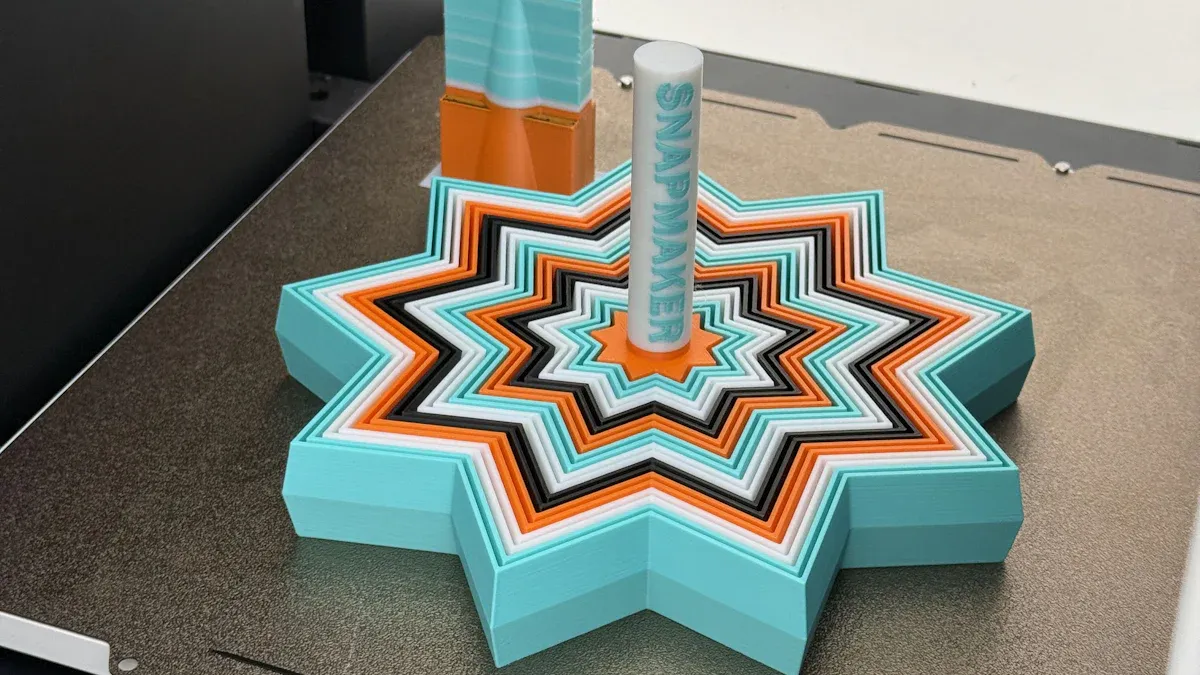
You can use petg for lots of things at home or school. This 3d printing material is good for making storage boxes, phone stands, and kitchen tools. Many people pick petg when they want parts that are strong and clear. You can print water bottles, custom organizers, or toys. Petg does not get damaged by water or chemicals, so your prints last longer.
If you enjoy crafts, petg lets you make decorations and art. You can also use it for fixing things around the house. For example, you might print a new handle or a clip. Petg gives a smooth finish and bright colors. These features make it popular for everyday 3d printing.
Tip: Try petg for outdoor items like garden markers or tool holders. It can handle sunlight and rain better than many other plastics.
Industrial and Professional Uses
Petg is important in many industries. You see it in hospitals because it is safe for the body and easy to clean. Hospitals use petg for face shields, device housings, and lab equipment. It also helps make prosthetics and protective gear.
In cars, petg is used for parts that need to be tough and stable. Car makers use it for trim, covers, and some outside parts. Electronics makers use petg for cases and covers that protect devices.
Here are some common industrial uses for petg:
- Medical device parts and protective gear
- Car interior and exterior parts
- Electronics cases and covers
You can trust petg for strong, clear, and reliable parts. Many professionals pick petg when they need a 3d material that works in tough places. If you wonder what is PETG filament, remember it is a top choice for simple and advanced projects.
PETG vs PLA and ABS
PETG vs PLA
You may wonder how petg compares to PLA. Both are popular for desktop 3d printing. PLA is easy to use and works well for simple models. Petg gives you more strength and flexibility. You can bend petg without breaking it. PLA is stiff and can snap under stress.
Here is a table to help you see the main differences:
|
Property |
PLA |
PETG |
|---|---|---|
|
Flexibility |
Low |
High |
|
Ductility |
Breaks easily |
Bends before breaking |
|
12.2 ± 1.8% |
>100% |
|
|
Tensile Strength |
40-60 MPa |
55-60 MPa |
|
Impact Resistance |
Lower |
Higher |
|
Up to 60°C |
Up to 80°C |
|
|
UV Resistance |
Less resistant |
More resistant |
|
Chemical Resistance |
Lower |
Higher |
|
Moisture Absorption |
Less |
More |
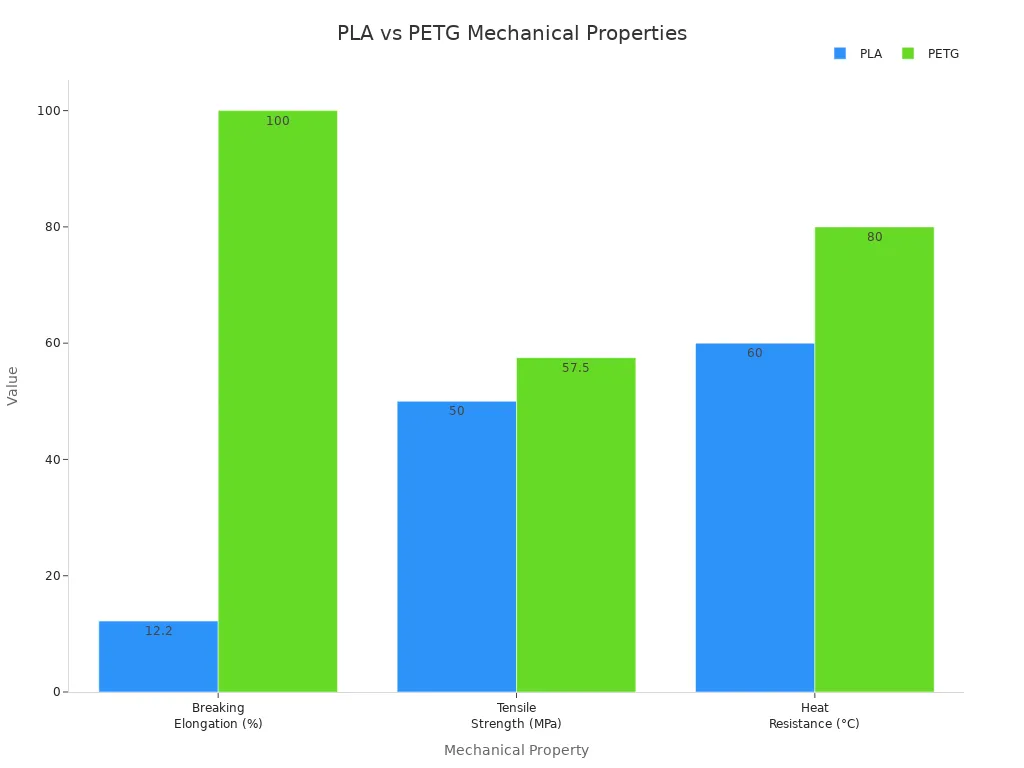
Petg is more flexible and tough. You can use it for parts that need to bend or take a hit. PLA works best for models and decorations. Petg also resists chemicals and UV light better than PLA.
Note: If you want a material that is easy to print and good for beginners, PLA is a safe choice. If you need more strength and flexibility, petg is better.
You may also care about the environment. PLA is biodegradable, but you cannot recycle it in most places. Petg is not biodegradable, but you can recycle it at special centers.
|
Material |
Recyclability |
|
|---|---|---|
|
PLA |
Biodegradable, breaks down |
Not recyclable in most systems |
|
PETG |
Not biodegradable, but recyclable |
Can be recycled |
PETG vs ABS
You may also compare petg to ABS. ABS is strong and handles heat well. Many people use it for car parts and tools. Petg is easier to print and does not warp as much. You do not need a special printer for petg.
Here is a table to show the main differences:
|
Property |
PETG |
ABS |
|---|---|---|
|
Heat Resistance |
Up to 70-80°C |
Up to 100°C |
|
Warping |
Less prone |
More prone |
|
Layer Adhesion |
Better |
Needs careful control |
|
Impact Strength |
Moderate |
Superior |
|
Moisture Resistance |
Better |
Moderate |
|
Printability |
Easier |
More difficult |
|
Odor |
Minimal |
Harmful fumes |
- ABS works well for parts that need to handle high heat.
- Petg is better for easy printing and less warping.
- ABS gives you more impact strength, but petg is safer to print at home.
Tip: If you want to avoid strong smells and warping, choose petg for your 3d projects.
Choosing the Right Filament
You should think about your project needs before you pick a filament. Here are some tips to help you decide:
- Check how strong and durable your part needs to be.
- Make sure your printer can handle the filament’s temperature.
- Think about how you want to finish your print.
Here is a table to help you compare:
|
Filament |
Strength |
Durability |
Impact Resistance |
Heat Resistance |
|---|---|---|---|---|
|
PLA |
High |
Low |
Low |
Low |
|
ABS |
Medium |
High |
High |
Medium |
|
PETG |
High |
High |
High |
High |
- Use ABS or petg for parts that need to be strong or handle heat.
- Choose PLA for simple models or when you want easy printing.
If you want to know what is PETG filament, remember that it gives you a mix of strength, flexibility, and easy use. Petg is a great choice for many 3d printing projects, from home tools to outdoor gear. You can trust petg for reliable and tough prints.
You have learned about PETG filament and why people like it for 3D printing. PETG is strong and flexible. It is easy to print with. You can use PETG for parts that need to be tough. It works well for outdoor things and clear models. Here is a simple table showing PETG’s main features:
|
Property/Use |
Description |
|---|---|
|
Strength & Flexibility |
Good for prints that need to bend and stay strong |
|
Chemical Resistance |
Works well outside and with chemicals |
|
Durability |
Lasts longer than many other filaments |
|
Printability |
Easy to use if you set your printer right |
- PETG can take hits and does not get damaged by chemicals.
- It prints without much warping.
- You can recycle PETG to help the environment.
Try PETG for your next project. If you want more help, look at the FAQ for answers.
FAQ
What is PETG filament?
PETG filament is a plastic for 3D printing. Makers add glycol to PET to make it stronger, clearer, and more flexible. You can use PETG for tough, bendable, and water-resistant prints.
Is PETG filament safe for food contact?
You can use PETG filament for food containers if the brand says it is food-safe. Always check the label. Some PETG filaments have dyes or additives that are not safe for food.
How do you prevent stringing with PETG filament?
You can reduce stringing by lowering the nozzle temperature and increasing retraction settings in your slicer. Clean the nozzle before printing. Try printing at a slower speed for better results.
Can you recycle PETG filament?
You can recycle PETG filament at special centers. Most city recycling does not accept it. Do not mix PETG with PET bottles. Check local rules before recycling.
What is the best bed temperature for PETG filament?
Set your print bed to 70–90°C for PETG filament. This helps your prints stick and prevents warping. Clean the bed with isopropyl alcohol for better adhesion.