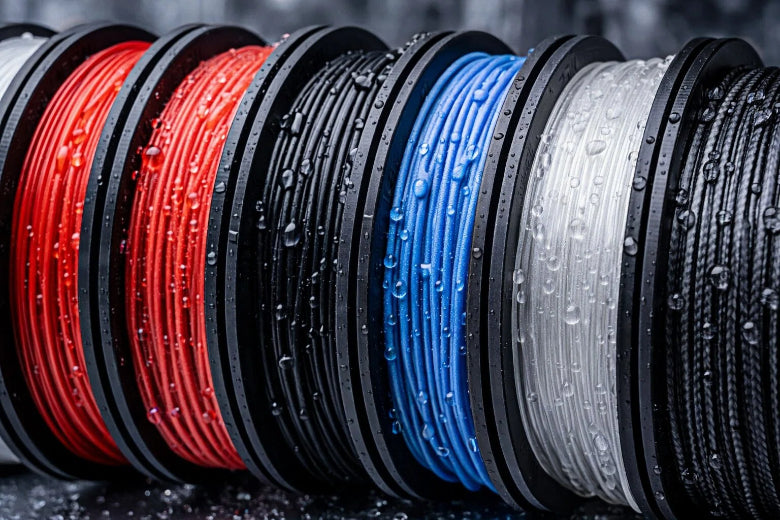
When selecting the best filament for 3D printing in humid air, it's important to consider filament moisture absorption. Nylon is known for its high moisture absorption, taking in the most water compared to other materials. PETG and ABS absorb less moisture than PLA, making them better choices in humid conditions. When filament gets wet due to high humidity, it can lead to weak prints, stringing, and layers that do not adhere properly. The level of humidity significantly affects how each filament behaves. To prevent these issues, you should store filaments in closed containers.
Properly storing your filament helps maintain its dryness and prevents printing problems related to moisture absorption.
Key Takeaways
- Nylon takes in the most water. This makes it bad for wet places. Pick PETG or ABS for better results when it is humid.
- Keep filaments in closed boxes with desiccant packs. This helps them stay dry and stops problems when printing.
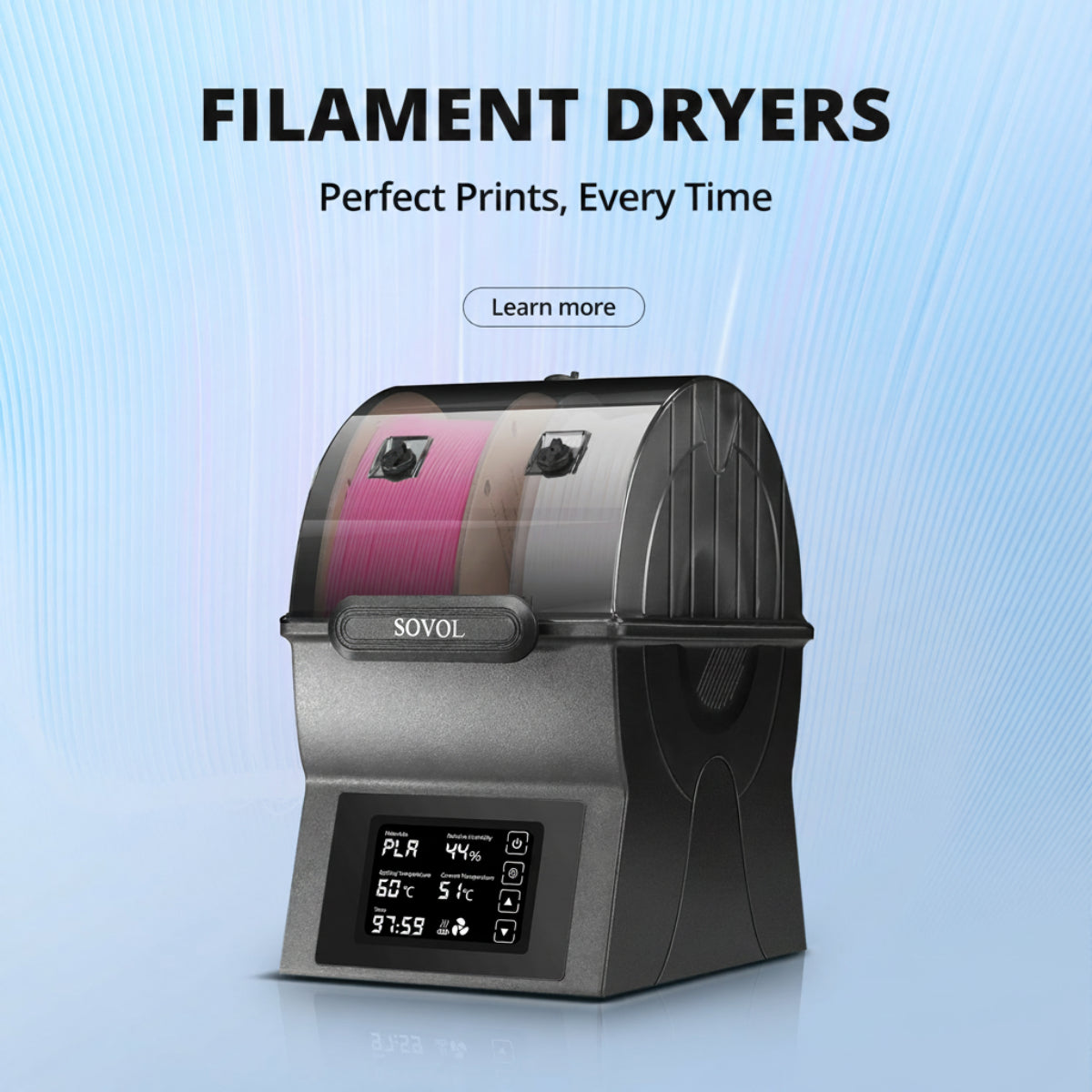
- If your filament gets wet, dry it first. Use a low-heat oven or a filament dryer. This brings back its good quality before you print.
- For things you use outside, pick ASA, PETG, or ABS. These types fight water and sun damage better than PLA and nylon.
- Check the wetness in your storage space with a hygrometer. This helps you keep the best conditions for your filaments.
Filament Moisture Absorption Comparison
Moisture Resistance Ratings
When you pick a 3D printing filament, you should think about how much water it can take in from the air. If a filament absorbs water, your prints might not turn out strong or look good. Some filaments do a better job with humidity than others. The table below shows how each filament handles moisture and the best way to store them.
|
Filament Type |
Moisture Resistance |
Recommended Storage Method |
Notes on Humidity Performance |
|---|---|---|---|
|
PLA |
Moderate |
Airtight container with desiccant |
Stays mostly the same at room temperature; breaks down in heat and humidity |
|
PETG |
Good |
Airtight container with desiccant |
Takes in more water than PLA, but still works well in humid air |
|
ABS |
Good |
Airtight container with desiccant |
Does not like water; barely absorbs any |
|
TPU |
Moderate |
Airtight container with desiccant |
Gets soft in water, but hardens again after drying |
|
Nylon |
Poor |
Vacuum-sealed bag with desiccant |
Takes in much more water than PLA; can lose over half its strength |
|
Carbon Fiber |
Depends on base polymer |
Airtight container with desiccant |
How it works depends on the base; often uses nylon or PETG |
Nylon takes in the most water. It gets weak and bends easily after only a week in humid air. PLA and TPU are in the middle for moisture resistance. PLA is strong at normal temperatures, but it can break down fast if it is hot and wet. PETG and ABS are better at fighting off water. They do not soak up as much water and stay strong longer than PLA and nylon. Carbon fiber filament depends on what it is made from. If it uses nylon, it will take in a lot of water. If it uses PETG, it will do better in humid places.
Key Printing Issues from Humidity
Humidity can cause a lot of problems when you use your 3D printer. If your filament gets too wet, you might see these things happen:
- You might hear popping or see bubbles while printing. This is because water in the filament turns into steam.
- Your prints might look rough or have thin strings between parts.
- The layers might not stick together well, so your prints are weak.
- Nylon can lose more than half its strength after just one week in humid air.
- PLA stays strong at normal temperatures, but it can break down fast in hot, wet places.
- TPU gets soft when wet, but it gets hard again after drying.
- PETG and ABS keep their shape and strength better than other filaments, even after being in moisture for a long time.
If you want to print things for outside, you should pick filaments that do not take in much water. ASA filament is made for outdoor use. It does not get damaged by sunlight or water. ASA stays strong and prints well in rain, humidity, and snow. PETG and ABS also work well outside and in humid air. Nylon and PLA are not good for outdoor use because they take in more water and get weak.
Tip: Always keep your filaments in airtight containers with desiccant packs. For nylon, use vacuum-sealed bags to keep it dry.
PLA 3D Printing Filament and Humidity
PLA Moisture Absorption
PLA is a very common 3D printing material. Many people use it because it is simple and works well. But, moisture in the air can change how PLA prints. PLA takes in some water from the air. It does not soak up as much as nylon. But, it is not as good as PETG or ABS at keeping water out.
- Research shows PLA can reach humidity levels like 0.18%, 0.61%, and 0.83%.
- PLA with only 0.18% humidity makes less dust when printing.
- If PLA has more water (0.61% or more), it can make more tiny particles and lower print quality.
Always look at your filament before you start printing to see if it is wet.
PLA Printing Problems in Humidity
If you print with PLA when it is humid, you may see problems. Water in the filament can cause these issues:
Humidity and other conditions can change how fast materials cool and behave while printing. This can make your prints change shape.
Your prints might look rough or have thin strings. Sometimes, you will see bubbles in your prints. The layers might not stick together well, so your parts can break easily. You might hear popping sounds as water turns into steam inside the filament. These problems can make your finished object look bad and be weak.
PLA Storage and Drying
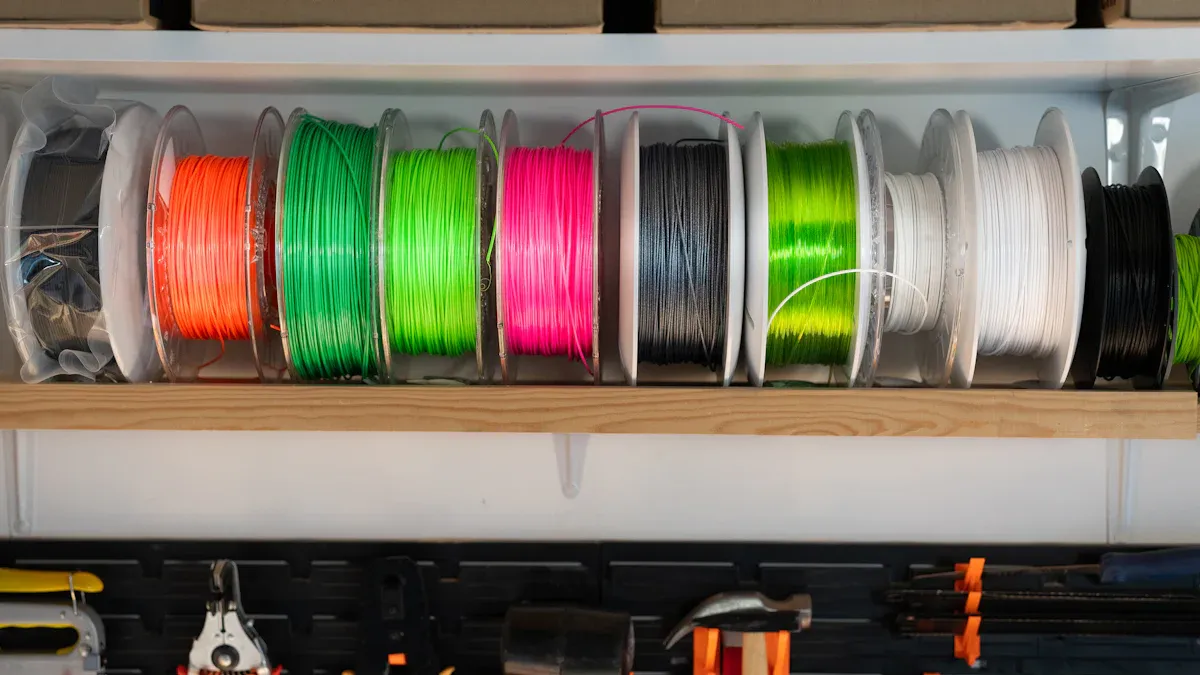
To keep PLA working well, you need to store it right. Always put it in a closed container with a desiccant pack. This stops water from getting in and keeps your filament dry.
If your PLA gets wet, you can dry it at home. Experts say you should use these settings:
- Set your dryer or oven to 45°C to 55°C for 4 to 6 hours.
- You can also use 40°C to 50°C for up to 12 hours.
- Check your filament often so it does not get too hot or melt.
Storing and drying PLA the right way helps you get good prints, even when the weather is humid.
PETG Filament Moisture Absorption
PETG Absorption Characteristics
PETG is strong and flexible. Many people use it for 3D printing. PETG is hygroscopic. This means it can soak up water from the air quickly. It absorbs water faster than some other filaments. This can change how your prints look and feel. PETG has high moisture sensitivity. It also absorbs water at a moderate to fast speed.
|
Filament Type |
Moisture Sensitivity |
Absorption Speed |
|---|---|---|
|
PETG |
High |
Moderate to Fast |
|
PLA |
Low to Moderate |
Slow |
|
ABS |
Moderate to High |
Moderate |
|
Nylon |
Very High |
Very Fast |
|
TPU |
High |
Fast |
PETG takes in more water than PLA. But it does not absorb as much as nylon. You should watch out for humidity when using PETG.
PETG Printing Issues
If PETG gets wet, you may see problems. Wet filament can make bubbles in your prints. It can also cause rough surfaces and weak layers. You might notice stringing or oozing. Sometimes, the nozzle can get stuck. These problems make your prints look bad and feel weak.
- PETG can soak up water from the air.
- Wet PETG may cause bubbles, rough spots, and weak layers.
- Damp filament can lead to stringing, oozing, and nozzle jams.
Check your filament before you print to avoid these issues.
PETG Storage Tips
You can keep PETG dry with good storage. Use airtight containers with silica gel packs for short-term storage. For long-term storage, vacuum-sealed bags with desiccants work best. Use a digital hygrometer to check humidity. Keep humidity below 20%. Dry cabinets let you use filament while keeping it dry.
|
Description |
|
|---|---|
|
Airtight Storage Solutions |
Use airtight containers or bags with silica gel packs for short-term storage. |
|
Desiccants & Humidity Monitoring |
Add silica gel packs and a hygrometer to keep humidity low. |
|
Dry Cabinets |
Store filament in dry cabinets for easy use and low humidity. |
|
Vacuum-Sealed Storage |
Vacuum seal spools with desiccants for long-term storage. |
Tip: Keep PETG in airtight containers or vacuum-sealed bags with desiccants. Always use a hygrometer to check humidity.
If PETG gets wet, you can dry it in a low-temperature oven or filament dryer. This helps your prints stay strong and look good.
ABS Filament and Humidity
ABS Moisture Absorption
ABS is a popular 3D printer material. It is strong and lasts a long time. ABS does not soak up much water from the air. It is less sensitive to water than nylon. But it can still take in enough water to cause problems. The table below shows how ABS compares to other materials:
|
Material |
Effect of moisture absorption |
|
|---|---|---|
|
PLA |
Low to medium |
Surface can look worse, bubbles may form |
|
ABS |
Low to medium |
Bubbles can show up, print gets weaker |
If you print in a humid place, ABS does better than PLA. But you still need to watch for issues. ASA is another good choice for humid air. ASA does not soak up much water or get damaged by sunlight. It is great for things you want to use outside.
ABS Printing Issues
When ABS gets wet, you might have print problems. The most common issues are:
- Bubbles can form while printing
- Print quality can go down
You may see bubbles in your finished print. These bubbles make the layers weak. Your print will not be as strong. Sometimes, the surface looks rough or bumpy. ASA can help stop these problems. ASA does not take in much water. It keeps your prints smooth and strong, even when it is humid.
Tip: If you want to print things for outside, try ASA instead of ABS. ASA fights off water and sunlight better than most other materials.
ABS Storage and Drying
You need to store ABS the right way to keep it dry. Here are some good tips:
- Use a filament dryer, food dehydrator, or a convection oven. A filament dryer works best and gives steady results.
- Dry ABS at 80℃ (176°F) for 4 to 12 hours. The time depends on how wet the filament is.
- Keep filaments in a closed box with desiccant packs. Vacuum bags also help keep water out.
ABS is easier to dry than nylon. But you should always check your filament before you print. Good storage and drying help you get strong, smooth prints every time.
TPU Filament Moisture Absorption
TPU Absorption Characteristics
TPU filament is very flexible and tough. People use TPU for parts that bend or stretch. TPU is hygroscopic, so it absorbs water from the air fast. If you live where it is humid, TPU can get wet even if you store it for a short time. When there is a lot of humidity, TPU loses its best features. The filament gets softer and is harder to use. You should keep TPU in a dry place with less than 20% humidity. This helps you avoid problems when you print.
TPU takes in water quickly. Keeping it dry helps your filament stay strong and flexible.
TPU Printing Issues
Humidity can cause many problems when you print with TPU. Wet TPU often makes bubbles and empty spots inside your prints. These bubbles make your finished parts weak and less bendy. You might see rough surfaces or gaps in the layers. Sometimes, the filament jams in the printer nozzle. This can stop your print or ruin your part. You may notice stringing or oozing between printed sections. These problems make your prints look bad and waste your time.
- Bubbles and empty spots inside prints
- Rough or bumpy surfaces
- Weak layers and less flexibility
- Nozzle jams and failed prints
- Stringing and oozing
You can stop most of these problems by keeping your TPU filament dry before printing.
TPU Storage Tips
You need to store TPU filament carefully to keep out humidity. There are several ways to keep TPU dry:
- Airtight Containers: Use clear bins or boxes with tight lids. Add silica gel packs to soak up water.
- Vacuum-Sealed Bags: Take out the air and add desiccant. Check the seal often for leaks.
- Weatherproof Storage: Pick toolboxes or bins with rubber seals and locks. These keep out water in wet places.
- Filament Dry Boxes: Store and use filament in dry boxes with heat and hygrometers.
If your TPU filament gets wet, you can dry it in a filament dryer or a low-temperature oven. Set the temperature between 40°C and 50°C for a few hours. Always check the filament before you print. Dry storage and careful handling help you get strong, flexible prints every time.
Tip: Keep TPU in airtight containers or vacuum-sealed bags with desiccant. Use a hygrometer to check humidity and keep it under 20%.
Nylon Filament Moisture Absorption
Nylon Absorption Characteristics
Nylon is one of the most moisture-sensitive filaments. Regular nylons like PA6 and PA66 soak up water from the air very fast. Nylon is hygroscopic, so it can get full of water in just a few hours if left out. When nylon gets wet, it changes how it prints and feels. The filament can turn soft and bendy, which makes printing harder.
Some new nylons, like PA11 and PA12, do not take in as much water. These types are easier to use when it is humid. PPA (Polyphthalamide) also does not soak up much water, so it works better for tough prints. If you want a filament that handles humidity best, nylon is not the best pick because it takes in a lot of water.
Nylon Printing Issues
When nylon gets wet, you will see many print problems. These issues can ruin your print and make it weak. Here is a table that shows the most common problems caused by humidity:
|
Visual Defect |
Description |
|---|---|
|
Bubbling |
Tiny bubbles show up on or inside the print because of steam from water. |
|
Rough Surfaces |
The print can look rough or spotty because the plastic comes out uneven. |
|
Cloudy Appearance |
The print can look cloudy or foggy because of water in the filament. |
|
Weak Structure |
The print can feel weak or break easily because water makes it less strong. |
You might hear popping sounds as water turns into steam while printing. The layers may not stick well, and your finished part can break easily. These problems show why nylon needs extra care when it is humid.
Nylon Storage and Drying
To get good prints with nylon, you must keep it dry all the time. Nylon is harder to store and dry than most other filaments. Always use airtight containers or vacuum-sealed bags with desiccant packs. If your nylon gets wet, you can dry it using these ways:
- Oven: Set your oven to about 80°C (176°F). Bake the filament for 4 to 6 hours. Watch the heat so it does not melt.
- Food Dehydrator: Use a dehydrator at about 80°C. This is a gentle and good way to dry nylon.
- Filament Dry Box: Store your filament in a dry box that keeps out water and keeps humidity low.
Tip: Always check your nylon before you print. If it feels soft or you see any of the problems above, dry it first. Good storage and drying help you avoid bad prints and keep your parts strong.
If you print where it is humid, you may want to use a filament that does not take in as much water. Nylon can make strong, bendy prints, but only if you keep it dry.
Carbon Fiber 3D Printing Filament and Humidity
Carbon Fiber Moisture Absorption
You may wonder how carbon fiber filaments deal with humidity. These filaments use a base polymer, like nylon or PETG. Tiny carbon fibers are mixed in. The carbon fibers help the filament absorb less water. For example, carbon fiber PETG absorbs about 0.3% moisture. Regular nylon can absorb up to 3%. This means carbon fiber filaments keep their shape better in humid air. They stay stronger than their base polymers, especially compared to nylon. If you need a filament that resists humidity, try carbon fiber PETG or PA12. These work much better than regular nylon.
Carbon Fiber Printing Issues
Carbon fiber filaments absorb less water, but they can still get wet. If they do, you might see some problems when printing:
- The filament can get damp, which lowers how well it works.
- Prints may lose strength and become less stiff.
- Bubbles or empty spots can show up, making the surface rough.
- Cracks might form in your finished print.
If you notice these problems, your filament is probably too wet. Always check your filament before you print, especially if you live where it is humid.
Tip: Dry filament helps you get strong, smooth prints. It also stops cracks and weak spots.
Carbon Fiber Storage Tips
You need to store carbon fiber filaments the right way to keep them dry. Here are some easy ways to protect your filament:
- Put spools in airtight containers with desiccant packs.
- Use vacuum-sealed bags for long-term storage.
- Keep your storage area cool and dry.
- Use a hygrometer to check humidity. Try to keep it under 20%.
If your filament feels soft or you see bubbles while printing, dry it in a filament dryer or a low-temperature oven. Most carbon fiber filaments dry well at 60°C to 70°C for 4 to 6 hours. Always follow the drying instructions for your filament type.
If you do these things, your carbon fiber prints will stay strong and look good, even when it is humid. If you want a filament that handles humidity best, carbon fiber PETG or PA12 are great choices for reliable results.
Storing Filaments for Outdoors and Humid Environments
Best Storage Practices
You must keep filament dry if you want to print for outdoors or in humid places. Good storage helps your filament stay ready for outdoor use. Experts suggest many ways to protect filament:
|
Storage Method |
Recommendations |
|---|---|
|
Airtight containers |
Use plastic cereal boxes, tubs with seals, or vacuum bags. |
|
Include desiccants |
Add silica gel packs. Color-changing types show when to replace. |
|
Monitor humidity levels |
Use a hygrometer. Keep humidity under 20%. |
|
Store in a cool, dark place |
Stay away from sunlight and temperature changes. |
|
Filament dryers |
Use for filaments like nylon that need to stay dry. |
|
Re-sealable bags |
Put silica gel inside for extra safety. |
|
Dry boxes |
Keep filament neat and safe from dust and water. |
|
DIY dry box solutions |
Use big totes with seals and spool holders. |
Tip: Always check humidity in your storage area. Dry filament prints better and lasts longer outside.
Drying Methods
If filament gets wet, you can dry it with the right method. You have a few choices:
- Specialized filament dryers let you control heat and time. These work best for tough filaments.
- Ovens let you dry filament at home. Set the heat low and watch it closely.
- Food dehydrators are a cheap way to dry filament at low heat.
- DIY dry boxes help you control moisture with custom setups.
Filament dryers work best because they control heat and drying time. Ovens and dehydrators also help, but you must check the filament often. Drying keeps filament strong for outdoor use.
Choosing Filaments for Outdoors
You want prints to last outside. Some filaments fight moisture and sunlight better than others. ASA is great because it stands up to UV light, water, and heat. PETG is also good for outdoor projects. ABS works well for outdoor use too. These filaments keep their shape and strength in rain or sun.
- ASA fights UV, water, and heat.
- PETG stays strong in wet and humid places.
- ABS is good for outdoor projects.
Note: Nylon and PLA do not work well outside. They soak up water and get weak.
Pick the right filament and store it well. You will get strong prints for outdoors and humid places.
If you need good prints in humid or outdoor places, ASA filament is a top choice. ASA does not get damaged by sunlight or bad weather. You can make your prints better by keeping filament dry. Store filament in airtight containers and use desiccant packs. Vacuum-seal spools to keep out water. Try to keep the storage area cool. These steps help stop moisture from ruining your filament. You will get strong and reliable prints every time. 🌦️
FAQ
Which 3D printing filament handles humidity best?
PETG and ABS handle humidity best. You can use ASA for outdoor prints because it resists water and sunlight. Nylon absorbs the most moisture, so you should avoid it in humid places.
How do you know if filament is too wet to print?
You may hear popping sounds or see bubbles during printing. Prints can look rough or have weak layers. If you notice these signs, your filament needs drying.
What is the easiest way to keep filament dry?
You should store filament in airtight containers with silica gel packs. Use vacuum-sealed bags for extra protection. A hygrometer helps you check humidity levels.
Can you dry wet filament at home?
Yes! You can use a filament dryer, food dehydrator, or a low-temperature oven. Set the temperature based on the filament type. Always check instructions before drying.