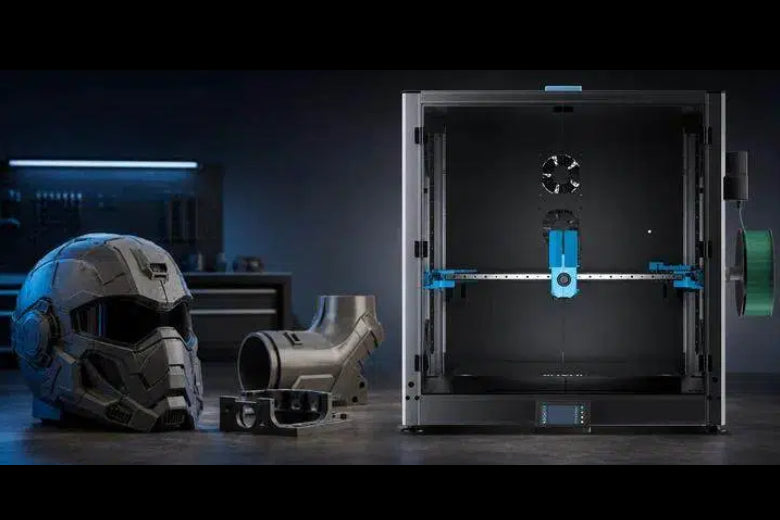
A big build volume sounds like the ultimate “print anything” upgrade. And if you build big props, helmets, fixtures, or oversized prototypes, a large-bed 3D printer can genuinely simplify your workflow.

But the capability isn’t “free.” A printer with a 500 × 500 × 500 mm build volume is a bigger machine with longer print runs, higher failure stakes, and more demands on your space and process.
This guide will help you decide whether you’ll use the volume—or mostly pay to look at it.
If you’re unsure, a quick baseline: if your usual “big” projects top out around helmets and medium props, a 300–350 mm machine is often enough. A 500 mm-class printer pays off when you’re regularly trying to avoid seams on truly oversized parts.
Key takeaways
- A 500mm 3d printer is worth it when you regularly need to print large models in one piece (helmets, large props, jigs/fixtures, oversized functional parts) and the time you save on assembly is bigger than the new time you spend managing long prints.
- The biggest benefit isn’t “bigger objects”—it’s fewer seams: less alignment, gluing, filling, sanding, and fewer weak joints.
- The biggest cost isn’t just money—it’s risk concentration. A failure at hour 18 hurts a lot more than a failure at hour 3.
- Many hobbyists don’t need 500mm. If your “large” projects are occasional, splitting models on a smaller printer is usually the better deal.
1) What a 500×500×500mm build volume means in practical terms
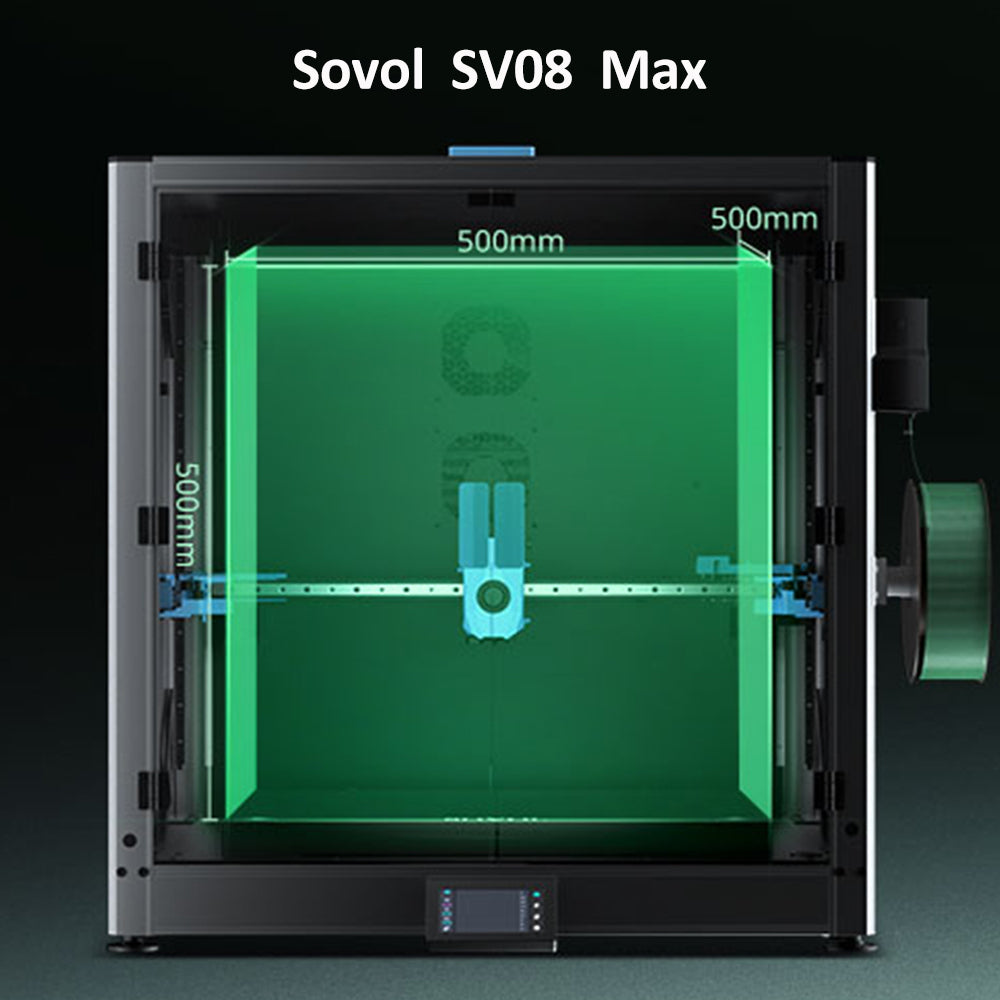
A build volume of 500 × 500 × 500 mm means your printer can place plastic inside a cube that’s roughly:
- 19.7 × 19.7 × 19.7 inches (about 20 inches)
- Big enough for large wearable parts, full-scale prototypes, and bulky functional components
Two practical clarifiers:
It’s the maximum envelope, not the guaranteed “easy” size
Printing near the edges (full 500mm width) is where the hard stuff shows up: bed flatness variation, first-layer consistency, and warping forces across a huge footprint.
“500mm” changes your workflow even when parts are smaller
A large build plate isn’t only for one huge part. It also lets you:
- Batch multiple pieces in one run
- Print an entire “kit” of jig/fixture parts together
- Arrange parts to reduce supports (more layout flexibility)
That’s why a large build volume 3d printer can increase throughput in a workshop—if you’re actually feeding it jobs.
2) What types of models can be printed in one piece at 500mm?
A 500 mm-class printer can print (in one piece) objects that tend to be “assembly projects” on smaller machines:
- Cosplay helmets (including bulkier designs or orientations that won’t fit on ~300mm beds)
- Larger single armor sections (certain chest/back pieces, big shoulder assemblies)
- Large prop bodies (blasters, sci‑fi panels, creature parts)
- Large functional housings, bins, trays, and covers
- Oversized brackets, guards, ducts, and shop components
It can also print long objects diagonally—but diagonals introduce support and surface-quality tradeoffs. The real win is when the part fits cleanly without extreme tilting.
Pro Tip: Before you upgrade, check your last 20 prints. How many actually exceeded 300–350mm in any direction? That number is usually the truth.
3) Large-format printing: where it genuinely helps
A large format 3d printer is most valuable when your project’s “hard part” isn’t printing—it’s everything after printing.

Cosplay helmets, armor, and wearable props
If you build cosplay, you already know the pain:
- Seams in high-visibility areas
- Misaligned glue joints that telegraph through paint
- Hours of filling and sanding before you even start finishing
Many cosplay guides point out that a ~300mm build volume is often a solid baseline for helmet printing, while bigger volumes help reduce seams across larger builds (and give you more freedom in orientation). For example, see Clever Creations’ cosplay helmet printing workflow and QIDI Tech’s helmet printing guide.
A 3d printer for helmets doesn’t need to be 500mm to be useful—but 500mm can reduce part count when you print bulky helmets, large armor sections, or when you want to avoid awkward diagonal orientations.
Props and large decorative parts
Large prop bodies are where 500mm starts to feel like a superpower:
- Fewer glue joints in curves
- Cleaner silhouettes (especially on symmetrical props)
- Less chance you’ll “build in” a twist during assembly
If your goal is “con-ready surface finish,” fewer seams is often the biggest quality jump you can buy. That’s a big reason people search for the best 3d printer for cosplay and end up prioritizing build volume.
Prototypes and fit-check parts
For product prototypes (including small businesses), bigger isn’t about ego—it’s about reality:
- Full-scale components and fit-check prototypes
- Assembly validation
- Ergonomics and handling
A one-piece prototype avoids tolerance stack-ups between sections. That can matter a lot when you’re checking a lid fit, alignment to mounting points, or clearance around other parts.
Jigs, fixtures, and shop tooling
Workshops often get real value from large format 3d printing because tooling tends to be:
- Flat
- Wide
- Customized to a bench or machine
Think drill guides, router templates, assembly fixtures, soldering jigs, check gauges, mounting plates, and brackets that match existing gear.
4) The advantages of avoiding splitting, gluing, sanding, and alignment
Splitting isn’t just “one extra step.” It can turn a clean print into a multi-day workflow.
Here’s what you avoid when you can print large models in one piece:
- Alignment problems (twist, step lines, gaps)
- Weak joints (especially on impact-prone props)
- Extra post-processing (glue squeeze-out, seam filling, sanding)
- Surface mismatch from different orientations and layer directions
This is the real argument for a large 3d printer: you’re buying back your time and your patience.
And if you’re running a small shop, you’re also buying consistency. Manual assembly quality varies; a single-piece print is more repeatable.
5) The disadvantages that come with size
A 500mm build volume is legitimately demanding. The most common downsides are practical—not theoretical.
Machine footprint and space requirements
A large-format printer needs:
- A sturdy bench (wobble becomes visible in tall prints)
- Clearance for maintenance and loading
- If you use an enclosure or materials that require ventilation, plan for appropriate airflow
Even if the build volume is 500mm, the printer itself is much larger.
Filament consumption
Large parts can be surprisingly material-hungry—especially when you add:
- Brims/rafts for adhesion
- Supports for big overhangs
- Higher wall counts for strength
A big plate can be a filament multiplier if you start filling it “because you can.”
Long print times (and higher failure stakes)
Long prints create more opportunity for something to go wrong:
- First-layer issues that don’t show until later
- Partial clogs that slowly degrade extrusion
- Layer shifts (from collisions, vibration, or belt issues)
- Filament tangles
This “risk concentration” tradeoff shows up in many large-format discussions, including 3DSourced’s overview of why people buy 500×500×500mm printers.
⚠️ Warning: If you’re not already running long 10–30+ hour prints confidently (depending on the model and settings), a 500 mm-class printer doesn’t magically fix that. It just makes failures bigger.
Warping risks scale up
Warping risk scales with footprint. The bigger the part, the more shrink stress it can build as it cools.
For a practical overview of why large prints lift at the corners and common mitigation ideas, see Kingroon’s primer on preventing warping in large 3D prints.
In practice, many users end up caring more about:
- Bed temperature stability across the whole plate
- First-layer consistency
- Drafts and ambient temperature
…than they do about headline speed.
Power usage
A larger heated bed may require more power during heat-up and long print jobs, depending on insulation and heater design. If you print big, long jobs regularly, the energy cost becomes part of your “total cost of ownership.”
6) Whether most hobby users actually need 500mm
Most hobbyists want 500mm more than they use 500mm.
Here’s a useful way to think about it:
- If you print big parts once a month or less, you’re usually better off learning to split models well.
- If you print big parts weekly, the time you spend assembling and finishing seams can become the real bottleneck.
A 500mm machine is a tool that pays off with repetition. If your print queue is mostly:
- miniatures
- small functional parts
- brackets
- printer upgrades
- organizers
…then the build volume may sit unused while you deal with a larger machine day-to-day.
7) 500x500 3d printer vs printing a model in multiple smaller sections
This is the core decision. You’re choosing between:
- Machine time (one big print) and higher “all eggs in one basket” risk
- Human time (splitting + assembly + finishing) and more opportunities for alignment errors
Quick comparison table
|
Question |
If you answer “yes”… |
Lean toward |
|---|---|---|
|
Do you regularly print parts that exceed ~300–350mm? |
You’ll use the volume often |
500mm 3d printer |
|
Are seams unacceptable on your finished work? |
You need clean surfaces |
Large format 3d printer |
|
Do long prints already succeed reliably for you? |
You can manage long jobs |
Large build volume 3d printer |
|
Is space/ventilation limited? |
A big footprint is a problem |
Smaller printer + splitting |
|
Do you enjoy post-processing and assembly? |
You don’t mind seams |
Smaller printer + splitting |
If you choose splitting, treat it like a skill—not an emergency.
Sovol has a practical guide on how to split large 3D models, plus a decision framework in its split model vs large printer article.
8) Who should buy a 500 mm-class printer—and who shouldn’t
A 500 mm-class printer is the right tool when volume saves you real time and quality issues downstream. It’s a poor fit when the footprint, long runs, and workflow overhead outweigh the seam savings.
|
Your situation |
Buy a 500 mm-class printer if… |
Stick with 300–350 mm if… |
|---|---|---|
|
Cosplay & props |
You print helmets/armor/large props often and want fewer visible seams |
Big projects are occasional or you’re fine splitting and finishing |
|
Prototyping |
You need full-scale components and fit-check prototypes with fewer joints |
Most prototypes fit comfortably on 300–350 mm |
|
Workshop tooling |
You make wide jigs, fixtures, templates, and shop parts regularly |
Tooling parts are small or infrequent |
|
Reliability tolerance |
You already manage long 10–30+ hour prints with good success rates |
Long runs still fail often and you’re still dialing in basics |
|
Space & environment |
You have dedicated space (and can handle noise/heat/material needs) |
You print in shared living space or have limited room |
A simple litmus test: if you already have a backlog of projects you haven’t started because splitting sounds miserable, you’re the target user.
Why the Sovol SV08 MAX makes sense for large-format printing
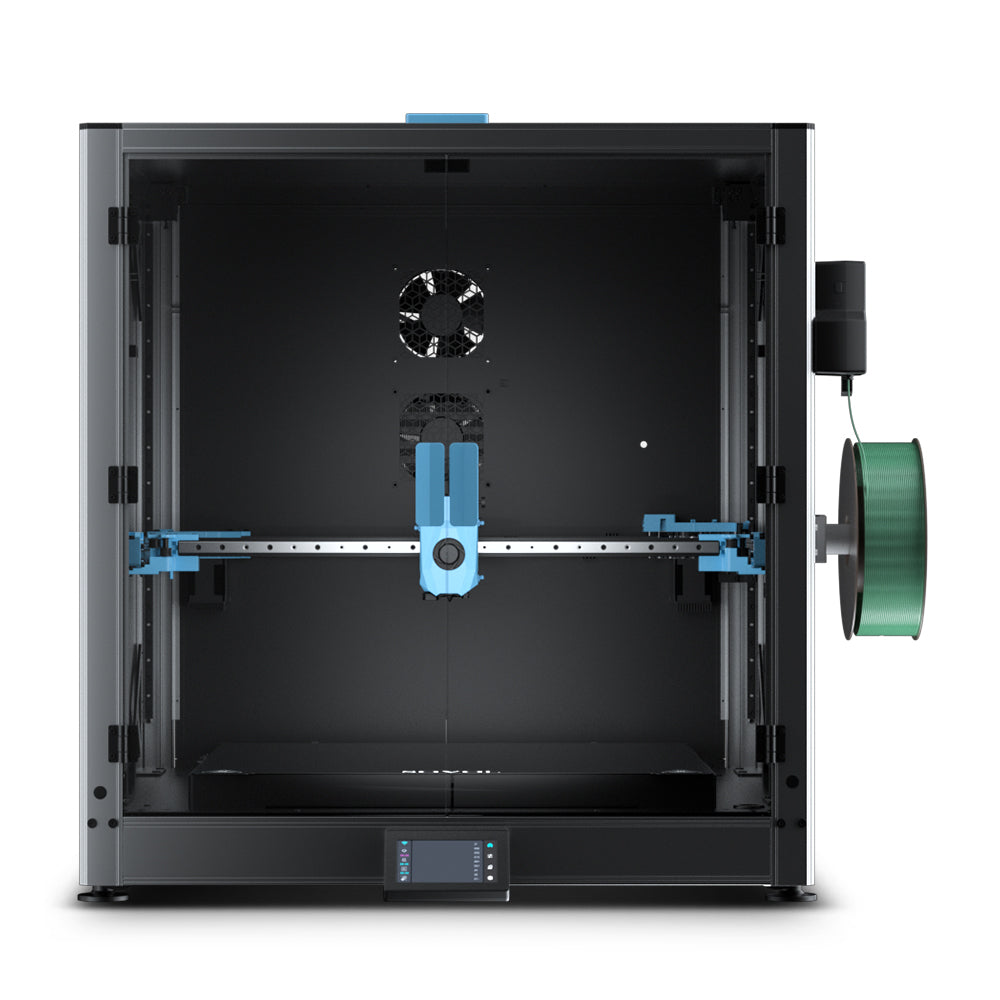
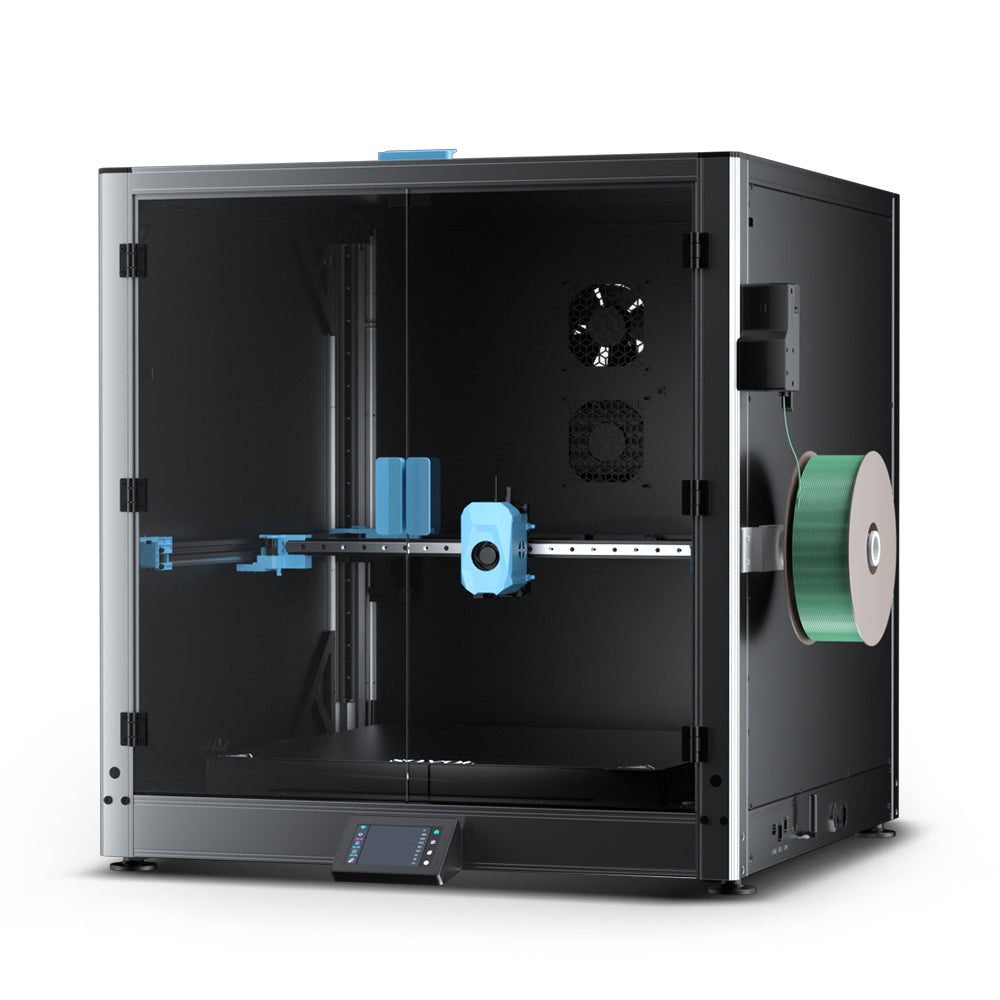
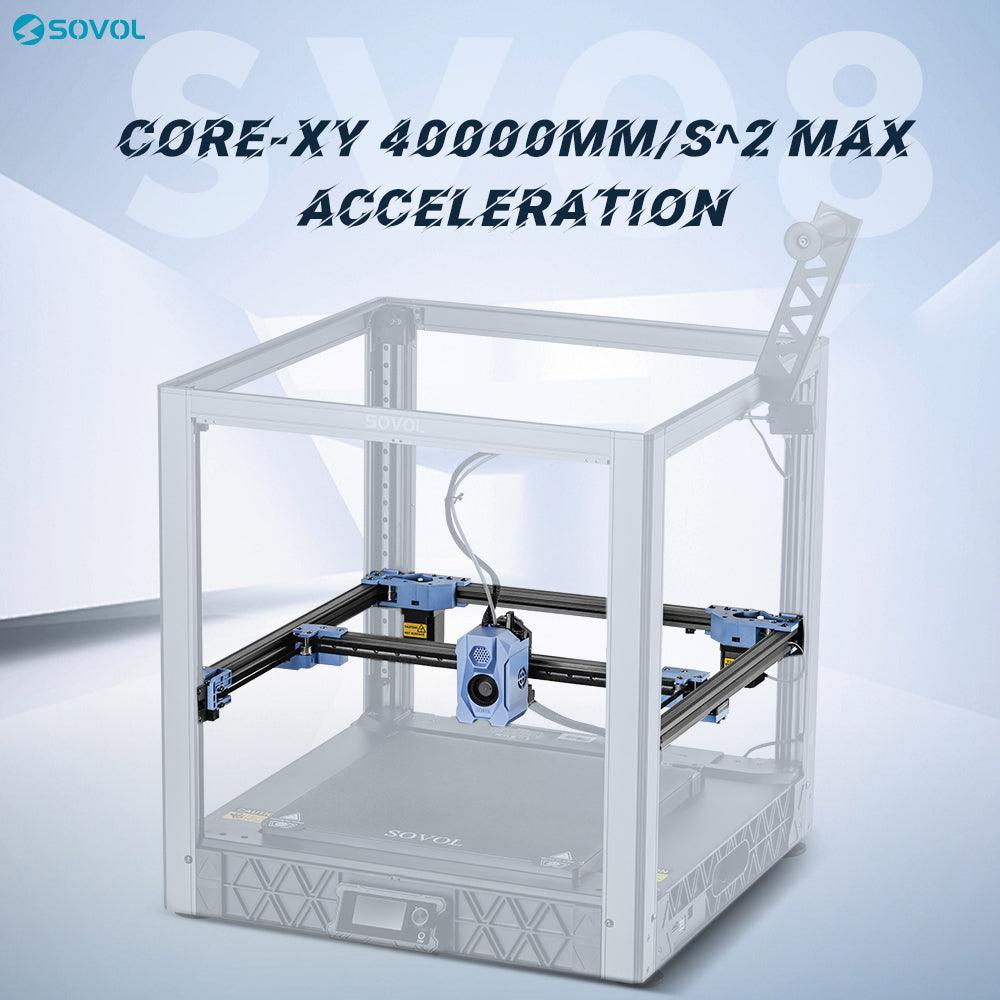
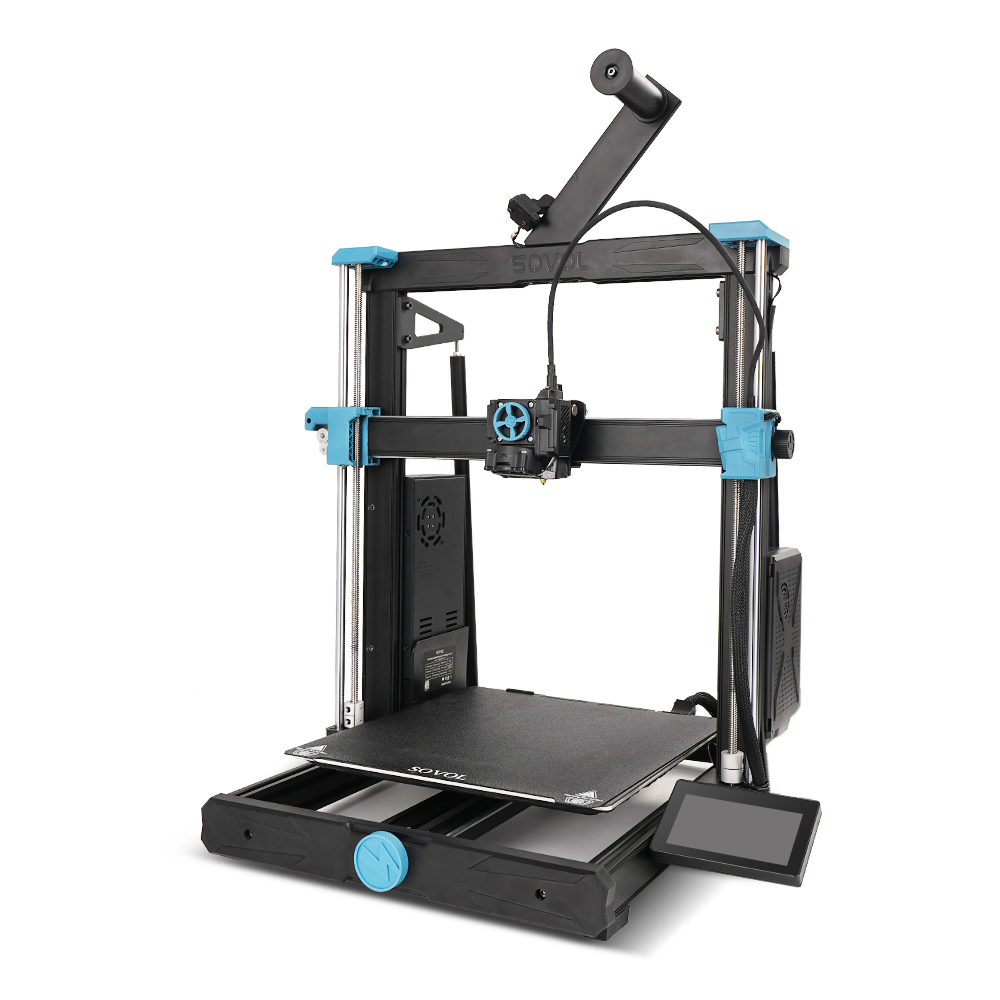
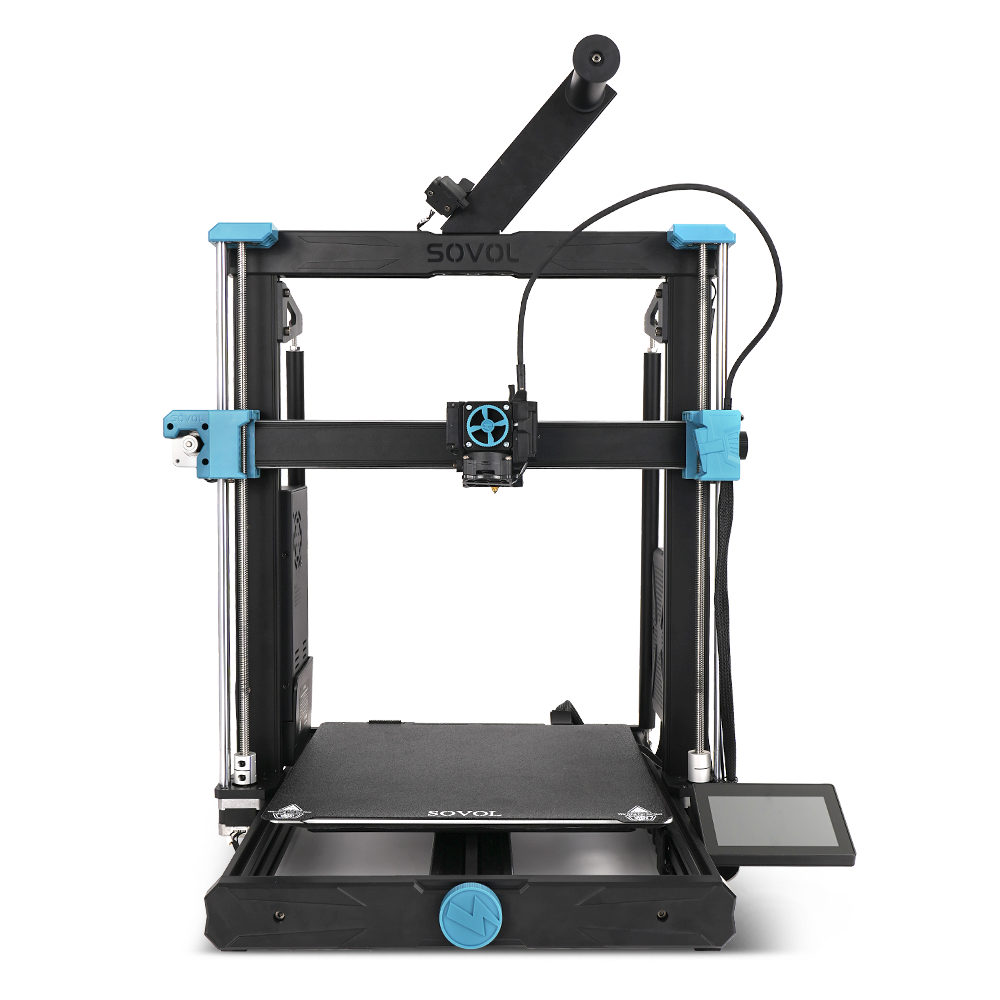
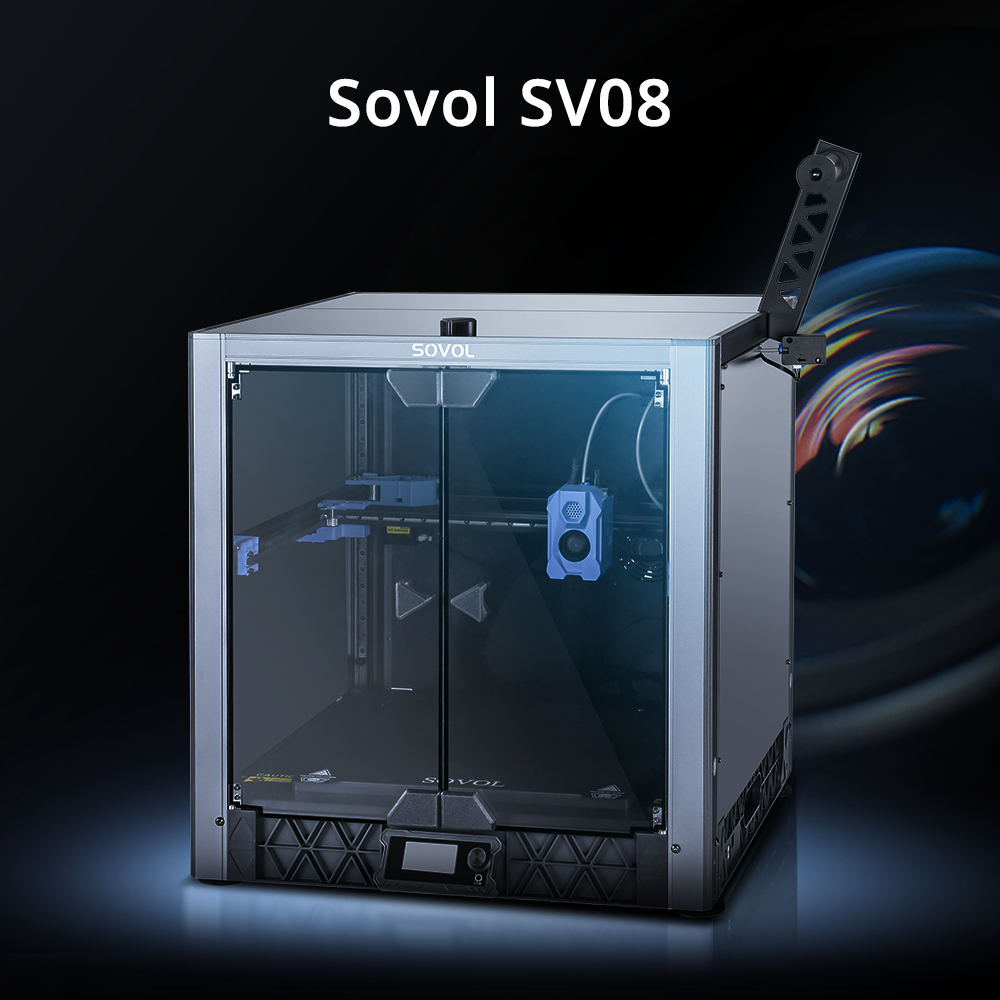
If you’ve decided a 500 mm-class machine fits your workflow, the Sovol SV08 MAX is built around the practical requirements that make large-format printing less painful:
- 500 × 500 × 500 mm build volume for one-piece helmets, big prop shells, wide jigs/fixtures, and large enclosures
- 700 × 710 × 750 mm footprint (excluding spool holder), so you can plan bench space and clearance up front
- A CoreXY motion system and open-source Klipper firmware (useful if you like tuning and upgrades)
Before you buy, make sure you can also reserve extra room for maintenance access, filament handling, and (if you enclose it) airflow management.
Explore the machine here: Sovol SV08 MAX
10) Practical example: the Sovol SV08 MAX as a 500mm-class printer
To make this more concrete, here’s what 500mm-class ownership looks like on paper.
In Sovol’s own SV08 Max large-format 3D printer buying guide, the SV08 MAX is listed with:
- Build volume: 500×500×500mm (standard)
- Footprint (excluding spool holder): 700×710×750mm
- A CoreXY motion system and open-source Klipper firmware
This illustrates the general point:
- When you buy a 500×500×500 class printer, you’re also committing to a much larger machine footprint.
- The “worth it” question becomes less about can it print big and more about whether your work consistently benefits from fewer seams and larger one-piece prints.
If you want the direct reference page for the machine, see Sovol SV08 Max.
FAQ: 500 × 500 × 500 mm printers
What can you print on a 500 × 500 × 500 mm 3D printer?
Large one-piece parts that would otherwise need splitting—helmets, big prop shells, wide jigs/fixtures, large enclosures, and oversized functional parts. It’s also useful for batching many medium parts on one plate.
Is a 500 mm 3D printer too large for home use?
Not necessarily—but it’s less forgiving. The footprint, noise, heat, and long print times can be awkward in shared living space. If you don’t have a dedicated corner or workshop, a 300–350 mm machine is often the more comfortable choice.
How much space does a 500 mm 3D printer need?
More than the build volume. Plan for the machine footprint plus clearance for moving parts, loading filament, and maintenance access. As a reference point, the Sovol SV08 MAX lists a 700 × 710 × 750 mm footprint (excluding spool holder).
Is a 500 mm printer better than a 300 mm printer?
It’s better only when you use the extra volume often. If you regularly need fewer seams and one-piece prints, 500 mm wins. If large prints are occasional, 300–350 mm is usually better value and easier to live with.
How long do large 3D prints usually take?
It depends on layer height, nozzle size, material, and how much of the bed you’re using. Many large prints run 10–30+ hours, and truly big, high-detail jobs can go longer.
Conclusion: is a 500 × 500 × 500 mm build volume actually worth it?
A 500 × 500 × 500 mm build volume is worth it when you regularly print oversized parts—cosplay props, helmets, large prototypes, jigs/fixtures, or small-batch production parts—and you want to reduce seams, assembly, and finishing as a normal part of your workflow.
But if your projects are mostly smaller models and you only occasionally exceed 300–350mm, a 500mm machine is often unnecessary. In that case, you’ll get better value by using a reliable smaller printer and learning how to split and assemble parts well.
Next steps
- If you’re on the fence, do a quick audit: list your last 20 prints and mark the ones that would have benefited from being one piece.
- If you decide to stick with a smaller printer, start here: how to split large 3D models. (You don’t need a new machine to get better results.)
- If you decide you truly need a large-format machine, explore the Sovol SV08 MAX and sanity-check your space and long-print workflow before you buy.
- If you decide you truly need a large-format machine, use a checklist-style buying lens (space, workflow, reliability) before picking a specific model.