


You can achieve sharper prints by performing pressure advance tuning in Klipper. Pressure advance tuning in Klipper adjusts how your printer manages pressure inside the nozzle. When printing at high speeds or navigating sharp corners, you might notice thin lines at the start of a move and blobs at the end. Pressure advance tuning Klipper helps resolve these issues. The table below explains how pressure advance tuning Klipper improves print quality:
|
Aspect |
Explanation |
|---|---|
|
Filament Compression |
Fast printing requires more pressure advance tuning Klipper before extrusion begins. |
|
Under-extrusion at Start |
Insufficient pressure at the start causes thin lines, which pressure advance tuning Klipper can fix. |
|
Over-extrusion at End |
Excess pressure at the end leads to blobs, solved by pressure advance tuning Klipper. |
|
Bleeding Edges at Corners |
Corners appear messy without proper pressure advance tuning Klipper. |
|
Elimination of Issues |
Accurate pressure advance tuning Klipper removes rough edges and enhances print quality. |
Adjusting your pressure advance tuning Klipper settings will help you achieve cleaner lines and sharper corners. Both beginners and experienced users can benefit from learning how to perform pressure advance tuning Klipper for improved prints.
Key Takeaways
- Pressure advance tuning in Klipper helps prints look better. It controls how the filament moves. This stops blobs and makes corners sharper.
- Make sure your printer is clean before you start. Calibrate your printer and use new filament. This helps you get good results.
- Begin with the suggested pressure advance for your filament. Change the value a little at a time. This helps you find the best setting for your printer.
- Print test objects to see how pressure advance works. Look for smooth lines and sharp corners. This shows if your tuning is working.
- Change pressure advance settings often if you use new filament. Also change it if you print faster or slower. This keeps your prints looking their best.
Understanding Pressure Advance in Klipper
How Pressure Advance Works
Pressure advance is a tool in klipper firmware. It helps you control how filament comes out during printing. When the printer head moves faster or slower, pressure inside the nozzle changes. This can make blobs, thin lines, or rough corners. Pressure advance fixes these problems by changing how much filament comes out. You get smoother changes and lines that look the same.
- Pressure builds up in the nozzle when the print head speeds up. Filament does not come out right away, so there is a small wait.
- When the print head slows down, extra pressure can push out too much filament. This makes blobs at the end of a move.
- Pressure advance helps stop ooze when the printer is not printing. It also helps stop blobs when turning corners.
- The feature controls filament flow when speeding up or slowing down. This helps you get sharper corners and cleaner prints.
Klipper firmware uses quick math to change the extruder’s pressure. This gives you better prints, especially when printing faster than 100 mm/s.
Why It Improves Print Quality
You will see a big change in print quality after tuning pressure advance. Klipper firmware makes it easier to set up than other systems like Marlin or RepRap. Klipper has special features and does math faster.
- Klipper’s pressure advance works like Marlin’s Linear Advance but is easier to set up.
- Advanced slicers like OrcaSlicer work well with klipper. They help you get better prints with fewer mistakes.
- Tuning pressure advance helps you stop stringing, get sharp corners, and fix uneven filament.
If you print fast, pressure advance tuning klipper is even more important. You can avoid blobs, bad corners, and slow filament. With good tuning, your printer makes sharper edges and smoother surfaces.
Tip: Always check your pressure advance settings when you change filament or print speed. This helps your prints look great.
Preparing for Pressure Advance Tuning
Pre-Tuning Checklist
Before you start pressure advance tuning klipper, you need to make sure your printer is ready. A good setup helps you get accurate results and saves time.
- Check that your printer is clean and all parts move smoothly.
- Calibrate your extruder steps. This makes sure your printer pushes out the right amount of filament.
- Use fresh filament. Old or wet filament can cause uneven extrusion.
- Level your bed and set the correct nozzle height.
- Warm up your printer to the normal printing temperature for your filament.
Tip: Proper extrusion calibration helps your printer control pressure better. This step is important for sharp corners and smooth lines.
Slicer and Filament Setup
You need to set up your slicer with the right values before you start tuning. These settings help you see the effect of pressure advance tuning klipper more clearly.
|
Setting |
Value |
|---|---|
|
Speed |
100 mm/s |
|
Layer Height |
75% of Nozzle dia |
|
Infill |
0 |
|
Walls |
1 |
|
Floor |
1 or 2 |
|
Dynamic Acceleration Control |
Off |
Choose the right starting value for your filament. Here are common starting points:
|
0.4 mm Nozzle |
0.6 mm Nozzle |
|
|---|---|---|
|
PLA |
0.05 |
0.04 |
|
PETG |
0.08 |
0.04 - 0.05 |
|
ASA/ABS |
0.04 |
0.02 - 0.03 |
Note: PLA usually needs less pressure advance than PETG. ABS and ASA need even less. Start with these values, then fine-tune for your printer.
By following these steps, you set a strong foundation for pressure advance tuning klipper. You will get more reliable results and sharper prints.
Pressure Advance Tuning Klipper: Step-by-Step
Editing printer.cfg and Setting Initial Value
You start pressure advance tuning klipper by changing your printer’s configuration file. This file tells your printer what to do. You can set the pressure advance value in this file. Here are the steps to add the pressure advance value and begin calibration:
- Open your printer.cfg file using Klipper.
- Look for the
[extruder]section. - At the end, add this line:
pressure_advance: 0.5 - Save your changes.
- Restart Klipper firmware so the new value works.
Begin with a value like 0.5. Many people found that values under 0.5 made the extruder stop after two walls. Higher values help your printer run better during pressure advance tuning klipper. You can change this number later as you test.
Tip: If you want to turn off pressure advance, put a
#at the start of the line. This lets you switch settings easily.
Running Test Prints and Measuring Results
After you set the first pressure advance value, you need to print a test. These prints show how pressure advance tuning klipper changes your results. You can use a cube or a special test model.
- Put a cube in your slicer software.
- Change the X and Y sizes to reach 100 mm/s speed and 500 mm/s² acceleration. You can use online tools for this.
- Make the Z height 100 mm for a tall print.
- Turn on vase mode in your slicer. This prints one wall and makes changes easy to see.
- Turn off smart acceleration controls. Make sure your start gcode does not have M204 commands.
- Check your gcode preview for steady speed. Cooling or speed controls should not change the test.
- Slice the model and get it ready to print.
Before printing, run these commands in Klipper console:
SET_VELOCITY_LIMIT SQUARE_CORNER_VELOCITY=1 ACCEL=500
TUNING_TOWER COMMAND=SET_PRESSURE_ADVANCE PARAMETER=ADVANCE START=0 FACTOR=.005
These commands let you test different pressure advance values in one print. The tuning tower command changes the value as the print gets taller. Look at the print to measure results. Check for sharp corners, smooth lines, and even filament. If you see blobs or thin lines, change the value.
Note: Fast printers and CoreXY machines get the most help from pressure advance tuning klipper. You will see sharper corners and fewer blobs when printing fast.
Iterative Adjustment and Using Calibration Tools
You need to repeat calibration to find the best pressure advance value for your printer. Start with your test print and look at what happened. If you see problems, change the pressure advance value a little bit.
- Raise or lower the value by 0.01 or 0.02 each time.
- Print another test.
- Compare the prints. Look for better corners and lines.
- Keep changing until you see sharp edges and no blobs.
You can use automatic calibration tools to make this faster. Some tools use a camera to check your test print and find the pressure advance value for you. These tools use cheap hardware, like a USB endoscope camera. The software is open source, so you can change it if you want. Always check the results yourself because the tools are still new.
|
Feature |
Description |
|---|---|
|
Automated Calibration |
Uses a camera to check a test print and find the best pressure advance value. |
|
Affordable Hardware |
Uses a cheap USB endoscope camera (about €6) to take pictures. |
|
Open Source |
Licensed under GPL3, so anyone can help or change it. |
|
Reliability Consideration |
Still being developed; always check results yourself to be safe. |
Tip: Always look at the results from automatic calibration tools yourself. Checking by hand helps you avoid mistakes and get the best prints.
You can put a # in front of old settings in your printer.cfg file to remember what you tried. This helps you keep track of what worked and what did not. You can also write notes next to each value.
Pressure advance tuning klipper is something you should do again when you change filament or print speed. Each filament type and nozzle size might need a different value. Always run calibration to find the right pressure advance value for your setup.
Takeaway: Careful pressure advance tuning klipper gives you sharper prints, cleaner corners, and smoother surfaces. You can use manual or automatic ways to find the best value for your printer.
Optimizing and Troubleshooting Results
Comparing Print Quality Before and After
You can see how pressure advance tuning klipper helps by looking at prints before and after you change settings. Check the corners and edges of your models. If the corners look sharp and the lines are smooth, your settings are good. If you see blobs or spaces, you should tune more. Print a simple cube or a test tower to check. Look for even filament and clean corners. Use a ruler or calipers to measure the wall thickness. If the thickness is always the same, your klipper setup is working right.
Common Issues and Fixes
When you tune pressure advance klipper, you might have problems like too little or too much filament. These problems can make your prints look bad and need fixing.
The results show some common problems with Pressure Advance tuning in Klipper. You might see too little filament in some spots, especially with short extrusions and lots of retractions. Sometimes, settings can get stuck or not work right.
Use this table to help fix common extrusion problems:
|
Issue |
Troubleshooting Steps |
|---|---|
|
Under-extrusion |
Make sure filament moves easily. Look for jams or friction. Check filament size. Change slicer settings. Check print temperature and speed. Calibrate extruder steps/mm. Clean the nozzle. |
|
Over-extrusion |
Lower extrusion multiplier. Calibrate filament size. Change print temperature. Check nozzle condition. Adjust slicer settings. |
If you see too little filament after tuning, check the filament path and nozzle. Sometimes, klipper settings do not change. Restart your printer and reload your configuration file to fix this.
Advanced Tips for High-Speed and CoreXY
If you use klipper for fast printing or CoreXY printers, you need special tuning steps. Fast printers need lower pressure advance values and careful acceleration changes.
- The best pressure advance value gets lower with faster speeds and bigger layers.
- High acceleration means you must change pressure advance settings.
- You might need to balance between different speeds and features to stop bulges or gaps.
- Adaptive pressure advance can help by picking the best value for changing flow rates and acceleration.
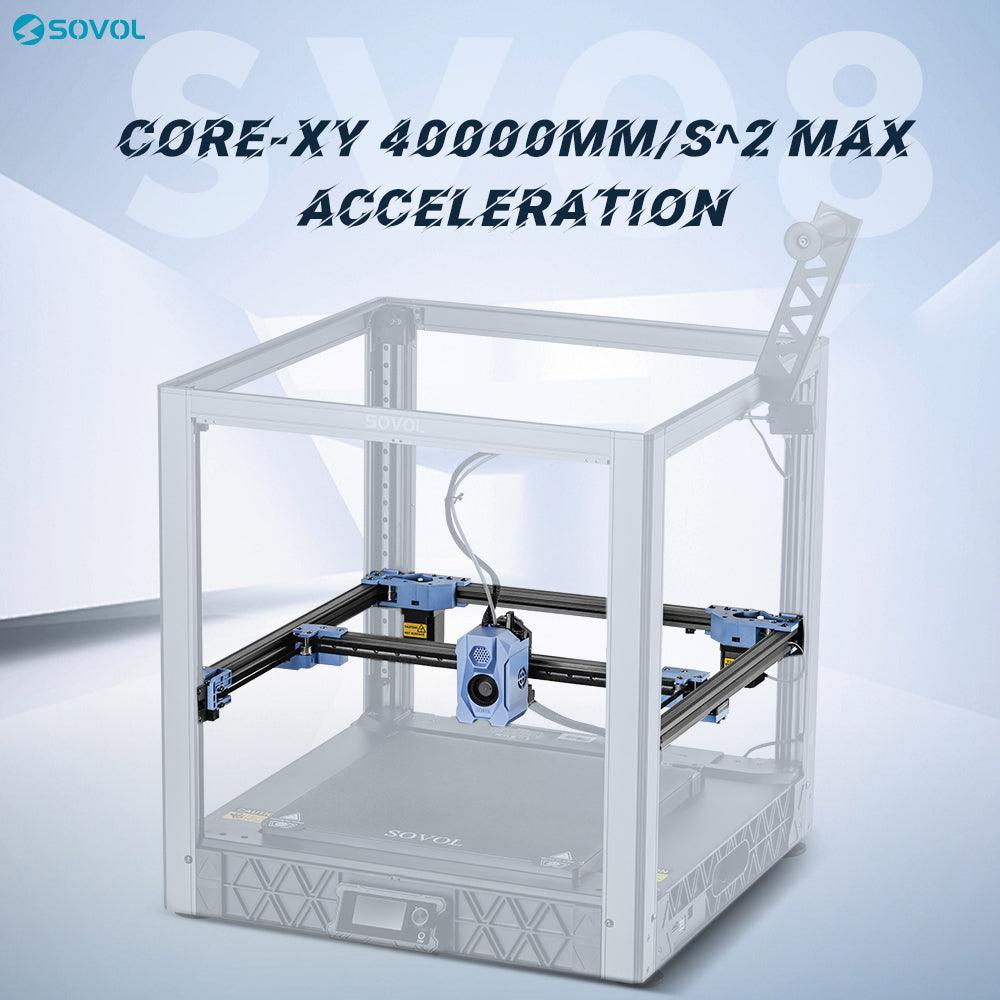
- CoreXY printers use belts and motors to move fast. You can make these better with klipper pressure advance settings.
- Input shaping helps stop shaking and makes prints look better at high speeds.
- Change jerk settings with pressure advance for the best results.
Try these tips to get the most from pressure advance tuning klipper. You will get sharper prints and fewer problems with blobs or too little filament.
You can make your prints look better by tuning pressure advance in klipper. First, set the right pressure advance value for your extruder, nozzle, and filament. Next, change slicer settings like layer height and speed. Then, print a test model and look at the corners for blobs or gaps. After that, update your klipper configuration and restart the firmware.
Tuning klipper often helps stop problems like too little or too much filament. You will see cleaner corners and smoother surfaces. If you want more help, check out the official klipper documentation.
|
Resource |
Description |
|---|---|
|
Pressure advance |
Find out how to set up and tune pressure advance in klipper. |
|
Tuning pressure advance |
Read guides to fix blobs and make corners better. |
Tip: Always look at your klipper settings when you change filament or speed. This helps your prints stay sharp and clean.
FAQ
What is pressure advance tuning klipper?
Pressure advance tuning klipper helps you control filament flow. You adjust settings so your printer makes sharp corners and smooth lines. This feature fixes blobs and thin spots by changing how fast the extruder pushes filament.
How often should you tune pressure advance in Klipper?
You should tune pressure advance every time you change filament, nozzle size, or print speed. Regular tuning keeps your prints sharp and clean. If you see blobs or gaps, run a new calibration.
Can you use automatic tools for pressure advance tuning klipper?
Yes, you can use automatic calibration tools. These tools use a camera to check your test prints and suggest the best value. Always review results yourself to make sure your prints look good.
What happens if your pressure advance value is too high or too low?
If your value is too high, you see gaps or under-extrusion. If it is too low, you get blobs at corners. Adjust the value in small steps and print test models to find the best setting.
Do different filaments need different pressure advance values?
Yes, each filament type needs its own pressure advance value. PLA, PETG, and ABS behave differently. Start with recommended values, then fine-tune for your printer and filament.
Takeaway: Pressure advance tuning klipper helps you get sharper prints. Tune often, use test prints, and adjust for each filament type.