
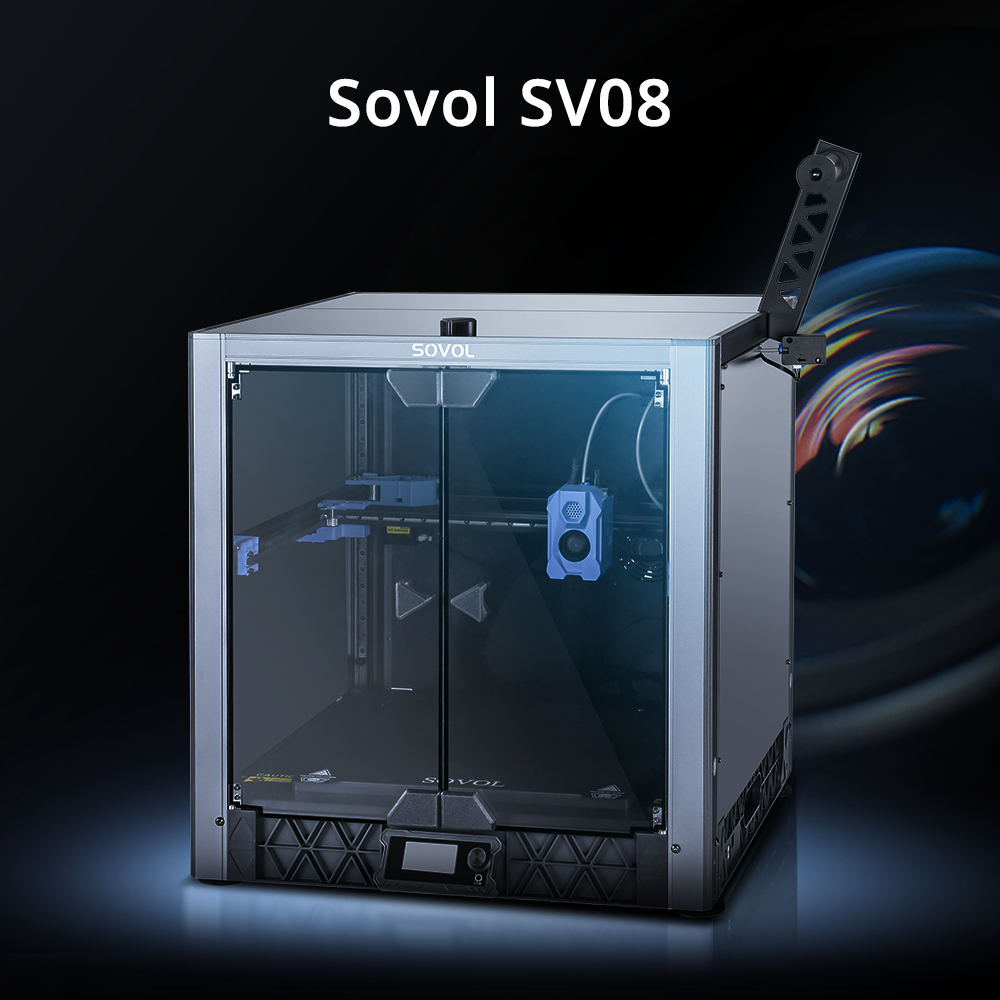

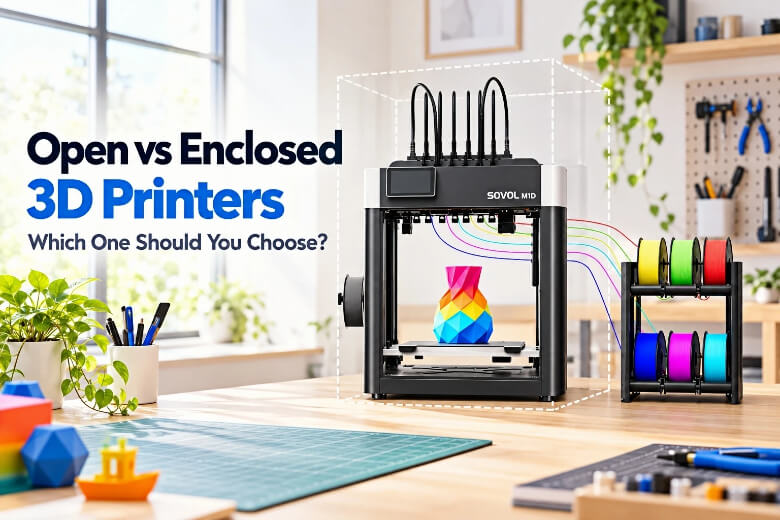
Open vs Enclosed 3D Printer: Which One Should You Choose?
Compare open and enclosed 3D printers to understand temperature control, material compatibility, ventilation, and which setup best fits your FDM printing needs.
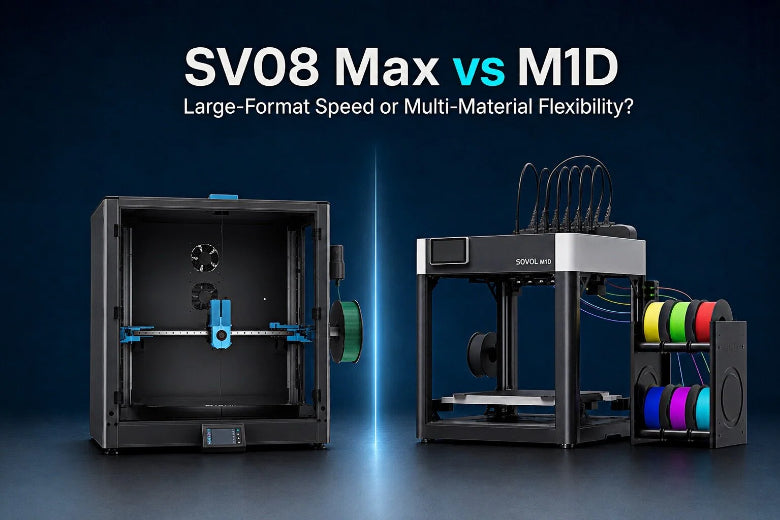
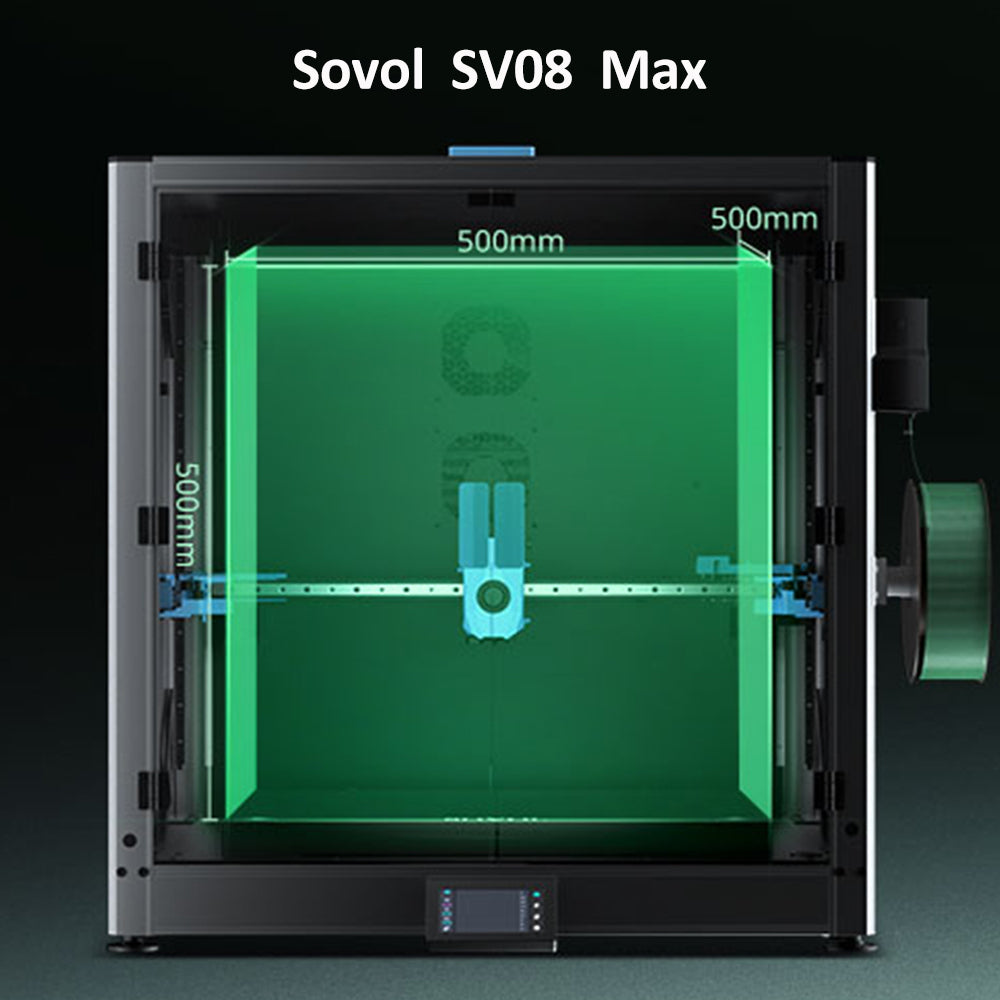
Sovol SV08 Max vs M1D: Large-Format Speed or Multi-Material Flexibility?
Compare the Sovol SV08 Max and M1D to see how their build volume, print speed, IDEX features, and multi-material capabilities fit different 3D printing workflows.
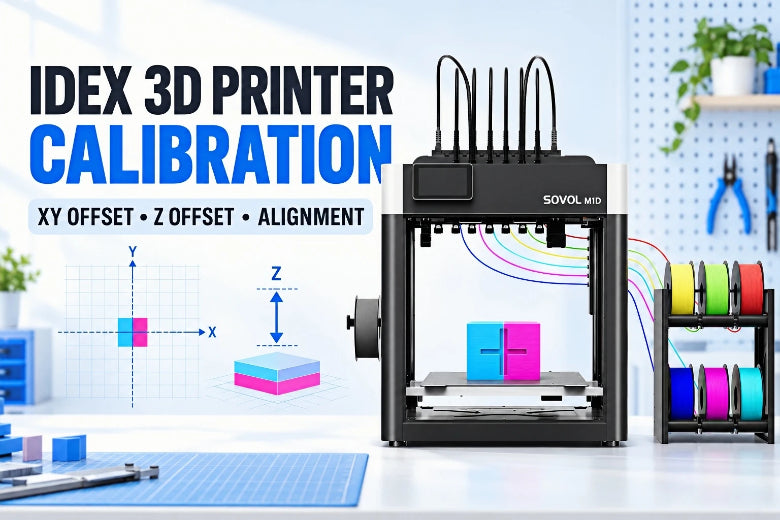
How to Calibrate an IDEX 3D Printer: XY Offset, Z Offset, and Toolhead Alignment
Learn how to calibrate an IDEX 3D printer by checking toolhead alignment, XY offset, Z offset, extrusion flow, docking repeatability, and two-color test prints. This practical guide explains how to...
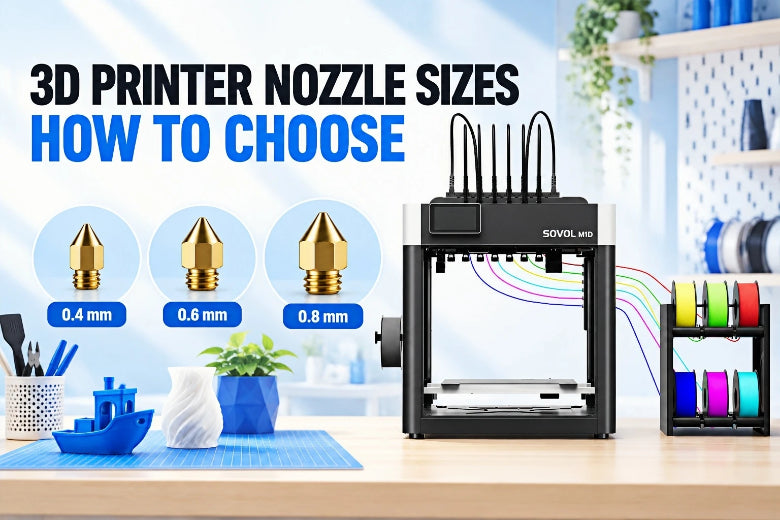
3D Printer Nozzle Sizes Explained: How to Choose the Right Nozzle
Choosing the right 3D printer nozzle size can improve print detail, speed, and reliability. This guide explains 0.4 mm, 0.6 mm, and 0.8 mm nozzles, nozzle materials, and slicer settings to check af...
How to Diagnose 3D Printer Stringing: A Step-by-Step Troubleshooting Workflow
Learn how to diagnose 3D printer stringing by checking filament moisture, temperature, retraction, travel settings, and printer hardware.
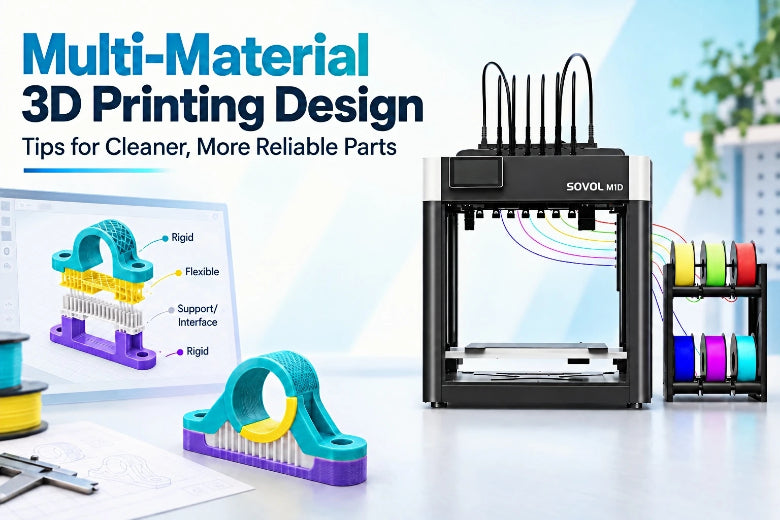
Multi-Material 3D Printing Design: Tips for Cleaner, More Reliable Parts
Learn how to design reliable multi-material 3D prints with practical tips for material planning, strong interfaces, tool assignments, slicer checks, and small test prints before the final model.
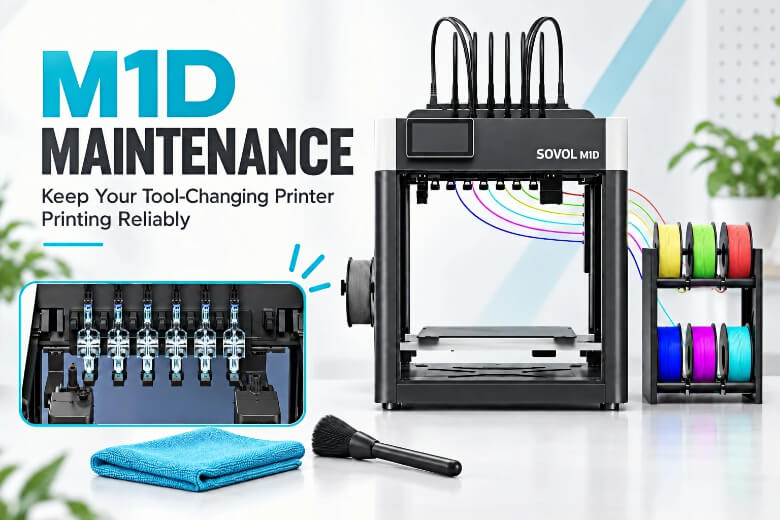
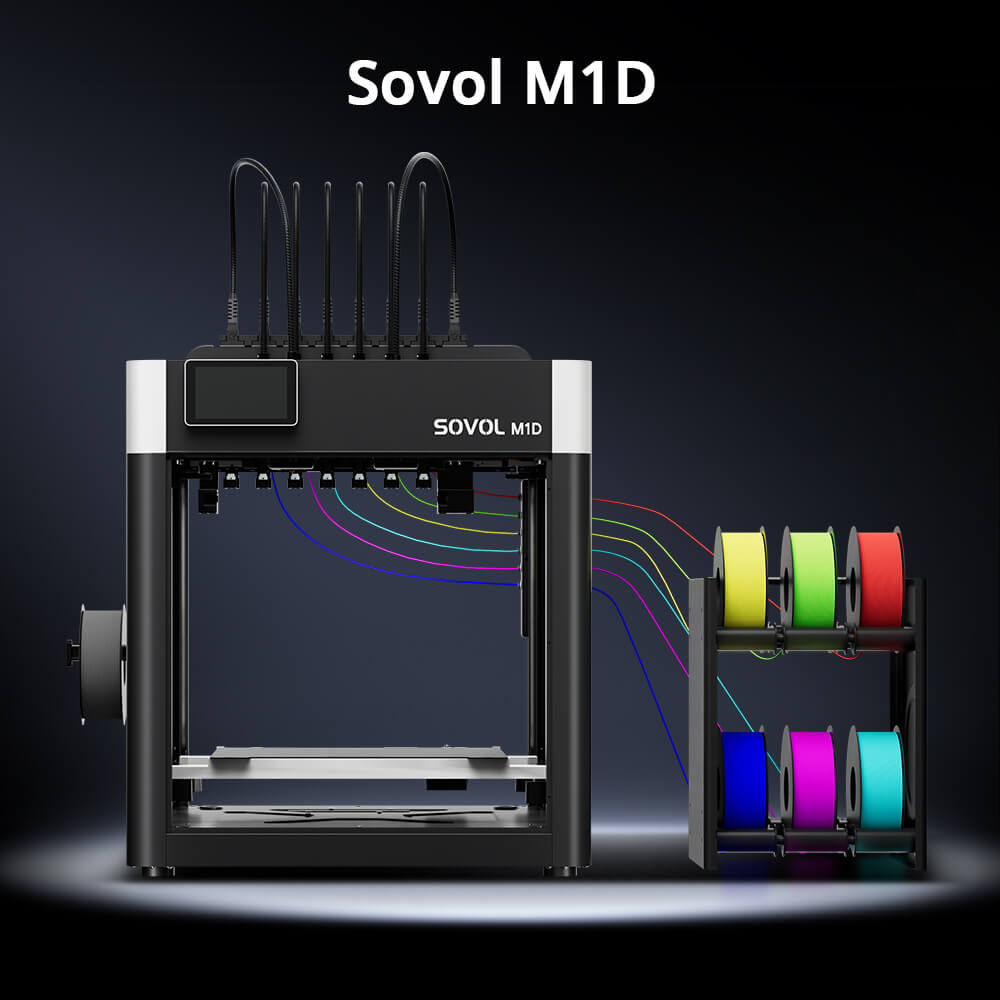
Tool-Changing 3D Printer Maintenance: How to Keep Your M1D Printing Reliably
Learn how to maintain a tool-changing 3D printer with this practical M1D guide. Discover how to inspect toolheads, docking areas, filament paths, and calibration, plus safe cleaning steps and troub...
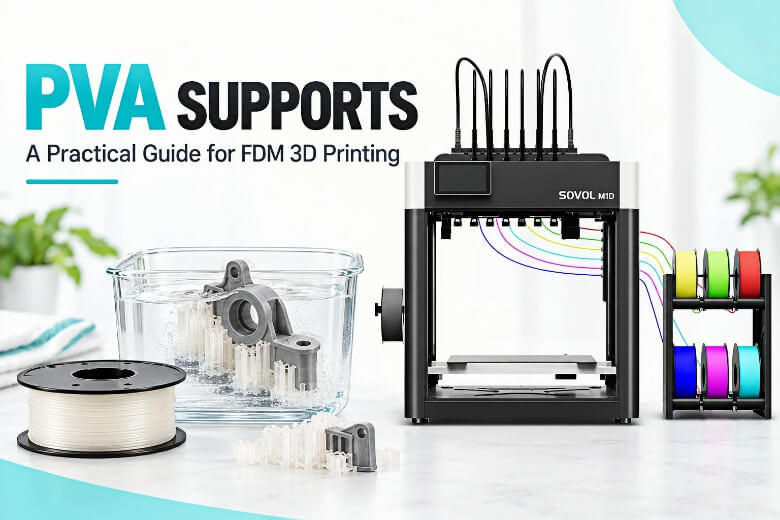
How to Use PVA Supports for 3D Printing: A Step-by-Step Guide
Learn how to use PVA soluble supports in FDM 3D printing. This practical guide covers material compatibility, moisture control, slicer setup, support interface settings, dissolving methods, and tro...
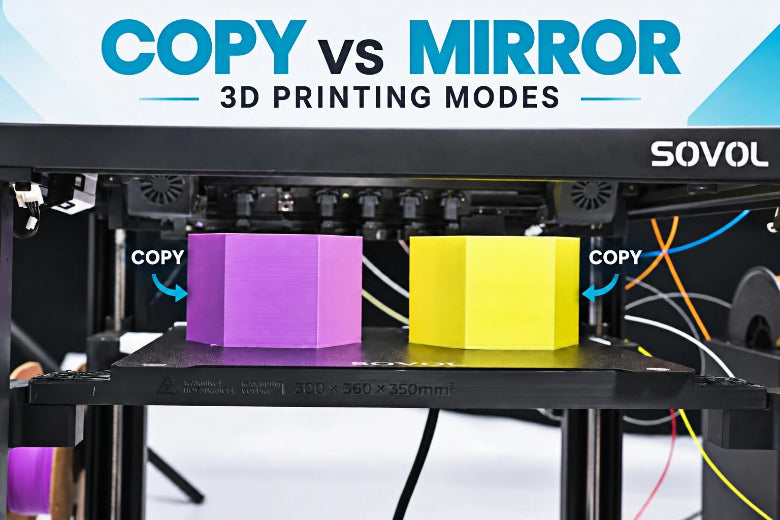
Copy vs Mirror 3D Printing: When to Print Two Parts at Once
Learn how Copy and Mirror modes work on IDEX 3D printers, when to print two identical parts or a left-and-right pair, and what to check before slicing. This guide uses the Sovol M1D as an example a...
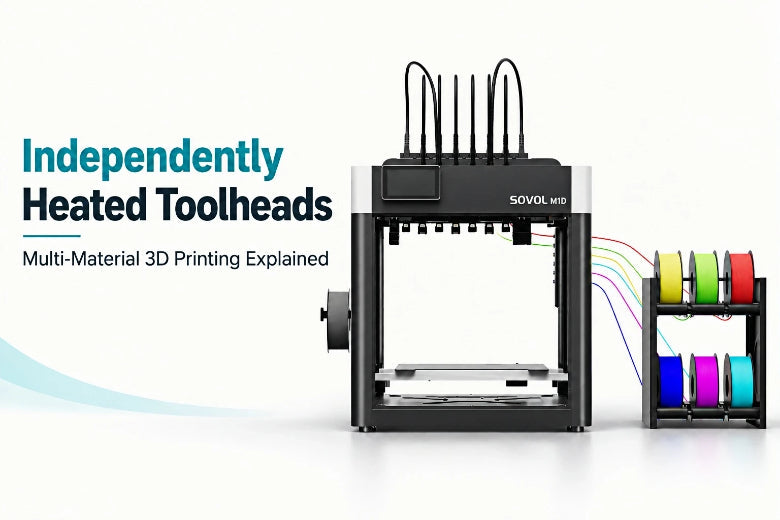
Independently Heated Toolheads: Why They Matter
Independently heated toolheads give each filament its own nozzle and temperature profile. This guide explains how they work, how they compare with single-nozzle systems, and why they can improve ma...

M1D Material Compatibility Guide: Multi-Material Printing, Supports, and Tool-Changing Workflows
Learn how Sovol M1D handles multi-material printing, PETG and PVA supports, PLA+TPU workflows, tool changes, calibration, and material compatibility.
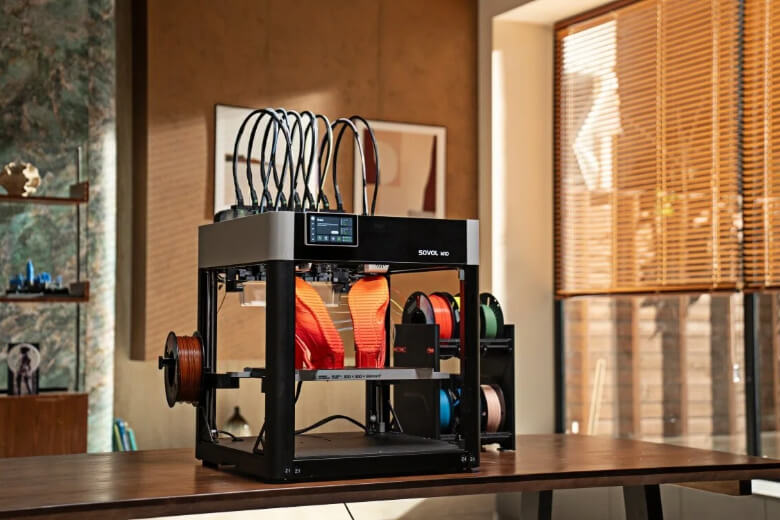
Sovol M1D First Print Setup: A Beginner's Guide
Learn how to set up the Sovol M1D and prepare your first multi-material print. This beginner-friendly guide covers toolhead checks, filament loading, OrcaSlicer assignments, automatic calibration, ...